
In large-scale construction and civil engineering projects, long-term performance is just as important as initial strength. Many failures in roads, drainage systems, and foundations are not caused by poor materials, but by inadequate soil management and water control. This is where geotextiles play a crucial role.
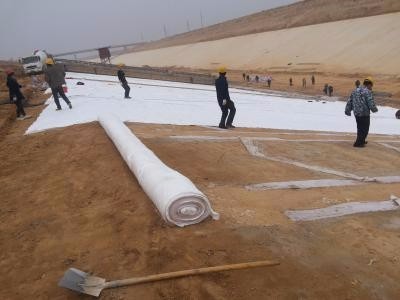
For contractors, developers, and B2B buyers, the key question is how to use geotextiles effectively to improve durability while controlling lifecycle costs. This article explores geotextiles from a practical, performance-driven perspective, focusing on how they deliver measurable value in real projects.
Why Are Geotextiles Considered a Smart Engineering Investment?
Unlike traditional materials that serve a single purpose, geotextiles are multifunctional. They are engineered to interact with soil and water simultaneously, which allows them to solve multiple structural problems with one solution.
Instead of increasing the thickness of base layers or using more aggregate, engineers can integrate geotextiles to achieve better results with fewer resources. This makes them not only technically effective but also economically efficient.
In modern infrastructure planning, geotextiles are no longer optional—they are often a standard component in design specifications.
How Do Geotextiles Help Reduce Maintenance Costs?
One of the biggest advantages of geotextiles is their ability to reduce long-term maintenance.
● They prevent contamination between soil layers, maintaining structural integrity
● They improve drainage, reducing water-related damage
● They minimize deformation in load-bearing surfaces such as roads
● They protect critical layers from mechanical damage
When these factors are controlled, the need for frequent repairs is significantly reduced. Over time, this translates into substantial savings for infrastructure owners.
How Do Geotextiles Perform in Road Construction?
Road construction is one of the most common applications for geotextiles, and also one of the most demanding.
In weak subgrade conditions, geotextiles act as a stabilizing layer. They distribute loads from traffic more evenly and prevent fine soil from mixing with aggregate layers. This helps maintain the strength and shape of the road.
Without geotextiles, roads are more prone to rutting, cracking, and early failure. By incorporating geotextiles, engineers can extend the service life of roads and reduce the frequency of resurfacing.
Can Geotextiles Improve Drainage Efficiency in Wet Conditions?
Yes, and this is one of their most valuable functions.
In areas with high groundwater levels or frequent rainfall, poor drainage can quickly compromise structural stability. Geotextiles act as a filtration medium, allowing water to pass through while retaining soil particles.
This prevents clogging in drainage systems and ensures continuous water flow. In retaining walls, for example, geotextiles help relieve hydrostatic pressure, which reduces the risk of structural failure.
Effective drainage supported by geotextiles is a key factor in ensuring long-term project performance.
How Do Geotextiles Contribute to Environmental Protection?
Environmental considerations are becoming increasingly important in construction projects.
Geotextiles help reduce environmental impact in several ways.
● They control soil erosion in sensitive areas
● They support vegetation growth in slope stabilization projects
● They reduce the need for excessive raw materials
● They improve water management and prevent contamination
In landfill systems, geotextiles are used to separate waste layers and protect liners, ensuring environmental safety.
These functions make geotextiles an important tool for sustainable development.
How Do Installation Practices Affect Performance?
Even the best geotextile will not perform properly if installed incorrectly.
Proper installation includes:
● Preparing a smooth and stable subgrade
● Avoiding wrinkles or folds during placement
● Ensuring adequate overlap between sheets
● Protecting the material from damage during construction
Attention to these details ensures that the geotextile functions as intended throughout the project lifecycle.
What Innovations Are Shaping the Future of Geotextiles?
As construction technology advances, geotextiles are also evolving.
● Development of biodegradable geotextiles for temporary applications
● Improved manufacturing processes for higher strength and consistency
● Integration with geogrids and other geosynthetics
● Enhanced resistance to extreme environmental conditions
These innovations are expanding the role of geotextiles in modern engineering.
Conclusion
Geotextiles are more than just supporting materials—they are a strategic solution for improving infrastructure performance and reducing long-term costs. By enhancing soil stability, improving drainage, and protecting structural layers, they play a vital role in modern construction.
For B2B buyers and project planners, the key to maximizing value lies in proper selection and application. When used correctly, geotextiles can significantly extend project lifespan, reduce maintenance needs, and support sustainable construction practices.
FAQ
1. Are geotextiles suitable for all construction projects?
They are highly versatile, but the type and specification must be selected based on project requirements.
2. Do geotextiles require special maintenance?
No, once properly installed, they typically do not require maintenance.
3. Can geotextiles be used in environmentally sensitive areas?
Yes, they are widely used for erosion control and environmental protection.
4. What is the most important factor when choosing geotextiles?
Matching the material properties to the specific soil, load, and drainage conditions is the most critical factor.
Post time: Apr-24-2026