
As global infrastructure development continues to expand, construction companies and engineering contractors are placing greater emphasis on project durability, construction stability, and long-term maintenance cost control.
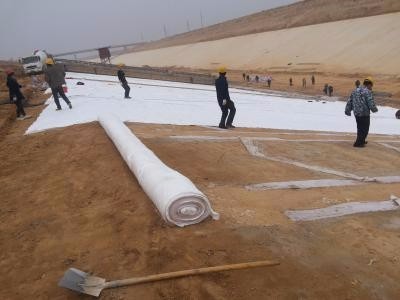
Geotextile fabrics have gradually become essential materials in modern civil engineering and infrastructure construction. Whether used in highway construction, railway projects, or agricultural infrastructure applications, geotextiles help improve ground stability, filtration performance, and overall structural durability.
Today, geotextiles are no longer considered simply auxiliary engineering materials. In many construction projects, they have become important components for improving construction efficiency, extending project service life, and reducing long-term maintenance costs.
What Is a Geotextile Fabric?
A geotextile fabric is a permeable engineering textile material used together with soil, sand, rock, or other construction materials to improve overall project performance. Most geotextiles are manufactured from synthetic polymers such as polypropylene (PP) or polyester (PET), allowing them to maintain long-term durability under difficult environmental conditions.
Unlike ordinary textile products, geotextiles are specifically designed for civil engineering environments where strength, permeability, filtration efficiency, and environmental resistance are critical. Depending on the manufacturing method, geotextiles can be produced as woven geotextiles, nonwoven geotextiles, or knitted structures.
Why Modern Engineering Projects Depend on Geotextiles
Many modern infrastructure projects are built under challenging soil conditions, heavy traffic loads, and long-term environmental pressure. Without proper ground stabilization and drainage management, roads, railways, and foundation systems may gradually deform, crack, or fail prematurely.
Geotextile fabrics help engineers solve these problems more efficiently while reducing future maintenance requirements.
Improving Ground Stability
One of the most important functions of geotextiles is improving soil stability. In weak soil environments, pressure from vehicles, roads, and structures can easily cause uneven settlement and surface deformation.
● Geotextiles help distribute loads more evenly across the soil surface, reducing stress concentration and improving overall foundation stability.
● In road construction projects, geotextiles are commonly installed between subgrade soil and aggregate layers to strengthen road structures and reduce rutting caused by repeated traffic loads.
● In soft soil areas, geotextiles also prevent the mixing of different material layers, helping structural fill materials maintain long-term stability.
Enhancing Drainage Performance
Poor drainage is one of the leading causes of infrastructure deterioration. When water remains trapped inside soil structures, it gradually weakens the load-bearing capacity of the foundation and accelerates pavement damage.
● Geotextile fabrics allow water to pass through while preventing soil particles from entering drainage systems, helping maintain long-term drainage efficiency.
● In retaining walls, railway systems, and drainage trenches, geotextiles are frequently used to improve water flow management and reduce hydrostatic pressure buildup.
● In landfill and environmental engineering projects, drainage geotextiles also help control liquid movement while protecting filtration systems from blockage.
Because of their permeability properties, geotextiles help maintain both structural stability and environmental protection performance.
Different Types of Geotextile Fabrics for Different Engineering Applications
Not all geotextiles are designed for the same working conditions. Different projects require different tensile strength levels, filtration capabilities, and permeability performance.
Woven Geotextiles
Woven geotextiles are manufactured by interweaving synthetic yarns into stable fabric structures. Their main advantage is high tensile strength and structural reinforcement capability.
● Woven geotextiles are commonly used in road reinforcement, embankment stabilization, and heavy-load construction projects where structural support is critical.
● Because of their strong tensile performance, they are highly suitable for transportation infrastructure projects exposed to continuous traffic pressure.
● Many highway projects use woven geotextiles to extend pavement life and reduce long-term maintenance frequency.
Nonwoven Geotextiles
Nonwoven geotextiles are typically produced through needle punching or thermal bonding processes, giving them excellent permeability and filtration performance.
● These products are widely used in drainage systems, filtration layers, erosion control projects, and landscaping applications.
● Nonwoven geotextiles are especially suitable for applications requiring water flow management and soil filtration.
● In agricultural and environmental projects, nonwoven geotextiles are often preferred because of their flexibility and efficient filtration capability.
Geocomposite Materials
In some complex engineering projects, geotextiles are combined with drainage boards, geomembranes, or reinforcement grids to create multifunctional geocomposite systems.
● These composite systems are commonly used in landfill engineering, tunnel construction, mining operations, and large infrastructure projects.
● Geocomposites can simultaneously provide drainage, reinforcement, and separation functions while improving construction efficiency and reducing overall material usage.
Common Applications of Geotextile Fabrics
Because geotextiles can adapt to many different engineering environments, they are now widely used across multiple industries.
Road and Highway Construction
Road construction remains one of the largest application sectors for geotextile fabrics.
● Geotextiles separate subgrade soil from aggregate layers, preventing material mixing that may weaken road performance over time.
● They also improve load distribution and help reduce pavement cracking, rutting, and structural deformation.
● In many highway projects, geotextiles contribute to longer pavement service life and lower maintenance costs.
Railway Infrastructure
Railway systems require highly stable foundations to ensure safe and efficient operation.
● Geotextiles help stabilize ballast layers and improve drainage beneath railway tracks.
● By reducing soil movement and water accumulation, geotextiles help minimize track settlement and future maintenance requirements.
Slope Protection and Erosion Control
In river management, coastal engineering, and slope stabilization projects, erosion control is extremely important.
● Geotextiles help reduce soil loss caused by water flow, rainfall, and wind erosion.
● They are commonly installed beneath rock protection layers, retaining structures, and vegetation reinforcement systems.
Landfill and Environmental Engineering
Modern landfill systems rely heavily on geotextiles for filtration and separation functions.
● Geotextiles help prevent drainage system clogging while controlling liquid movement inside landfill structures.
● In wastewater treatment, environmental remediation, and containment projects, geotextiles also play a critical role.
What Buyers Usually Consider When Selecting Geotextiles
Because different engineering projects require different technical specifications, buyers usually focus on several important performance factors when choosing geotextile products.
● Tensile strength is critical for reinforcement and heavy-load applications.
● Permeability performance directly affects filtration and drainage system efficiency.
● UV resistance and chemical resistance are especially important for long-term outdoor exposure.
● Puncture resistance and abrasion resistance affect durability under rough construction conditions.
● Roll width, thickness, and installation convenience also influence construction efficiency and project cost control.
For large infrastructure projects, long-term reliability is usually more important than simply choosing the lowest-cost material.
Conclusion
Geotextile fabrics have become essential materials in modern infrastructure development because they help improve ground stability, drainage efficiency, structural durability, and environmental protection performance. From highways and railways to landfill systems and erosion control projects, geotextiles provide reliable and efficient engineering solutions for modern construction.
FAQ
What materials are commonly used in geotextile fabrics?
Most geotextile fabrics are manufactured from polypropylene (PP) or polyester (PET) because these materials offer excellent durability, chemical resistance, and long-term performance stability.
What is the difference between woven and nonwoven geotextiles?
Woven geotextiles are mainly used for reinforcement and stabilization, while nonwoven geotextiles are more suitable for filtration, drainage, and erosion control applications.
Can geotextile fabrics improve road service life?
Yes. Geotextiles help stabilize road foundations, improve load distribution, and reduce pavement deformation, which helps extend road service life and lower maintenance costs.
Post time: May-15-2026