
In modern civil engineering and infrastructure development, geotextile materials have become essential for improving soil stability, drainage performance, and long-term structural durability. As global demand continues to grow across road construction, railway systems, landfill engineering, and environmental protection projects, understanding how a geotextile factory operates has become increasingly important for contractors, distributors, and project planners.
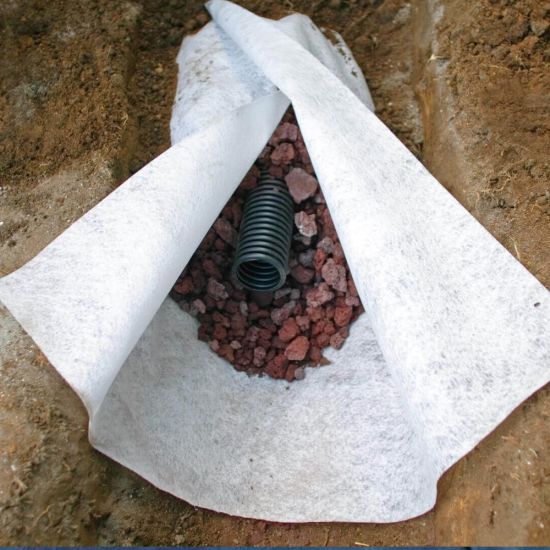
A geotextile factory is not a standard textile production site. It is a highly specialized industrial manufacturing facility where polymer science, engineering design, and strict quality control systems are combined to produce technical fabrics used in demanding underground and outdoor environments.
What Is a Geotextile Factory?
A geotextile factory is a manufacturing plant that produces geosynthetic fabrics designed for civil engineering applications. These fabrics are made by processing raw polymer materials such as polypropylene (PP) or polyester (PET) into functional geotextiles through advanced production technologies.
The primary goal of a geotextile factory is not simply to produce fabric, but to manufacture engineered materials that can perform specific functions in real construction environments, including soil separation, filtration, reinforcement, and drainage.
Typical product categories include:
● Nonwoven geotextiles produced through needle-punching or thermal bonding processes
● Woven geotextiles manufactured using high-strength industrial weaving equipment
● Composite geotextiles combined with membranes or drainage layers for enhanced engineering performance
Each product type is designed for different soil conditions, load requirements, and environmental challenges.
What Raw Materials Are Used in Geotextile Manufacturing?
The performance of geotextiles depends heavily on the raw materials selected during production, as these directly influence strength, durability, and chemical resistance.
Polypropylene (PP)
Polypropylene is one of the most widely used materials in geotextile production due to its balanced performance and cost efficiency.
● Provides strong resistance to acids and alkalis commonly found in soil environments
● Maintains structural stability under long-term underground conditions
● Suitable for large-scale infrastructure projects requiring cost-effective solutions
Polyester (PET)
Polyester is used in applications requiring higher strength and long-term load resistance.
● Ideal for highways, railways, and embankment reinforcement projects
● Offers excellent creep resistance under sustained stress
● Performs reliably in high-temperature and demanding environments
The selection between PP and PET depends on engineering design requirements and expected project lifespan.
How Does a Geotextile Factory Produce Geotextiles?
The manufacturing process involves multiple controlled stages designed to ensure consistency, durability, and engineering performance.
How are geotextile fibers produced?
In the first stage, polymer pellets are melted and extruded into continuous fibers under controlled temperature conditions.
● Ensures uniform fiber diameter for stable mechanical performance
● Controls molecular structure to improve tensile strength
● Prepares raw fibers for fabric formation processes
How is geotextile fabric formed?
Different production methods are used depending on the final product type.
● Nonwoven geotextiles are formed using needle-punching technology to entangle fibers into a random but strong structure
● Woven geotextiles are produced using industrial looms that interlace fibers in a structured pattern for higher tensile strength
● Composite geotextiles combine multiple layers to achieve multifunctional performance
Is additional treatment required in production?
Yes, many products undergo post-processing to enhance performance characteristics.
● Improves bonding strength between fibers
● Enhances resistance to deformation under load
● Extends service life in underground engineering conditions
How Does a Geotextile Factory Ensure Product Quality?
Quality control is a critical part of geotextile manufacturing because these materials are used in infrastructure systems where failure is not acceptable.
How is tensile strength tested?
● Measures the ability of the material to withstand pulling forces
● Ensures consistent performance in reinforcement applications
● Essential for road and railway engineering projects
How is permeability evaluated?
● Tests how effectively water passes through the fabric
● Ensures proper filtration and drainage performance
● Prevents clogging in soil systems
How is puncture resistance tested?
● Simulates sharp aggregate and stone pressure conditions
● Ensures durability during installation and service life
● Important for landfill and erosion control applications
How is long-term durability verified?
● UV and aging tests simulate long-term environmental exposure
● Ensures stability during storage and outdoor use
● Confirms performance consistency over time
Where Are Geotextiles Produced by Factories Used?
Geotextiles manufactured in professional factories are widely used in civil engineering projects where soil behavior must be controlled and stabilized.
● Road and highway construction for soil separation and load distribution
● Railway systems to stabilize ballast layers and improve drainage
● Landfill engineering to prevent contamination and improve filtration
● Slope protection projects to reduce erosion and enhance stability
● Environmental engineering projects for sustainable soil management
Why Is Choosing the Right Geotextile Factory Important?
The quality of geotextiles directly depends on the manufacturing capability of the factory, making supplier selection a critical decision for engineering projects.
● Ensures consistent mechanical performance across production batches
● Reduces risk of structural failure in infrastructure applications
● Provides customized solutions based on engineering requirements
● Supports large-scale supply for international construction projects
A reliable factory is not just a supplier but a long-term engineering partner.
What Is the Market Trend for Geotextile Factories?
The global geotextile industry continues to expand due to infrastructure growth and environmental protection demands.
● Increasing investment in transportation infrastructure worldwide
● Rising demand for sustainable and durable construction materials
● Expansion of urban development and land reclamation projects
● Greater use of geosynthetics in environmental engineering
● Rapid adoption in emerging construction markets
As a result, geotextile factories are continuously improving automation, production efficiency, and material innovation.
Conclusion
A geotextile factory plays a vital role in modern infrastructure development by producing engineered materials that enhance soil stability, drainage efficiency, and structural durability. Through advanced manufacturing processes, strict quality control systems, and carefully selected raw materials, these factories ensure reliable performance in demanding engineering environments.
As global infrastructure continues to expand, geotextile factories will remain a key foundation in delivering safe, efficient, and sustainable civil engineering solutions.
FAQ
1、What does a geotextile factory actually do?
A geotextile factory manufactures engineered fabrics used in civil engineering applications such as road construction, railway systems, drainage, and soil stabilization.
2、What materials are commonly used in geotextile production?
The most common raw materials are polypropylene (PP) and polyester (PET), chosen for their strength, durability, and chemical resistance.
3、How does a geotextile factory guarantee product quality?
Factories use strict testing methods including tensile strength testing, permeability testing, puncture resistance testing, and UV aging tests to ensure consistent performance.
4、In which engineering projects are geotextiles used?
They are widely used in highways, railways, landfill systems, slope protection, and various environmental and infrastructure engineering projects.
Post time: May-27-2026