
PET Geotextile Fabric vs PP Geotextile Fabric is not simply a comparison between two synthetic fibers. When polyester (PET) or polypropylene (PP) is used to manufacture needle-punched nonwoven geotextile, the fiber material influences mechanical behavior, moisture response, chemical resistance, density, dimensional stability, and long-term performance after burial.
Both materials can be used for separation, filtration, drainage, protection, and other ground applications, but they do not behave identically under every condition. The more useful question is therefore not which material is universally better, but which fiber characteristics match the actual soil, load, moisture, and chemical environment of the project.
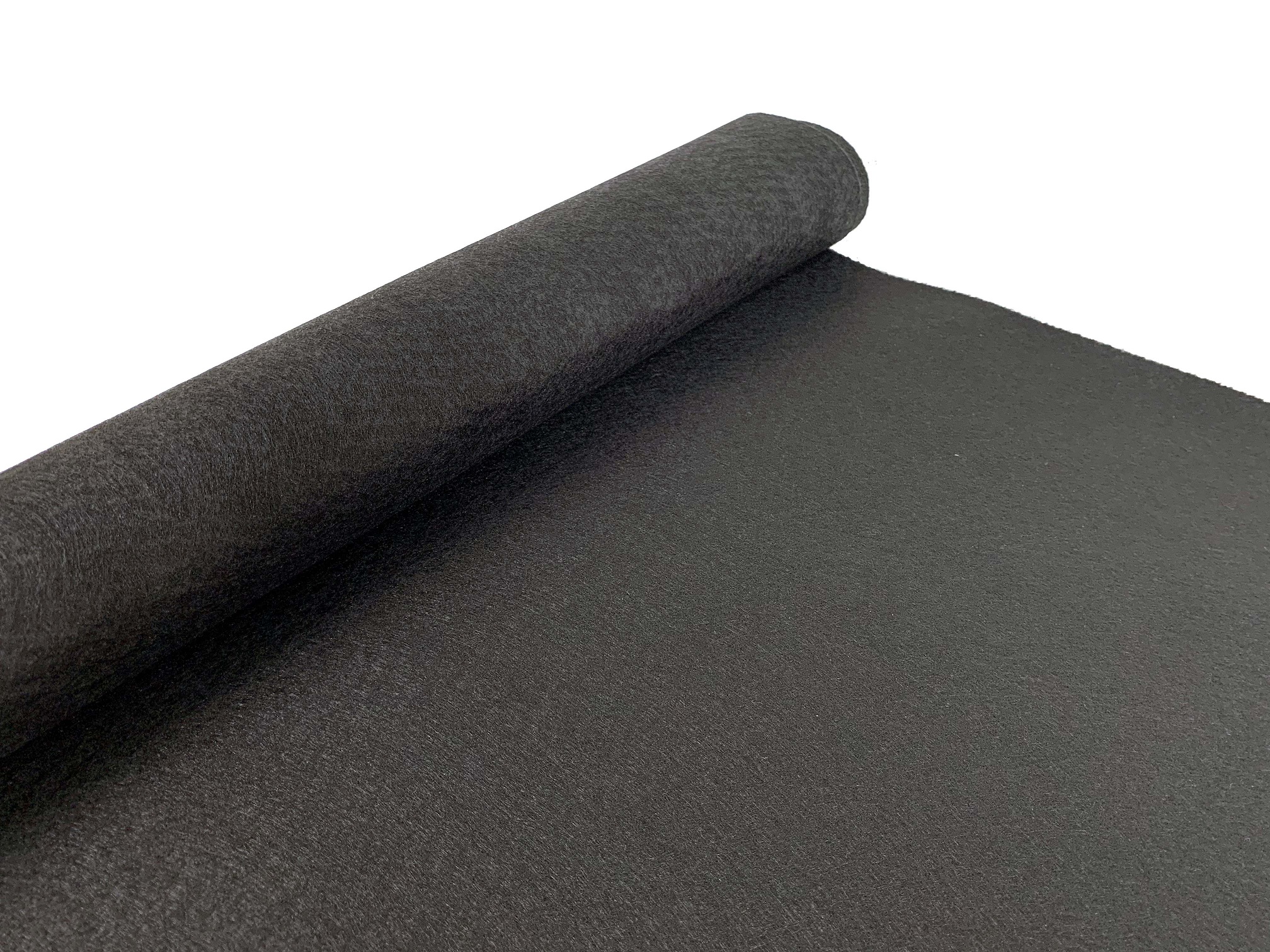
PET Geotextile Fabric vs PP Geotextile Fabric Starts With the Fiber Itself
PET and PP are both thermoplastic polymers, but their molecular structures and physical properties are different. Those differences remain relevant even after the fibers are formed into a similar needle-punched nonwoven structure.
PET generally has a higher material density and good mechanical stability, which makes it useful where the geotextile needs to maintain strength and dimensional stability under long-term loading. PP has a much lower density and very low water absorption, while also providing strong resistance to many chemicals commonly encountered in soil and water environments.
This means two geotextiles with similar GSM and similar appearance can still perform differently because the fiber material changes how the finished fabric responds to stress, moisture, and environmental exposure.
For this reason, comparing PET Geotextile Fabric vs PP Geotextile Fabric only by weight is not enough.
PET Is Often Selected When Mechanical Stability Is a Major Priority
PET fibers are widely used in geotextiles where tensile performance, dimensional stability, and resistance to long-term deformation are important considerations.
When a geotextile is installed beneath aggregate, road base, protective layers, or other materials that apply continuous pressure, the fabric needs to remain structurally stable after burial. PET can provide useful mechanical performance in these conditions, particularly when the product is designed with suitable fiber distribution, needle-punch density, and fabric weight.
This does not mean PET automatically provides higher performance in every product. The finished geotextile still depends on manufacturing quality and specification. However, PET is often considered where the application places greater emphasis on:
- mechanical stability under sustained load;
- tensile performance;
- dimensional stability;
- protection beneath rough or heavy materials;
- long-term buried applications.
The material choice becomes more meaningful when these requirements are combined with the actual GSM, thickness, puncture resistance, and tensile properties of the finished fabric.
PP Has Advantages in Moisture and Many Chemical Environments
PP geotextile behaves differently because polypropylene absorbs very little moisture and is highly resistant to many chemicals found in normal soil and water conditions.
This can be useful where the geotextile remains continuously exposed to wet ground, drainage water, or environments where chemical resistance is an important consideration.
PP fibers do not rely on water absorption to perform. Water passes mainly through the interconnected voids within the needle-punched structure, while the fiber network provides filtration or separation between adjacent materials.
The low density of PP also means that the relationship between GSM, thickness, and fiber volume can differ from PET. A PP geotextile and a PET geotextile with the same weight per square meter are therefore not necessarily structurally identical.
This is one reason why PET Geotextile Fabric vs PP Geotextile Fabric should be evaluated through actual product performance rather than assuming the same GSM represents the same structure.
Moisture Resistance Is Not the Same as Filtration Performance
One common mistake when comparing PET and PP is to treat low water absorption as the same thing as better drainage or filtration.
They are different properties.
The fiber material determines how much moisture the polymer itself absorbs, while filtration performance depends heavily on the completed fabric structure. Pore size, fiber distribution, fabric thickness, manufacturing consistency, and permeability all influence how water and soil particles interact with the geotextile.
A PP fabric may absorb less moisture than PET, but that does not automatically mean it will provide better filtration. Similarly, a PET fabric can provide effective drainage and filtration if its pore structure and hydraulic characteristics are suitable for the surrounding soil.
For filtration applications, material type should therefore be considered together with the physical structure of the finished fabric.
The Same GSM Does Not Mean the Same Geotextile
GSM is one of the easiest specifications to compare, but it can also lead to oversimplified decisions.
Because PET and PP have different material densities and fiber characteristics, two products with the same nominal GSM may differ in thickness, fiber volume, pore structure, stiffness, and mechanical behavior.
This becomes especially important when the geotextile has to perform more than one function at the same time.
|
Application Requirement |
PET May Receive More Attention When |
PP May Receive More Attention When |
| Long-term mechanical stability | Sustained load and dimensional control are important | Mechanical requirements remain within suitable PP specification |
| Wet soil or drainage environment | Filtration and mechanical performance are both required | Very low moisture absorption is preferred |
| Chemical exposure | Conditions are within suitable PET range | Broad chemical resistance is a major priority |
| Protection layer | Mechanical stability and cushioning are important | Lightweight handling and chemical stability are useful |
| Separation | Strong, stable buried layer is required | Moisture and chemical resistance are important |
| Filtration | Fabric pore structure matches the soil | Fabric pore structure matches the soil |
The table should not be treated as a rigid rule. Finished product specifications remain more important than the polymer name alone.
How Should PET and PP Be Matched to Real Applications?
A more practical way to compare PET Geotextile Fabric vs PP Geotextile Fabric is to start with project conditions rather than material preference.
For example, where the geotextile will be buried beneath heavy aggregate and long-term mechanical stability is a major concern, PET may be a strong option. Where the environment is consistently wet or involves greater chemical exposure, PP may deserve more attention.
However, neither decision should be made without checking the finished product properties. Tensile strength, puncture resistance, permeability, thickness, pore structure, roll dimensions, and manufacturing consistency still determine whether the geotextile actually matches the application.
In many projects, the correct question is therefore:
What performance does the geotextile need to maintain after burial, and which material structure can provide that performance most reliably?
Vinner PET and PP Geotextile Fabric
Vinner provides both PET Geotextile Fabric and PP Geotextile Fabric in needle-punched nonwoven structures for separation, filtration, drainage, protection, and other ground applications.
Different material types can be matched with different GSM, thicknesses, roll widths, and roll lengths according to application conditions. Where mechanical stability and long-term buried performance are important, PET options can be considered alongside the required strength and puncture properties. Where moisture exposure or chemical resistance receives greater attention, PP can provide another practical material solution.
For projects with specific soil conditions, load requirements, drainage needs, or roll-size requirements, the geotextile specification can be matched around the actual function rather than selecting PET or PP by name alone.
FAQ
Is PET geotextile stronger than PP geotextile?
Not automatically. PET often provides strong mechanical and dimensional stability, but actual strength depends on fiber structure, GSM, needle-punching process, and the finished product specification. A specific PP product may outperform a PET product if it is designed to a higher mechanical specification.
Which is better for drainage, PET or PP geotextile?
Both can be used for drainage. Filtration and drainage performance depend mainly on permeability, pore structure, soil conditions, and fabric construction rather than polymer type alone.
Is PP geotextile better for wet environments?
PP has very low moisture absorption and good resistance to many chemicals, which can make it attractive for wet environments. However, mechanical, filtration, and installation requirements still need to be considered.
Can Vinner provide both PET and PP needle-punched geotextile?
Yes. Vinner provides PET and PP needle-punched nonwoven geotextile with different weights, thicknesses, roll dimensions, and application-based configurations for different project conditions.
Post time: Sep-07-2026