
Choosing the right geotextile fabric is not only about selecting a material. It is about understanding the ground condition, water movement, load pressure, installation environment, and long-term maintenance needs of a project. In many construction, landscaping, road, drainage, and agricultural applications, geotextile plays an important role in keeping the ground structure stable and functional. However, different projects require different types of geotextile, and using the wrong fabric may lead to poor drainage, soil mixing, surface settlement, or unnecessary replacement costs.
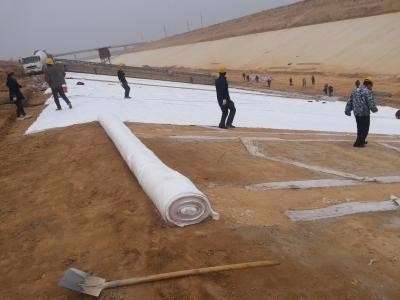
For project buyers, contractors, and distributors, the most important question is not simply “What is geotextile?” but “Which geotextile is suitable for my application?” This article explains how to evaluate geotextile fabric from a practical selection perspective.
Start with the Project Problem
Before choosing geotextile, it is important to identify the main problem the project needs to solve. Some projects need to stop soil layers from mixing. Some need better drainage. Some require reinforcement under heavy loads. Others need protection for pond liners, membranes, or landscaping surfaces.
For example, a driveway built on soft soil usually needs a fabric that can separate the subgrade from the stone base and improve stability. A drainage trench needs a geotextile that allows water to pass through while preventing soil particles from clogging the gravel layer. A pond liner project may need a protective layer that reduces puncture risk. A garden path may need a fabric that keeps the surface clean and stable over time.
Different problems require different fabric properties, so the selection should always begin with the actual use environment.
Consider Soil Type and Ground Condition
Soil condition has a direct influence on geotextile selection. Soft clay, sandy soil, rocky ground, and wet soil all behave differently. In soft or muddy areas, separation and stabilization are usually more important because the base layer can easily sink or mix with the soil. In sandy areas, filtration performance may be more important because fine particles can move with water and block drainage systems.
If the soil has poor drainage, a nonwoven geotextile is often a practical choice because it provides good permeability and filtration. If the soil needs stronger support under roads, parking areas, or working platforms, woven geotextile may be more suitable because of its higher tensile strength.
Understanding the ground condition helps buyers avoid choosing a fabric that is either too weak for the project or too heavy for the actual application.
Match Geotextile Type with Application
There are two common types of geotextile used in most projects: woven geotextile and nonwoven geotextile.
Woven geotextile is made from synthetic yarns arranged in a stable woven structure. It is generally used when reinforcement and load distribution are the main requirements. It is suitable for road bases, temporary construction roads, embankments, driveways, and areas where the ground must support repeated pressure.
Nonwoven geotextile is made from fibers bonded together, often through a needle-punching process. It has a more flexible and porous structure, making it suitable for drainage, filtration, separation, and protection. It is widely used in retaining wall drainage, French drains, landscape projects, pond liner protection, artificial grass installation, and erosion control.
In many cases, buyers should not simply choose the stronger fabric. A strong woven fabric may not be the best option for drainage, while a highly permeable nonwoven fabric may not provide enough reinforcement for heavy-duty road construction. The right fabric depends on the function required by the project.
Pay Attention to Water Flow
Water is one of the biggest reasons ground projects fail. Poor drainage can cause soil erosion, road settlement, surface cracking, foundation instability, and blocked drainage systems. For this reason, permeability is one of the key factors when selecting geotextile.
For drainage applications, the fabric should allow water to pass through efficiently while holding back soil particles. If the pore structure is too tight, water movement may become slow. If it is too open, soil particles may pass through and contaminate the drainage layer. A good geotextile fabric should maintain a balance between filtration and water flow.
This is especially important for retaining walls, underground drainage systems, landscape drainage, and road edge drainage. When water pressure builds up behind a structure, it can lead to long-term damage. A suitable geotextile helps water move away from the structure while keeping the drainage layer clean.
Evaluate Strength Requirements
Not every project needs high-strength geotextile, but strength becomes important when the fabric is used under heavy load or difficult ground conditions. Roads, parking lots, construction platforms, embankments, and industrial areas usually require stronger materials because the fabric must resist tension, pressure, and installation stress.
Tensile strength, puncture resistance, and tear resistance are important indicators. During installation, geotextile may be exposed to gravel, stones, machinery, and pulling forces. If the fabric tears easily, it may lose its separation or reinforcement function before the project is completed.
For landscaping or garden use, the strength requirement may be lower, but the fabric still needs enough durability to withstand soil movement, foot traffic, weather exposure, and installation handling.
Common Selection Suggestions
For road base and driveway projects, woven geotextile or stronger separation fabric is often recommended, especially where the soil is soft or unstable.
For drainage trenches, retaining walls, and French drains, nonwoven needle-punched geotextile is commonly used because it offers good water permeability and filtration.
For pond liners, waterproof membranes, and protective layers, thicker nonwoven geotextile can help reduce puncture and abrasion damage.
For landscaping, gravel paths, artificial grass, and garden surfaces, flexible nonwoven geotextile can improve separation, drainage, and surface stability.
For erosion control projects, the choice depends on slope condition, water flow, soil type, and whether the fabric will be used with rocks, vegetation, or other protection systems.
Conclusion
Selecting the right geotextile fabric requires more than comparing price or fabric weight. Buyers need to consider soil condition, project purpose, water flow, strength requirements, installation environment, and long-term performance. Woven geotextile is usually better for reinforcement and stabilization, while nonwoven geotextile is widely used for drainage, filtration, separation, and protection.
A suitable geotextile helps improve ground stability, reduce drainage problems, protect structural layers, and extend the service life of the project. For contractors, distributors, and project buyers, choosing the right fabric from the beginning can reduce future maintenance costs and improve overall project reliability.
FAQ
1. Which geotextile is better for drainage projects?
Nonwoven geotextile is usually preferred for drainage projects because it allows water to pass through while helping prevent soil particles from entering the drainage layer.
2. Can geotextile be used under a driveway?
Yes. Geotextile can be used under a driveway to separate soft soil from the gravel base, improve stability, and reduce surface settlement.
3. Is woven or nonwoven geotextile better for road construction?
Woven geotextile is often used for reinforcement and stabilization in road construction, while nonwoven geotextile may be used when drainage and filtration are more important.
4. What should buyers consider when choosing geotextile?
Buyers should consider application, soil type, tensile strength, permeability, thickness, UV resistance, roll size, and production quality before choosing a geotextile fabric.
Post time: Jun-22-2026