
Many base-layer problems are not caused by insufficient gravel thickness. The real issue is often that the gravel layer gradually mixes with the soil underneath.
A gravel road, driveway, parking area, or landscape base may look stable immediately after construction. However, after repeated traffic, rainfall, freeze-thaw cycles, and long-term use, gravel can gradually sink into soft subgrade while fine soil moves upward into the aggregate. Eventually, even repeated gravel replenishment may not prevent settlement, mud pumping, or standing water.
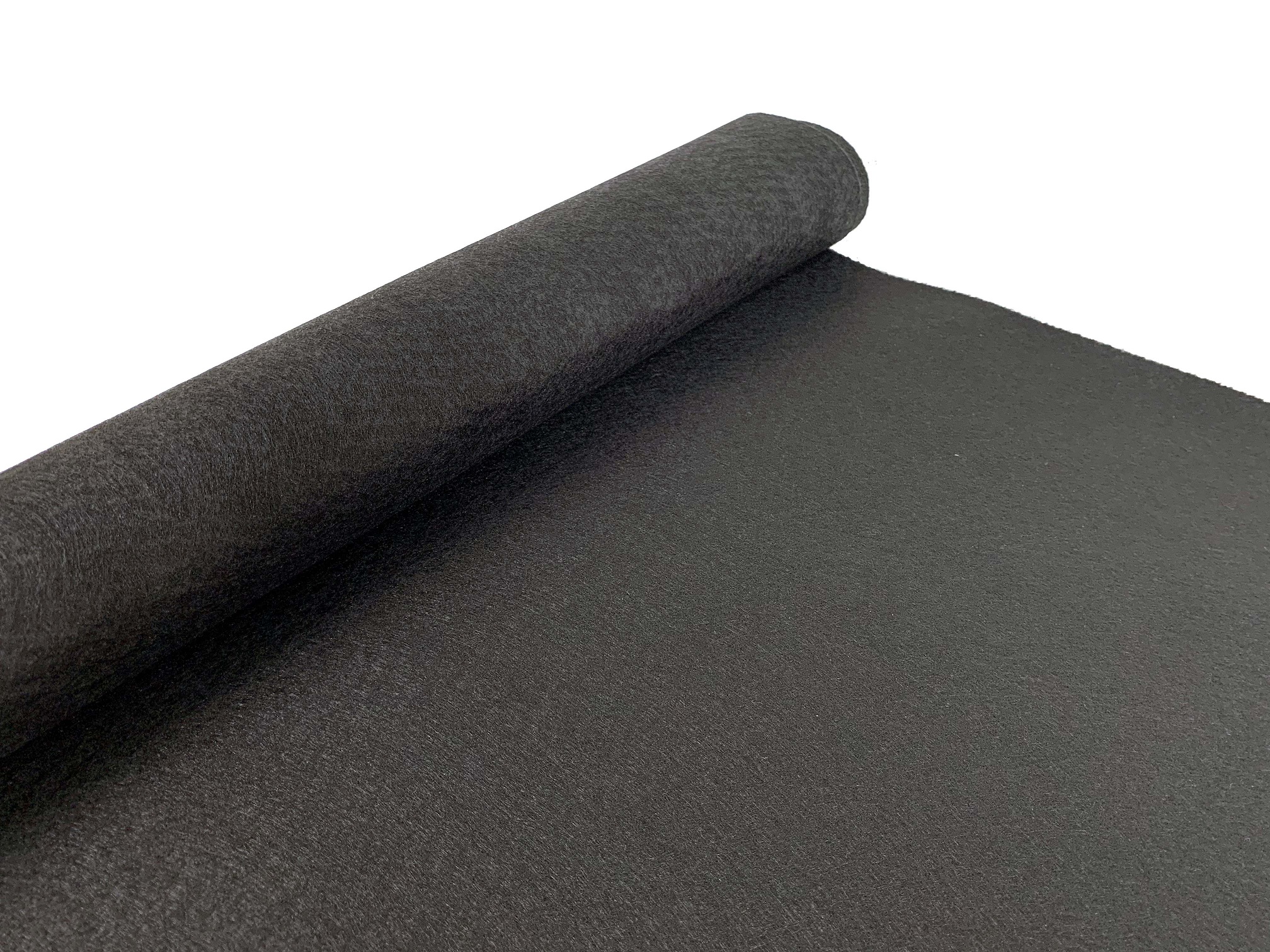
Nonwoven Geotextile Fabric creates a stable and permeable separation layer between soil and aggregate. It helps keep the upper gravel layer in its intended position while reducing the movement of fine soil into drainage voids.
If Gravel Needs Constant Replenishment, the Problem May Be Below the Surface
If a gravel driveway or road needs new aggregate at regular intervals, it is worth looking at the condition of the base underneath.
Several changes may be taking place.
Gravel sinks downward.
Soft soil deforms under vehicle loads, allowing aggregate to gradually penetrate the subgrade.
Fine soil moves upward.
In wet conditions, fine particles can migrate into the spaces between the stones, reducing the open structure of the gravel layer.
Drainage spaces become blocked.
Once gravel becomes contaminated with soil, water moves more slowly through the layer, increasing the risk of softening and water accumulation after rainfall.
The effective base becomes thinner.
The aggregate has not physically disappeared, but much of it is no longer concentrated within the intended base thickness.
If these problems are addressed only by adding more gravel, the improvement may remain limited to the surface. The purpose of Nonwoven Geotextile Fabric is to reduce continued mixing between the upper and lower material layers.
Nonwoven Geotextile Fabric Solves Different Problems in Different Ground Conditions
Nonwoven geotextile does not have only one fixed function. Different applications place different demands on the material.
Soft Subgrade: Reducing Aggregate Penetration
When gravel is placed directly over soft, wet, or fine-grained soil, repeated loading can push the aggregate into the subgrade.
Installing nonwoven geotextile between the two materials creates a continuous separation layer and reduces direct penetration of the stone into the soft soil.
This is particularly useful for:
- Gravel roads
- Temporary construction roads
- Residential driveways
- Parking areas
- Equipment access routes
In these applications, installation strength, puncture resistance, and material stability are important product considerations.
Drainage Systems: Let Water Through, Keep Soil Back
Drainage trenches, French drains, and gravel drainage layers do not usually fail because there is too little stone. A more common problem is fine soil gradually filling the open spaces between the aggregate.
The fibrous structure of nonwoven geotextile allows water to pass through while helping limit the movement of fine particles.
The key requirement here is a balance between filtration and permeability.
If the material restricts water too much, drainage performance may decline. If the pore structure is too open, fine soil can migrate into the drainage layer.
For this reason, drainage geotextile should not be selected by fabric weight alone.
Landscape Gravel: Maintaining Clear Material Layers
When decorative gravel is installed directly over natural soil, the stones may gradually sink while soil moves upward between them.
A layer of nonwoven geotextile helps keep the gravel and soil separated, maintaining a cleaner and more defined base structure.
For this type of application, important characteristics include:
- Installation flexibility
- Water permeability
- Material stability
- Roll width
- Ease of cutting and overlapping
The same Nonwoven Geotextile Fabric can therefore serve different purposes depending on the application.
Why Is Needle-Punched Fabric Suitable for Separation Without Sealing the Ground?
Nonwoven geotextile is commonly manufactured using a needle-punching process. Fibers are mechanically entangled to form a three-dimensional structure.
Unlike ordinary plastic sheeting, this structure is not completely closed.
Numerous small, interconnected pathways remain within the fabric, allowing water to pass through while the material still provides physical separation.
Within a base structure, needle-punched geotextile can:
- Reduce mixing between soil and aggregate
- Allow water to pass through the layer
- Limit fine particles entering the gravel
- Provide cushioning between sharp aggregate and the underlying surface
- Help maintain the effective thickness of the aggregate layer
This combination explains why needle-punched nonwoven geotextile is widely used where separation, filtration, and drainage are required together.
Choosing Nonwoven Geotextile Is About More Than GSM
Fabric weight is an important specification, but simply comparing GSM values can overlook the properties that actually determine performance.
A more practical approach is to first consider where the fabric will be installed, what material will be above it, what lies below it, and what stresses it will experience.
|
Ground Condition or Application |
Product Properties to Focus On |
| Gravel over soft soil | Puncture resistance, tear resistance, separation stability |
| Drainage trench | Permeability, filtration structure |
| Driveway and parking area | Strength, installation durability, long-term stability |
| Landscape gravel | Flexibility, permeability, easy installation |
| Pond liner protection | Cushioning, thickness, puncture resistance |
| Large base areas | Roll width, roll length, number of overlaps |
In other words, a heavier geotextile is not automatically better for every project.
For drainage applications, water flow and filtration are more important. For gravel roads and traffic areas, installation strength and resistance to aggregate pressure may require greater attention.
Roll Dimensions Also Affect Final Performance
Fabric weight and strength often receive the most attention, while roll width is easily overlooked.
In large road, parking, or foundation projects, narrow rolls create more seams.
The more seams there are, the more complicated installation becomes, and the greater the possibility of local contact between soil and aggregate.
Wider rolls are generally more practical for:
- Large base areas
- Long road sections
- Parking areas
- Large landscape projects
Narrower rolls can be easier to handle in:
- Drainage trenches
- Garden areas
- Irregular boundaries
- Small driveways
Roll width and length are therefore not simply packaging details. They directly affect installation efficiency and the continuity of the separation layer.
A More Practical Way to Select Nonwoven Geotextile Fabric
Instead of starting with a single specification, it is more useful to begin with the actual problem on site.
If gravel keeps sinking:
Focus on separation performance, puncture resistance, and installation strength.
If the drainage layer becomes clogged with soil:
Focus on filtration structure and water permeability.
If the installation area is large:
Consider roll width, roll length, and the number of overlaps.
If a liner or other vulnerable layer lies underneath:
Give greater attention to cushioning and protection.
If the soil remains wet for long periods:
The geotextile must provide separation without becoming a barrier to water movement.
This application-based approach is more useful than asking only, “What GSM should I use?”
Vinner Nonwoven Geotextile Fabric
Vinner provides needle-punched Nonwoven Geotextile Fabric for base separation, drainage filtration, road construction, gravel layers, landscape projects, and protective applications.
For road and gravel base applications, greater attention can be given to material strength and puncture resistance. For drainage projects, permeability and filtration performance become more important. For landscaping and general ground separation, roll size and installation conditions can be matched to the project area.
A stable needle-punched structure and multiple specification options allow the geotextile to provide more targeted separation, filtration, and protection according to different ground conditions.
The Real Question Is Not Whether to Use Fabric, but Whether the Base Can Stay Separated
The real value of nonwoven geotextile is not simply adding another layer between soil and gravel.
It addresses a longer-term problem: how to reduce the gradual mixing of upper aggregate and lower soil under years of loading, moisture, and ground movement.
When the gravel layer maintains its effective thickness, drainage voids remain less contaminated by fine soil, and the different material layers stay relatively stable, the complete base structure can perform more consistently.
For gravel roads, driveways, parking areas, drainage systems, and landscape bases, the right Nonwoven Geotextile Fabric should be matched to actual ground conditions rather than selected only by fabric weight or thickness.
FAQ
1. Is Nonwoven Geotextile Fabric suitable for soft soil?
Yes. It can help reduce gravel penetration into soft subgrade while maintaining water permeability.
2. Will nonwoven geotextile block drainage?
A suitable nonwoven geotextile has a permeable structure that allows water to pass while helping limit fine soil migration into the aggregate layer.
3. Can the same geotextile be used for road bases and drainage trenches?
Not always. Road bases generally place greater emphasis on strength and separation, while drainage trenches require suitable filtration and permeability. The specification should match the actual application.
4. Why is roll width important for large geotextile projects?
Wider rolls reduce the number of overlaps, helping create a more continuous separation layer while also improving installation efficiency over large areas.
Post time: Aug-12-2026