
In modern civil engineering projects, failure is rarely caused by one major issue. More often, it comes from small but continuous problems such as soil mixing, poor drainage, subgrade instability, or water pressure buildup. These issues gradually weaken infrastructure and increase long-term maintenance costs.
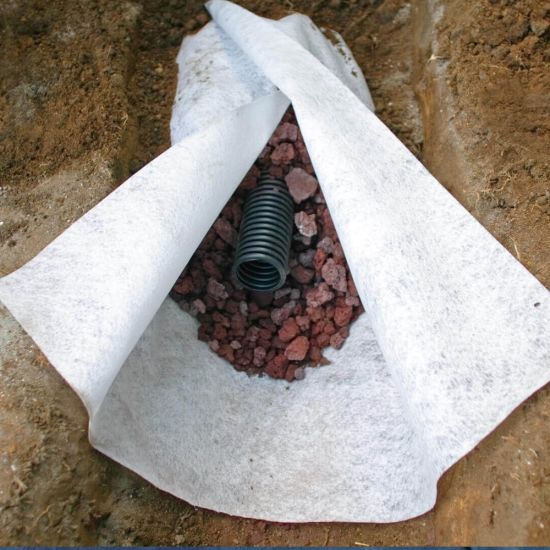
Needle punched nonwoven geotextiles are not just materials placed under soil layers. They are engineered problem-solving layers designed to control how soil and water interact inside construction systems.
This is why they are widely adopted in roads, railways, landfills, and drainage systems across global infrastructure projects.
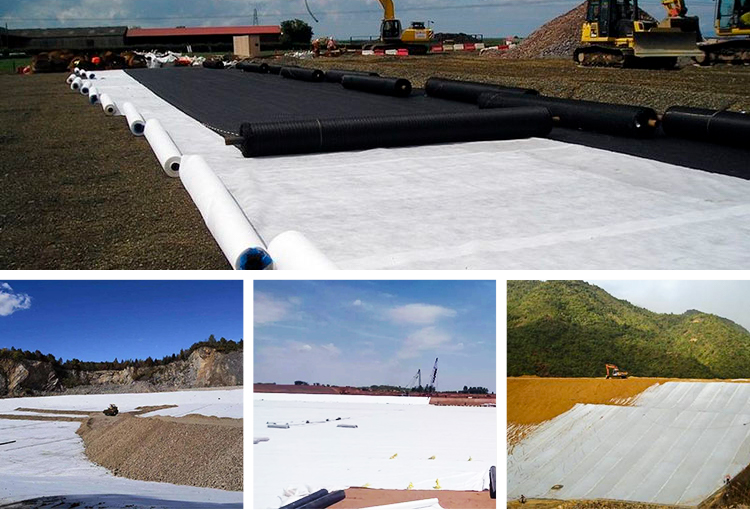
Why Do Roads and Foundations Fail Without Geotextile Separation?
One of the most common issues in road construction is the mixing of subgrade soil with aggregate layers. When fine soil particles migrate upward into gravel layers, the structural strength of the road decreases significantly.
At the same time, water accumulation in weak soil areas creates soft zones that lead to deformation, cracking, and uneven settlement.
Needle punched nonwoven geotextiles are designed to interrupt these failure mechanisms by acting as a functional separation and filtration layer.
● Prevents fine soil particles from migrating into aggregate layers
● Maintains structural integrity of base and sub-base layers
● Reduces deformation caused by water saturation
● Improves load distribution across weak ground conditions
Instead of simply reinforcing the structure, the geotextile controls the internal behavior of the soil system.
What Makes Needle Punched Structure Different from Other Geotextiles?
The performance of needle punched nonwoven geotextiles comes from their mechanical bonding process. Thousands of barbed needles repeatedly punch through fiber layers, entangling them into a three-dimensional structure.
Unlike woven geotextiles that rely on interlaced yarns, this structure creates random fiber bonding, which improves water flow and filtration behavior.
This leads to a material that performs differently in real engineering conditions:
● Multi-directional strength instead of single-axis reinforcement
● High permeability allowing controlled water movement
● Flexible structure that adapts to uneven terrain
● Consistent filtration performance under pressure
Because of this structure, it behaves more like a functional engineering filter than a traditional fabric.
How Does It Improve Drainage Systems in Real Projects?
Drainage failure is one of the most expensive long-term problems in infrastructure development. When water is trapped in soil layers, it increases pore pressure and reduces soil stability.
Needle punched geotextiles solve this problem by acting as a controlled filtration interface.
In drainage applications, it performs three critical roles:
● Allows water to pass freely through the fabric
● Prevents soil particles from clogging drainage systems
● Maintains long-term flow efficiency under pressure
This is especially important in railway ballast systems, retaining walls, and landfill drainage layers where clogging can lead to system failure.
Instead of acting as a passive layer, the geotextile actively manages water movement inside the structure.
Why Is It Used in Soft Soil and Weak Ground Engineering?
Soft soil is one of the most challenging conditions in civil engineering. It has low bearing capacity, high water content, and poor stability under load.
Without proper treatment, construction on such ground leads to settlement, cracking, or even structural failure.
Needle punched nonwoven geotextiles help engineers stabilize these conditions by distributing stress and improving soil behavior.
Key benefits in soft ground applications:
● Reduces localized stress concentration
● Improves load distribution across wide areas
● Prevents soil pumping under repeated loading
● Enhances stability of embankments and roadbeds
In many cases, it allows construction to proceed on otherwise unsuitable ground without full soil replacement.
Where Are These Geotextiles Most Commonly Used?
Rather than being limited to one type of project, needle punched geotextiles are used across multiple infrastructure systems.
Typical applications include:
● Highway and road base stabilization systems
● Railway ballast separation and drainage layers
● Landfill liner protection and filtration systems
● Retaining wall back drainage structures
● Coastal protection and erosion control systems
● Airport runway foundation reinforcement layers
Each application uses the same core principle: control soil movement and water behavior simultaneously.
What Performance Factors Matter Most in Engineering Use?
In real construction projects, engineers do not evaluate geotextiles based on appearance. They focus on measurable performance indicators that affect long-term durability.
Key performance factors include:
● Tensile strength for load resistance
● Puncture resistance against sharp aggregate materials
● Permeability for efficient water drainage
● Creep resistance under long-term stress
● Chemical stability in soil environments
● Durability under buried conditions for decades
These parameters determine whether the material will perform reliably over the entire lifecycle of the infrastructure.
Why It Is Becoming a Standard Material in Global Infrastructure Projects
The increasing adoption of needle punched nonwoven geotextiles is driven by cost efficiency and lifecycle performance optimization.
Instead of building thicker structural layers or over-designing foundations, engineers now use geotextiles to improve performance with minimal material cost.
This shift is especially visible in:
● Highway expansion projects in developing countries
● Large-scale landfill and environmental protection systems
● Flood control and drainage infrastructure upgrades
● Railway modernization and ballast improvement systems
The material is no longer optional in many designs; it is becoming a standard engineering layer.
Conclusion
Needle punched nonwoven geotextiles are not just construction materials; they are functional engineering layers that solve real problems related to soil instability, water control, and structural failure.
By improving separation, filtration, and drainage simultaneously, they allow infrastructure projects to become more efficient, cost-effective, and durable.
As global infrastructure demand continues to grow, these materials are becoming an essential part of modern civil engineering design rather than an optional component.
FAQ:
1. What is the main engineering purpose of needle punched geotextiles?
They are used to separate soil layers, improve drainage, filter water flow, and reinforce weak ground conditions in civil engineering projects.
2. Why are they preferred over woven geotextiles in drainage systems?
Because their random fiber structure allows better water permeability and reduces clogging risk compared to woven structures.
3. Can they replace traditional soil stabilization methods?
In many cases, yes. They reduce the need for soil replacement by improving load distribution and stability of weak ground.
4. How long do they perform in buried conditions?
When properly installed, they can remain effective for decades, depending on soil type, load conditions, and environmental exposure.
Post time: Jun-12-2026