
Geotextile Fabric for Erosion Control is mainly used in areas where rainfall, surface runoff, flowing water, or exposed ground can cause soil erosion. Typical applications include slopes, drainage channels, embankments, landscaped areas, and drainage outlets that are repeatedly exposed to water flow.
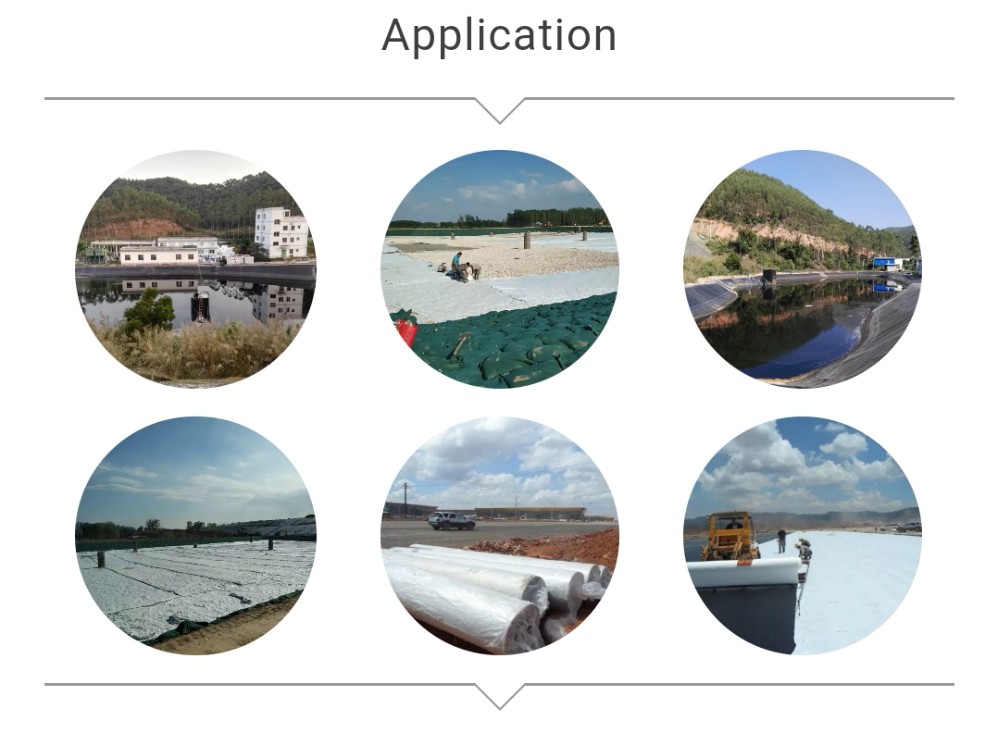
Its purpose is not simply to cover the soil. Instead, geotextile fabric forms a stable filtration and separation layer between the soil and the gravel, riprap, stone, or other protective materials above it. This allows water to pass through while helping reduce the movement of fine soil particles.
In real projects, the value of Geotextile Fabric for Erosion Control is often seen over time. Repeated rainfall, concentrated runoff, and changing soil moisture can gradually alter the ground surface, while geotextile fabric helps protect the interface between the soil and the protective layer above.
Why Is Geotextile Fabric for Erosion Control More Than Just a Soil Cover?
Soil erosion usually does not happen all at once. In many cases, it begins with small amounts of fine soil being carried away by raindrops or surface runoff. As the surface becomes less even, small channels may form, causing more water to concentrate in the same locations during later rainfall.
Over time, these minor changes can develop into visible rills, exposed roots, washed-out areas, or local slope instability.
Erosion risk is usually higher when several conditions occur together:
- Steep slopes: Water can accelerate downslope and carry more soil particles.
- Loose soil: Weak particle bonding makes the surface easier to erode.
- Limited vegetation: Without root systems and surface cover, soil is directly exposed to rainfall.
- Concentrated runoff: Drainage outlets, channels, and low points can experience stronger water flow.
For this reason, Geotextile Fabric for Erosion Control is not intended to stop water from moving. Its role is to help control soil movement while water passes through the protected structure.
How Does Geotextile Fabric Protect Soil Beneath Gravel or Riprap?
In many slope, drainage channel, and outlet protection projects, gravel, stone, or riprap is placed over the soil to reduce the impact of flowing water.
If coarse stone is placed directly on loose soil, fine particles may gradually wash upward or outward through the open spaces between the stones. At the same time, the stone itself may slowly press into softer ground, causing the protective layer to settle or mix with the soil below.
A geotextile layer creates a clearer interface between these materials:
Soil → Geotextile Fabric → Gravel or Riprap Protection Layer
In this structure, the soil provides the foundation, the geotextile provides filtration and separation, and the stone layer absorbs most of the hydraulic impact.
This layered arrangement is generally more stable than simply adding more stone because it helps reduce long-term mixing between the soil and coarse aggregate.
Erosion Control Is Not About Blocking Water Completely
One common misunderstanding in erosion-control projects is that less permeability is always better.
In reality, if water is completely blocked while moisture inside the soil or slope has no suitable drainage path, pressure can build beneath the protective layer. This may create new stability problems rather than solving the original erosion issue.
Nonwoven geotextile fabric has a porous fiber structure that can allow water to pass while helping restrict excessive movement of fine soil particles.
For erosion-control applications, geotextile fabric generally needs to balance two functions:
- Water transmission: It should allow water to move through the structure and reduce unnecessary water pressure.
- Soil retention: Its pore structure should help limit the movement of fine soil into or through the protective layer.
The correct balance depends on the soil type and the expected intensity of water flow.
Why Do Slopes Place Greater Demands on Geotextile Fabric?
Water behaves differently on a slope than on flat ground. As slope angle increases, runoff can gain speed, which increases its ability to detach and transport soil particles.
This means slope protection is not simply a question of whether the ground is covered. The entire protective system must remain stable.
Geotextile fabric is often installed beneath gravel, riprap, or other surface protection to help maintain separation between the soil and the material above. Before the upper layer is completed, the fabric itself must also remain in position without shifting, folding, or becoming exposed.
Important slope conditions include:
- The actual slope angle;
- Whether runoff is dispersed or concentrated;
- The type of protective material installed above the fabric;
- How stable the soil remains when wet;
- Whether vegetation will later provide additional stabilization.
These factors influence both the geotextile structure and the overall erosion-control design.
Why Are Drainage Outlets Especially Vulnerable to Erosion?
Severe erosion does not always affect an entire slope. In many cases, it is concentrated in a small area such as a pipe outlet, culvert outlet, or channel end.
These locations have one thing in common: a large amount of water is concentrated into a relatively small area.
Fast-moving water can quickly remove exposed soil and create scour holes, especially during heavy rainfall. For this reason, larger stone or riprap is often placed around outlets to dissipate the energy of the flow.
Geotextile fabric installed beneath the stone can help reduce the loss of fine soil through the gaps while still allowing water to move through the structure.
A complete outlet protection system therefore often works as a combination of layers:
- The soil provides the foundation;
- The geotextile provides filtration and separation;
- The stone layer dissipates water energy;
- The grading and drainage layout guide water toward a safer path.
This approach is generally more reliable than simply placing stone at the outlet.
Different Soils Require Different Geotextile Performance
Not all erodible soils behave in the same way.
Sandy soil may drain relatively quickly but can lose particles easily under flowing water. Silty soil contains finer particles and can be highly sensitive to erosion, while clay may appear stable when dry but become soft and weaker when saturated.
For this reason, Geotextile Fabric for Erosion Control should not be selected only by GSM or thickness.
A more practical approach is to match site conditions with the properties that matter most:
|
Soil or Site Condition |
Geotextile Properties to Consider |
| Fine silty soil | Filtration performance and suitable pore structure |
| Sandy soil | Soil retention and separation |
| Saturated soft ground | Mechanical stability and puncture resistance |
| Riprap or coarse aggregate above | Puncture resistance and installation durability |
| Strong water movement | Permeability and long-term filtration stability |
| Large slope area | Roll width, continuous coverage, and installation stability |
This is why soil type, water movement, and the protective layer above the geotextile are often more useful than relying on GSM alone.
Why Is Continuous Geotextile Coverage Important?
Water often begins eroding the weakest point in a protective system.
If there are large gaps between geotextile sections, water may directly reach exposed soil. Once fine particles begin moving through these gaps, the affected area may gradually expand beneath the surrounding stone or gravel layer.
For this reason, continuity is particularly important on slopes, drainage channels, and outlet protection areas.
On larger sites, suitable roll widths can also reduce the number of unnecessary joints, helping create a more continuous filtration and separation layer while improving installation efficiency.
Geotextile Fabric Cannot Replace Proper Drainage Design
Geotextile fabric can help control soil migration, but it cannot solve every erosion problem by itself.
If large volumes of runoff continue to strike an unprotected slope, if drainage water has no safe outlet, or if the protective stone above is too light for the actual flow conditions, erosion may continue even when geotextile fabric is installed.
A more stable erosion-control system usually combines:
- Appropriate grading and slope design;
- Effective drainage paths;
- A geotextile filtration and separation layer;
- Gravel, stone, riprap, vegetation, or other surface protection;
- Additional protection in high-energy areas such as drainage outlets.
The geotextile works best as a functional layer within this system rather than as a substitute for other erosion-control measures.
Vinner Geotextile Fabric for Erosion Control
Vinner provides PET and PP geotextile products for erosion control, slope protection, drainage, landscaping, soil separation, and related ground applications.
Different fabric weights, thicknesses, roll widths, and roll lengths can be matched to different site conditions. Where riprap or coarse aggregate is placed over the fabric, puncture resistance and installation strength may require greater attention. Where filtration is the main function, permeability and soil-retention performance become more important.
For large slope projects, suitable roll dimensions can also help reduce the number of joints and improve coverage continuity.
Conclusion
The main purpose of Geotextile Fabric for Erosion Control is not to stop water from moving, but to create a stable filtration and separation interface between water, soil, and the protective layer above.
On slopes, it can help maintain separation beneath gravel or stone. Around drainage outlets, it can reduce soil loss beneath riprap. In landscaping and drainage areas, it can limit soil migration while still allowing water to pass.
Effective erosion control comes from considering geotextile fabric together with site soil, runoff conditions, drainage design, and surface protection as one complete system.
FAQ
Can Geotextile Fabric solve erosion problems by itself?
Usually not. Geotextile fabric mainly provides filtration, separation, and soil-retention functions. Effective erosion control may also require drainage design, gravel, riprap, vegetation, or other surface protection.
Is nonwoven geotextile suitable for erosion-control applications?
Yes, when its permeability, filtration, and mechanical properties are suitable for the soil and water conditions of the site, nonwoven geotextile can be used in many erosion-control and soil-stabilization applications.
Why is geotextile fabric installed under riprap?
Geotextile fabric helps reduce the movement of fine soil into the gaps between riprap stones or its loss under flowing water, while still allowing water to move through the protected structure.
Is thicker geotextile always better for erosion control?
No. Thickness is only one factor. Filtration performance, permeability, puncture resistance, soil particle size, water-flow intensity, and the type of protective material above should all be considered together.
Post time: Aug-27-2026