
Geotextile Fabric for Drainage is used in drainage systems where water needs to pass through the structure while surrounding soil particles remain controlled. Its role is not simply to make drainage faster. A well-matched geotextile helps protect gravel layers, drainage pipes, and other drainage media from gradual contamination by fine soil, allowing the system to maintain useful flow paths over a longer period.
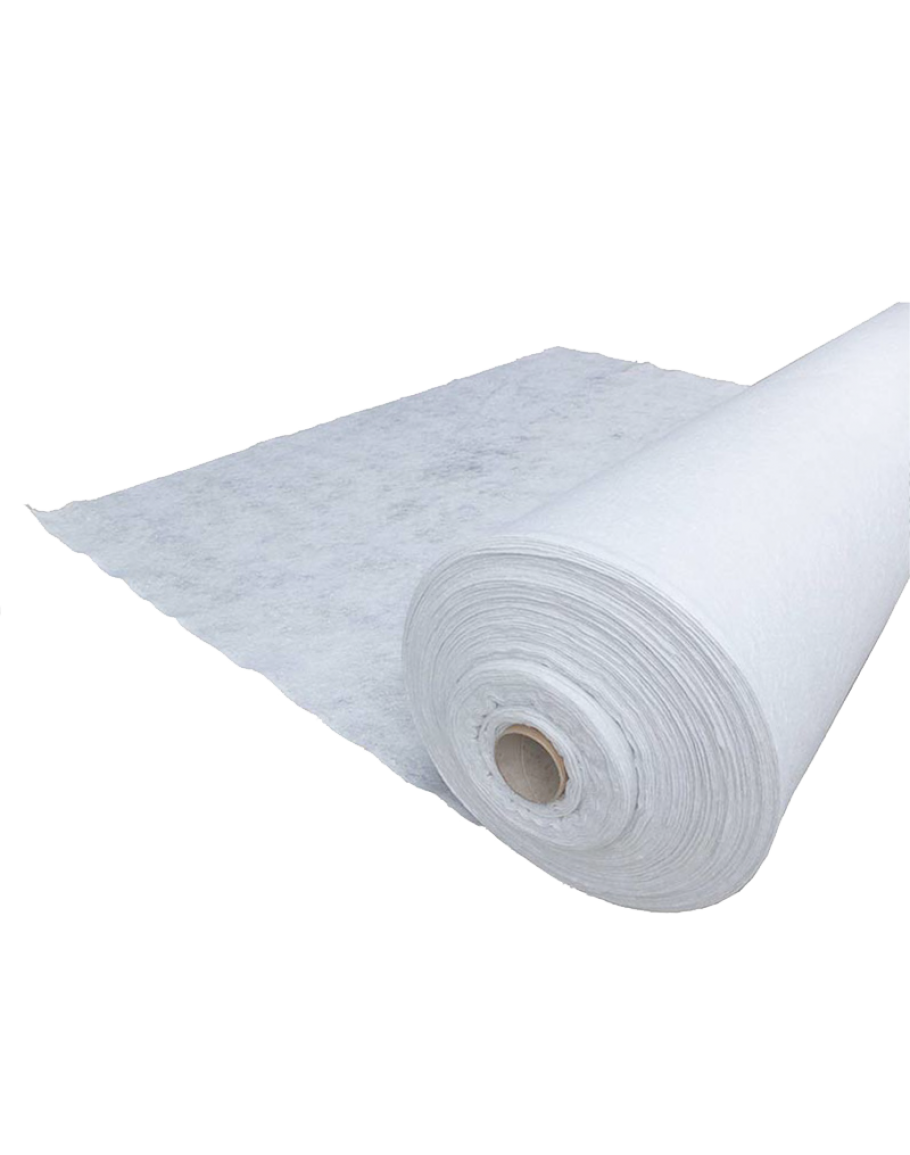
In many drainage failures, the original problem is not a lack of gravel or pipe capacity. Instead, fine soil slowly migrates into the drainage layer, fills the voids between aggregate, and reduces the space available for water movement. This is why selecting suitable Geotextile Fabric for Drainage is closely connected to filtration, soil retention, permeability, and long-term system stability.
Why Drainage Systems Lose Performance Over Time
A newly installed drainage trench often works well because the aggregate layer contains open voids that allow water to move freely. The problem begins when surrounding soil starts entering those voids.
This process may happen slowly. Fine particles can move with groundwater or surface infiltration, especially in silty, sandy, or saturated soils. As more soil enters the gravel layer, the drainage structure becomes denser and less efficient. Water may then move more slowly, remain in the soil longer, or begin finding alternative paths.
A drainage geotextile creates a controlled interface between the soil and the drainage medium. Instead of allowing direct contact between fine soil and coarse aggregate, the fabric helps retain soil particles while allowing water to pass.
The practical value is therefore not only improved drainage at installation, but better protection of the drainage layer over time.
Geotextile Fabric for Drainage Must Balance Water Flow and Soil Retention
One of the most important points in drainage design is that higher permeability alone does not automatically mean better performance.
If a geotextile has a structure that is too open for the surrounding soil, fine particles may migrate through the fabric and enter the drainage layer. If the structure is too restrictive, water movement may become less efficient than required.
A suitable Geotextile Fabric for Drainage needs to balance two functions:
- allowing sufficient water transmission through the fabric;
- limiting excessive movement of surrounding soil particles.
This balance is influenced by soil particle size, water conditions, fabric pore structure, and the way the drainage system is designed.
For this reason, drainage geotextile should not be selected only according to GSM or thickness. Those values are useful, but they do not fully describe filtration behavior.
Different Drainage Applications Create Different Geotextile Requirements
The same geotextile specification is not automatically suitable for every drainage system because the main source of water and the surrounding soil conditions can be very different.
French Drains and Gravel Trenches
In a French drain, the geotextile is commonly used to separate surrounding soil from the gravel drainage zone. The main concern is preventing fine soil from gradually filling the aggregate voids.
In this application, filtration stability and sufficient permeability are usually more important than simply choosing the heaviest fabric available.
Retaining Wall Drainage
Behind a retaining wall, water needs a reliable route away from the soil mass. If soil migrates into the drainage stone, the drainage layer may become less effective and water pressure can increase behind the wall.
Here, geotextile performance is closely related to long-term filtration and continuity around the drainage zone.
Landscape and Garden Drainage
Landscape drainage often deals with softer soils, planting areas, and lower mechanical loads, but filtration remains important. A drainage fabric can help maintain separation between soil and gravel while supporting water movement away from saturated areas.
Drainage Around Structures
Where drainage aggregate is placed around foundations, buried structures, or utility areas, geotextile fabric can help reduce soil migration into the drainage layer. In these situations, installation continuity and correct placement around corners or transitions become especially important.
Soil Type Changes the Filtration Challenge
The surrounding soil strongly influences how Geotextile Fabric for Drainage needs to perform.
Sandy soils may allow water to move relatively quickly, but loose particles can still migrate under repeated flow. Silty soils contain smaller particles and may require greater attention to filtration stability. Soft saturated ground can add another challenge because the fabric may need enough mechanical strength to remain stable during installation.
A practical way to evaluate the situation is to connect soil conditions with the main product requirement:
|
Site Condition |
Main Geotextile Priority |
| Fine silty soil | Filtration stability and suitable pore structure |
| Sandy soil | Soil retention with adequate permeability |
| Saturated soft ground | Filtration plus installation strength |
| Coarse aggregate contact | Puncture resistance and durability |
| High water movement | Stable permeability and filtration |
| Large drainage area | Roll width and installation continuity |
This helps prevent a common problem: choosing one geotextile specification simply because it has worked in another drainage project with completely different soil conditions.
Why Needle-Punched Nonwoven Geotextile Is Common in Drainage
Needle-punched nonwoven geotextile has a three-dimensional fiber structure with interconnected voids, which allows water to move through the fabric while the fiber network helps retain surrounding soil.
Its flexibility is also useful around uneven ground, drainage trenches, and irregular aggregate surfaces. Compared with a rigid barrier, the material can adapt more easily to changes in the underlying surface while continuing to perform as a filtration and separation layer.
However, not every nonwoven geotextile has the same performance. Fiber type, fabric weight, thickness, pore structure, tensile strength, puncture resistance, and manufacturing consistency all influence the final result.
The product should therefore be matched to the drainage function rather than selected only by the term “nonwoven.”
When Custom Geotextile Specifications Become More Useful
Standard geotextile products can meet many drainage applications, but some projects benefit from more specific matching.
For example, a large drainage trench may require wider rolls to reduce joints, while a rough aggregate layer may place greater emphasis on puncture resistance. A fine soil filtration application may require more attention to permeability and pore structure than to maximum fabric weight.
This is where product specification should follow the actual drainage function.
Useful information to confirm before selecting a drainage geotextile includes:
- surrounding soil type;
- expected water movement;
- aggregate size;
- installation surface;
- required roll width and length;
- whether the fabric also needs to provide protection or separation.
Providing these conditions makes it easier to match the fabric structure to the project instead of relying on a general-purpose specification.
Vinner Geotextile Fabric for Drainage
Vinner provides Geotextile Fabric for Drainage in PET and PP needle-punched nonwoven structures for filtration, separation, drainage protection, and other ground applications.
Different fabric weights, thicknesses, roll widths, and roll lengths can be matched to different site conditions. For drainage systems involving fine soil, filtration and permeability can receive greater attention, while applications involving coarse stone or more demanding installation conditions may require stronger puncture and mechanical performance.
For projects with specific soil, drainage, or roll-size requirements, Vinner can support specification matching and customized geotextile solutions based on the intended application.
A Better Drainage Layer Starts With the Soil–Aggregate Interface
Geotextile Fabric for Drainage is most effective when it is treated as part of the drainage system rather than as an additional sheet placed around gravel.
Its main value lies at the interface between soil and drainage media, where uncontrolled soil migration can gradually reduce system performance. By combining suitable filtration, permeability, mechanical stability, and installation continuity, the geotextile helps protect the drainage path that the system depends on.
For drainage projects, the more useful question is not simply “How heavy should the fabric be?” but “What does the fabric need to control in this soil and drainage condition?” Once that is clear, the required material structure becomes much easier to determine.
FAQ
What is Geotextile Fabric for Drainage used for?
It is used to separate soil from drainage aggregate while allowing water to pass through the structure. Typical applications include French drains, retaining wall drainage, landscape drainage, gravel trenches, and drainage around structures.
Is thicker geotextile always better for drainage?
No. Thickness and GSM are only part of the specification. Filtration performance, permeability, pore structure, puncture resistance, and soil conditions also need to be considered.
Can nonwoven geotextile be used around drainage stone?
Yes. Needle-punched nonwoven geotextile is commonly used around drainage aggregate because it can provide filtration and separation while allowing water movement, provided the product is suitable for the surrounding soil and application.
Can Vinner provide custom Geotextile Fabric for Drainage?
Yes. Vinner can provide different PET and PP geotextile configurations, fabric weights, roll dimensions, and application-based options according to drainage conditions and project requirements.
Post time: Sep-04-2026