
Geotextiles play a crucial role in sustainable land management by providing reliable, long-term solutions for erosion control, soil stabilization, drainage improvement, and environmental protection. As infrastructure development and environmental conservation increasingly intersect, geotextiles have become essential materials in civil engineering, landscaping, agriculture, and environmental projects.
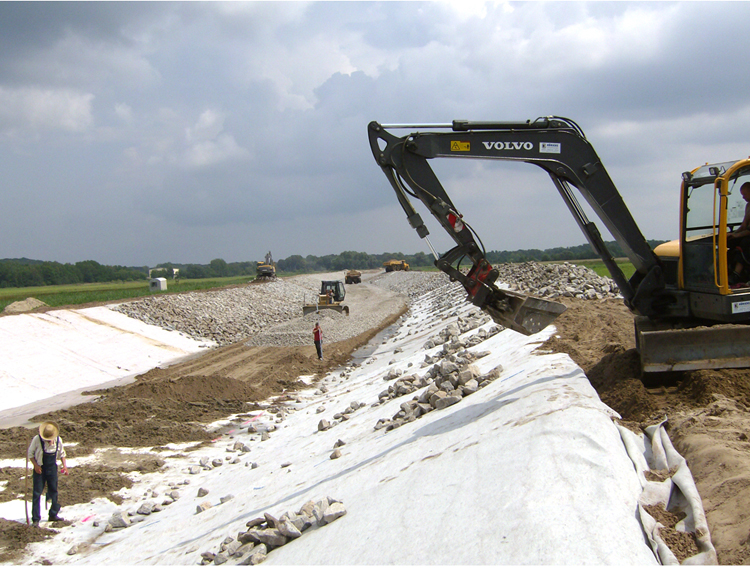
These synthetic textile materials are engineered to perform under diverse environmental conditions while offering a versatile, cost-effective, and environmentally responsible approach to managing soil-related challenges. By improving soil performance and extending the lifespan of land-based structures, geotextiles contribute significantly to sustainable land management practices worldwide.
The Role of Geotextiles in Land Management
Geotextiles function as protective and functional layers within soil systems, enhancing stability, controlling erosion, and supporting vegetation growth. Typically manufactured from synthetic fibers such as polyester or polypropylene, geotextiles are designed to deliver high tensile strength, durability, chemical resistance, and controlled permeability. These properties allow them to perform critical roles including separation, filtration, drainage, reinforcement, and protection.
In land management applications, geotextiles are widely used in road construction, drainage systems, embankments, slope protection, riverbank reinforcement, and landscaping projects. By separating different soil layers, geotextiles prevent contamination and mixing, which can otherwise compromise structural integrity. Their filtration capability allows water to pass through while retaining fine soil particles, maintaining soil structure and preventing erosion. As a result, geotextiles help preserve land integrity, reduce maintenance requirements, and deliver long-term environmental and economic benefits.
Benefits of Geotextiles
Erosion Control
Geotextiles are highly effective in preventing soil erosion caused by water runoff, wind exposure, and surface movement. When installed on slopes, embankments, or shorelines, they reinforce the soil structure and protect it from displacement. This is particularly important in areas exposed to heavy rainfall or flooding, where uncontrolled erosion can lead to land degradation and infrastructure damage.
Soil Stabilization
By distributing loads and reinforcing weak soils, geotextiles significantly improve soil stability. They reduce the risk of landslides, surface deformation, and settlement, especially in areas with poor soil conditions. This stabilization capability makes geotextiles essential in projects such as retaining walls, road bases, and foundation reinforcement.
Water Management
Geotextiles support effective water management by facilitating drainage while preventing soil loss. Their permeable structure allows water to flow freely, reducing hydrostatic pressure and preventing waterlogging. Proper moisture control enhances plant growth, protects soil structure, and improves the overall performance of land management systems.
Environmental Sustainability
Geotextiles contribute to sustainability by reducing the need for excessive excavation, natural aggregates, and chemical soil treatments. By extending the lifespan of infrastructure and minimizing environmental disruption, geotextiles support eco-friendly construction and land management practices.
Applications of Geotextiles in Sustainable Land Management
Geotextiles are widely used across various land management and civil engineering applications. Their versatility makes them suitable for both large-scale infrastructure projects and smaller environmental or landscaping initiatives.
|
Application |
Description |
| Road construction | Reinforcing and separating soil layers under road surfaces |
| Erosion control | Preventing soil loss on slopes, embankments, and riverbanks |
| Landfill capping | Covering landfill sites to prevent leachate leakage and soil contamination |
| Retaining wall construction | Reinforcing soil structures to improve stability and load-bearing capacity |
| Drainage systems | Enhancing water flow while preventing soil particle migration |
| Landscaping | Supporting soil stability and vegetation growth in green spaces |
Q&A: Common Questions about Geotextiles
Q: What are the different types of geotextiles available?
A: Geotextiles are generally classified based on manufacturing method and function. Common types include woven geotextiles, which offer high tensile strength for reinforcement; non-woven geotextiles, which provide excellent filtration and drainage; and composite geotextiles, which combine multiple functions such as separation, filtration, and reinforcement in a single product.
Q: How are geotextiles installed in land management projects?
A: Geotextiles are typically placed on a prepared soil surface and secured using anchor pins, stakes, or overlaps depending on the application. Proper surface preparation, correct placement, and adherence to installation guidelines are essential to ensure long-term effectiveness and performance.
Q: How long do geotextiles last in outdoor environments?
A: High-quality geotextiles are designed for long-term use and can last for decades when properly installed. Their resistance to UV exposure, chemicals, and biological degradation ensures durability even in harsh environmental conditions.
Conclusion
Geotextiles are a fundamental solution for sustainable land management, offering proven benefits such as erosion control, soil stabilization, water management, and environmental protection. Their ability to enhance soil performance while reducing environmental impact makes them indispensable in modern land management and infrastructure projects. Whether applied in road construction, erosion mitigation, drainage systems, or landscaping, geotextiles play a vital role in preserving land integrity, improving safety, and supporting sustainable development goals.
Product Selection Recommendations
When selecting geotextiles for land management projects, it is important to evaluate factors such as application requirements, soil conditions, tensile strength, permeability, environmental exposure, and installation methods. Different projects may require different types of geotextiles, whether woven, non-woven, or composite. Consulting with experienced geotextile manufacturers or suppliers can help ensure the correct product selection. Choosing high-quality geotextiles not only enhances project performance but also ensures long-term reliability, cost efficiency, and sustainability in land management applications.
Post time: Dec-17-2025