
Geotextiles play an important role in ground engineering by managing the interaction between soil, aggregate, and other construction materials. However, not all geotextiles perform in the same way. Woven and nonwoven geotextiles have different structures, mechanical properties, and fluid-flow characteristics, which influence how they behave under site conditions.
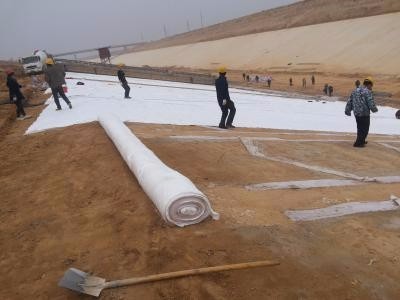
Selecting between them requires more than comparing strength or thickness. Engineers need to consider how loads are transferred, whether water must pass through the material, how soil particles interact with its structure, and what happens during installation. Understanding these differences helps match the geotextile to the actual demands of a project.
How Woven and Nonwoven Geotextiles Differ
Woven geotextiles are manufactured by interlacing yarns or tapes in a regular pattern. Their organized structure generally provides predictable tensile behavior, making them useful when reinforcement or separation under applied loads is important. Depending on the product design, they can offer high tensile strength with relatively low elongation.
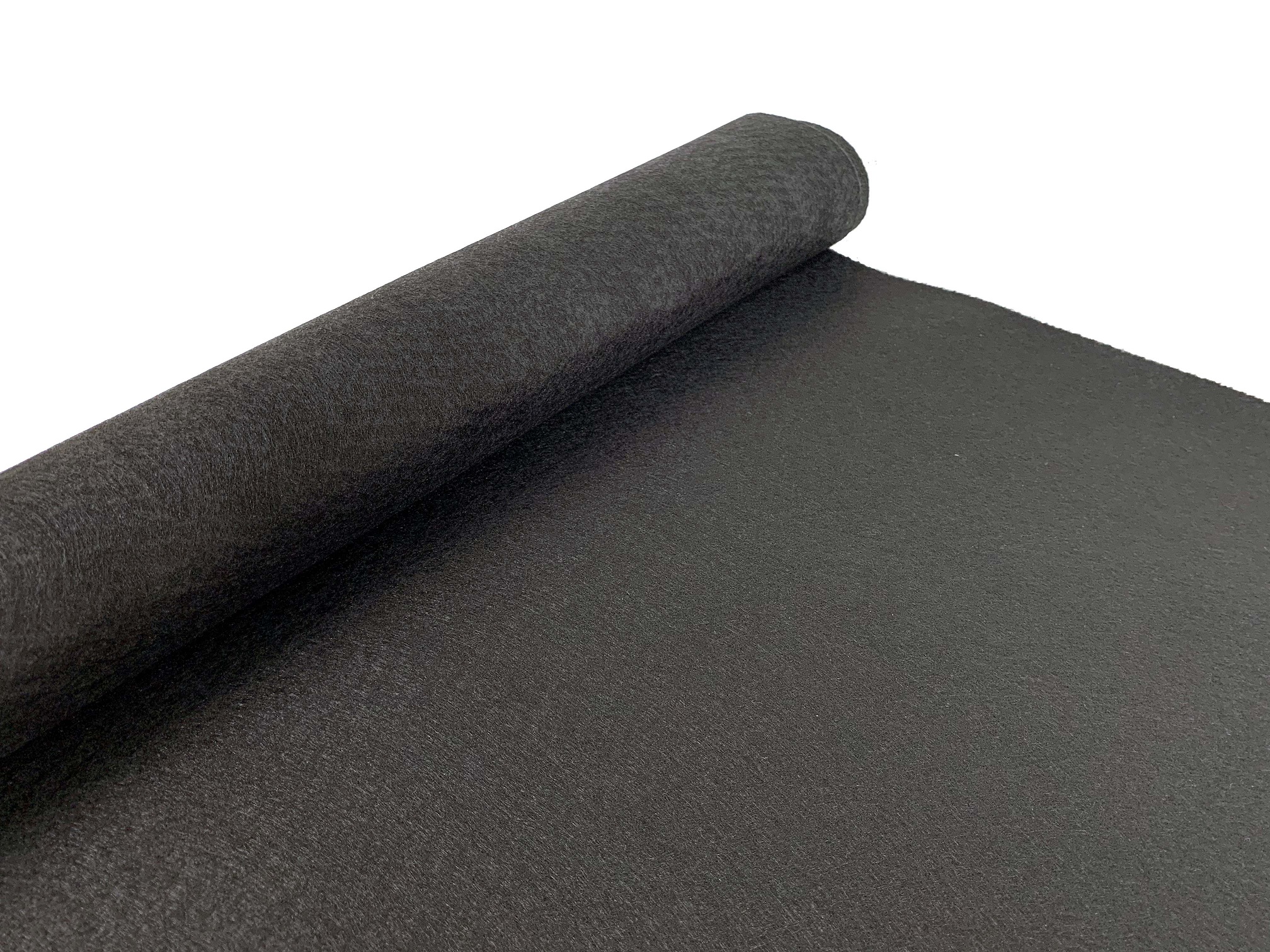
Nonwoven geotextiles are typically produced by bonding or entangling fibers into a sheet. Common manufacturing methods include needle punching and thermal bonding. Their fiber-based structure can provide flexibility, conformability, and useful filtration characteristics. Many needle-punched products also allow water to flow through interconnected pores while retaining soil particles of suitable sizes.
These structural differences influence performance, but neither category has one universal set of properties. Woven products vary in yarn type, weave, and opening size. Nonwoven products vary in fiber composition, bonding method, thickness, and density. Product specifications therefore matter more than the category name alone.
Load Transfer and Ground Stability
Woven geotextiles are often considered for applications requiring tensile resistance and controlled deformation. For example, beneath a working platform or an access road over weak ground, a suitable woven product can help restrain lateral movement of aggregate and improve the performance of the constructed layer. Its effectiveness depends on tensile strength, elongation, installation conditions, and interaction with the surrounding soil.
Nonwoven geotextiles can also contribute to ground stability, particularly when separation, cushioning, or filtration is required. Their flexibility allows them to conform to uneven surfaces, while some products can accommodate localized deformation without behaving like a rigid sheet. However, their suitability for reinforcement depends on their tensile properties and the engineering design rather than flexibility alone.
Designers should distinguish between a geotextile that provides tensile reinforcement and one that primarily performs separation or filtration. These functions may overlap, but they are not interchangeable. A material selected mainly for filtration may not provide the tensile resistance required for a heavily loaded platform.
Water Flow and Soil Retention
Water movement is another major difference to evaluate. Groundwater, rainfall, and seepage can influence soil stability, pavement performance, and the service life of drainage systems. A geotextile used in these conditions must allow the required water flow while limiting the migration of soil particles.
Nonwoven geotextiles are widely used in filtration and drainage applications because their interconnected fiber structure can provide water-flow paths through the thickness of the material. They may be suitable for wrapping drainage pipes, lining drainage trenches, or separating soil from drainage aggregate. The exact performance depends on permeability, characteristic opening size, thickness, and the surrounding soil.
Woven geotextiles can also provide filtration or separation, depending on their construction. Some woven products have relatively defined openings, while others are designed primarily for tensile performance. Their suitability for a drainage application should be assessed using relevant hydraulic properties rather than assuming that all woven materials behave alike.
Soil retention requires particular attention. If openings are too large for the surrounding soil, particles may pass through. If the structure is too restrictive for the soil and flow conditions, clogging or reduced water movement may become a concern. A suitable geotextile must balance soil retention with adequate flow capacity.
Where Each Type Is Commonly Used
l Woven geotextiles: Often considered for road subgrades, working platforms, embankments, and ground improvement projects where tensile resistance and dimensional stability are important. They may help restrain aggregate movement and support load distribution when designed for the application.
l Nonwoven geotextiles: Commonly used around drainage systems, beneath protective layers, in erosion-control assemblies, and in applications requiring filtration or cushioning. Their flexibility and fiber structure can help them conform to surfaces and support water movement.
l Projects requiring multiple functions: Some installations need reinforcement, separation, and filtration at the same time. In these cases, the design should identify the primary performance requirement and verify that the selected product can meet the remaining requirements as well.
These are general application patterns, not strict rules. A woven product may be appropriate for a specialized filtration application, while a nonwoven product may contribute to a reinforced ground system if its properties meet the design requirements. Product performance and project conditions should guide the final decision.
Installation Conditions and Potential Failure
Even a suitable geotextile can perform poorly if it is damaged or installed incorrectly. Construction equipment, sharp aggregate, uneven subgrades, and excessive tension can all affect the material before the finished structure enters service.
Woven geotextiles should be checked for damage to yarns or tapes, especially where concentrated loads or sharp aggregate are present. Local damage can reduce the effective strength of the material. Wrinkles, poor overlaps, and displacement during aggregate placement can also interfere with the intended separation or reinforcement function. Nonwoven geotextiles require attention to puncture, tearing, and compression. Their thickness and fiber structure may provide useful cushioning, but this does not make every product resistant to every installation condition. Heavy equipment should not travel directly over exposed geotextiles unless the construction method and product specifications permit it.
For both types, the subgrade should be prepared appropriately, overlaps should follow the design, and aggregate should be placed using a method that limits displacement and damage. Installation checks are particularly important because defects may become hidden once the next construction layer is added.
How to Compare Products for a Specific Project
For reinforcement and load-related applications: Review tensile strength, elongation, stiffness where relevant, and the design approach used to evaluate interaction with soil. Consider construction damage and long-term performance requirements as well as the nominal strength value.
For filtration and drainage applications: Check permeability, characteristic opening size, and resistance to clogging under the expected soil and flow conditions. Also assess puncture resistance, thickness, and compatibility with the surrounding aggregate and soil.
It is useful to examine technical data alongside representative samples and installation requirements. Two products with similar weights may have different tensile or hydraulic performance because their structures and manufacturing processes differ. Likewise, a higher strength rating does not automatically mean better performance if the material does not meet the project’s filtration needs. Where design conditions are complex, the final choice should be confirmed through appropriate engineering evaluation rather than appearance or price alone.
Selecting a Geotextile for Reliable Ground Performance
Choosing between woven and nonwoven geotextiles is ultimately a question of matching structure to function. Woven products are frequently considered where tensile resistance and dimensional stability are priorities, while nonwoven products are widely used where filtration, drainage, and conformity to uneven surfaces are important. Both categories can serve more than one purpose, but their suitability depends on the properties of the specific product.
As a Factory Geotextile Manufacturer, we recognize the importance of matching material characteristics with project requirements. Reviewing product specifications, manufacturing consistency, installation conditions, and intended applications together helps engineers identify a suitable geotextile for their ground engineering needs.
Conclusion
Woven and nonwoven geotextiles differ in structure, mechanical behavior, and hydraulic characteristics. Woven products are often selected for tensile-related functions, while nonwoven products are frequently used for filtration, drainage, and cushioning. Neither type is universally superior. The most appropriate choice depends on soil conditions, loading, water movement, installation risks, and the required service performance.
FAQs
1. Can woven and nonwoven geotextiles be used in the same project?
Yes. A project may use different geotextiles in separate layers or locations when reinforcement, filtration, and protection requirements vary. Each material should be selected for its specific function.
2. Does a heavier geotextile always provide better performance?
No. Weight alone does not establish tensile strength, permeability, opening size, or puncture resistance. Selection should be based on the properties relevant to the intended application.
3. Can nonwoven geotextiles be used beneath roads?
Yes, where the product and engineering design are suitable. They may provide separation, filtration, or cushioning, but applications requiring substantial tensile reinforcement need careful evaluation of the material’s mechanical properties.
4. What should be checked before geotextile installation?
Check the subgrade condition, product specifications, roll condition, overlap requirements, and planned aggregate placement method. These checks help reduce installation damage and maintain the intended function.
Post time: Oct-28-2026