
In modern construction, the performance of infrastructure depends not only on concrete and steel, but also on the hidden materials that stabilize and protect the ground beneath. Among these materials, civil engineering geotextile has become a critical solution for improving soil performance, drainage efficiency, and structural stability in a wide range of infrastructure projects.
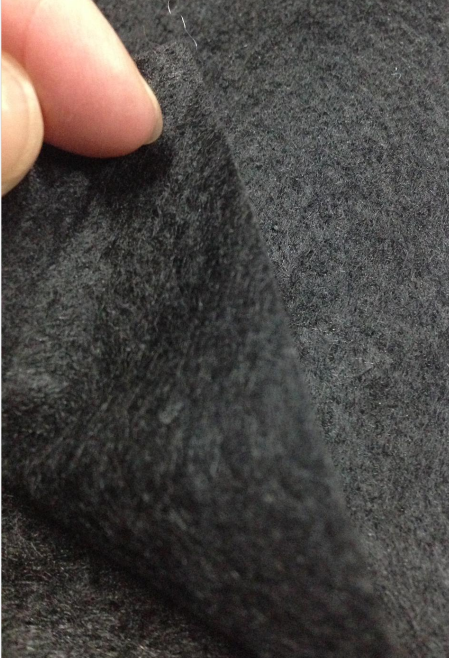
Unlike traditional construction materials, geotextiles are designed to work within soil systems rather than simply covering surfaces. This unique function makes them essential in highways, railways, embankments, retaining structures, and environmental engineering projects where ground behavior directly affects structural safety and lifespan.
What Is Civil Engineering Geotextile?
Civil engineering geotextile refers to a synthetic permeable textile material specifically designed for use in geotechnical and infrastructure construction applications. It is typically manufactured from polypropylene (PP) or polyester (PET) fibers and engineered into woven or nonwoven structures depending on the required function.
The primary purpose of civil engineering geotextile is to interact with soil and aggregates to improve engineering performance rather than act as a standalone structural element. It works within layered systems to provide separation, reinforcement, filtration, and drainage functions simultaneously.
Key characteristics include:
● High tensile strength for ground reinforcement
● Controlled permeability for water movement
● Resistance to biological and chemical degradation
● Long-term durability under buried conditions
● Compatibility with soil, gravel, and aggregate systems
Because of these properties, geotextiles are widely used in critical infrastructure environments where ground stability is a core requirement.
Why Civil Engineering Projects Depend on Geotextiles
Modern infrastructure development faces increasing challenges such as soft soil foundations, heavy traffic loads, extreme weather conditions, and environmental restrictions. Traditional soil treatment methods alone are often insufficient to guarantee long-term performance.
Civil engineering geotextiles solve these problems by improving the interaction between soil layers and structural materials.
Ground reinforcement in weak soil conditions
One of the most important roles of geotextiles is improving load distribution over weak or unstable soil.
● In soft ground areas, geotextiles help spread structural loads more evenly, reducing localized stress that can cause settlement or deformation
● In road base construction, they improve the performance of aggregate layers by preventing sinking into weak subgrade soil
● In embankment construction, they increase overall stability by reinforcing soil mass behavior under long-term pressure
This reinforcement effect allows engineers to construct reliable infrastructure even in challenging geological environments.
Separation of soil and aggregate layers
Soil mixing is a major cause of structural failure in roads and foundations. When fine soil particles migrate into aggregate layers, drainage capacity decreases and structural integrity weakens.
● Geotextiles act as a separation barrier between different material layers
● They prevent contamination of gravel layers by fine soil particles
● They help maintain consistent drainage performance over time
This separation function is particularly important in highway and railway construction where long-term stability is required.
Filtration and drainage control
Water management is a key factor in civil engineering performance. Poor drainage leads to reduced soil strength and increased structural damage over time.
● Geotextiles allow water to pass through while retaining soil particles
● They reduce water pressure buildup behind retaining structures
● They improve drainage efficiency in underground systems and foundations
By maintaining controlled water movement, geotextiles help extend the lifespan of infrastructure systems.
Types of Civil Engineering Geotextiles
Different engineering applications require different geotextile structures and mechanical properties. The two main categories used in civil engineering are woven and nonwoven geotextiles.
Woven geotextiles for reinforcement applications
Woven geotextiles are produced by interlacing synthetic yarns into a structured grid pattern. This construction gives them high tensile strength and low elongation properties.
● Commonly used in road construction and embankment reinforcement
● Suitable for high-load applications requiring structural stability
● Effective in reducing soil deformation under heavy traffic loads
Their primary role is reinforcement rather than filtration, making them ideal for structural engineering applications.
Nonwoven geotextiles for filtration and drainage
Nonwoven geotextiles are produced through needle-punching or thermal bonding processes, creating a random fiber structure with high permeability.
● Widely used in drainage systems, erosion control, and environmental projects
● Excellent filtration performance while allowing water flow
● Flexible and adaptable to irregular ground surfaces
These geotextiles are especially important in projects where water management is the primary concern.
Composite geotextile systems
In advanced civil engineering applications, geotextiles are often combined with other geosynthetic materials to create multifunctional systems.
● Used in landfill engineering, tunnel construction, and mining projects
● Combine reinforcement, filtration, and drainage functions in one system
● Improve installation efficiency and reduce material complexity
Composite systems represent the most advanced form of geotextile engineering.
Key Applications in Civil Engineering Projects
Civil engineering geotextiles are used across a wide range of infrastructure sectors where ground behavior directly affects performance.
Highway and road construction
Road construction is one of the largest application areas for geotextiles.
● Improve load distribution across weak subgrade soils
● Reduce pavement cracking and deformation
● Extend road service life and reduce maintenance frequency
They are especially valuable in highways built on soft or variable soil conditions.
Railway infrastructure systems
Railway foundations require long-term stability under continuous dynamic loads.
● Stabilize ballast layers and reduce track settlement
● Improve drainage beneath railway structures
● Enhance long-term operational safety and efficiency
Retaining walls and slope stabilization
Geotextiles play a critical role in soil retention and erosion control systems.
● Reinforce soil behind retaining walls
● Reduce slope failure risk in unstable terrain
● Improve overall structural integrity of earthworks
Landfill and environmental engineering
Modern landfill systems depend heavily on geotextile materials for safety and environmental protection.
● Prevent contamination between waste and drainage layers
● Improve leachate control and filtration performance
● Support long-term landfill stability
Future Trends in Civil Engineering Geotextiles
The demand for geotextiles continues to grow as infrastructure development expands globally. Several trends are shaping the future of this industry:
● Increased use in sustainable infrastructure and green construction projects
● Growth in smart infrastructure requiring advanced soil stabilization systems
● Development of higher-strength and lighter-weight polymer materials
● Expansion in climate-resilient construction due to extreme weather conditions
● Greater adoption in transportation and urban development projects
These trends indicate that geotextiles will remain a core material in civil engineering for decades to come.
Conclusion
Civil engineering geotextiles have become an essential part of modern infrastructure construction due to their ability to improve soil stability, enhance drainage performance, and extend the lifespan of engineering structures. From highways and railways to retaining walls and landfill systems, they provide reliable solutions for complex ground conditions that traditional materials cannot fully address.
As global infrastructure demands continue to rise, geotextiles will play an increasingly important role in building safer, more durable, and more efficient engineering systems. For contractors, engineers, and material suppliers, understanding and applying geotextile solutions is key to achieving long-term project success.
FAQ
1、What is civil engineering geotextile used for?
Civil engineering geotextile is used for soil stabilization, reinforcement, filtration, drainage improvement, and separation in infrastructure projects such as roads, railways, and retaining structures.
2、What is the difference between woven and nonwoven geotextiles?
Woven geotextiles are mainly used for reinforcement due to their high tensile strength, while nonwoven geotextiles are used for filtration and drainage because of their high permeability.
3、Can geotextiles improve road performance?
Yes, geotextiles help distribute loads, prevent soil mixing, and reduce pavement deformation, which significantly improves road durability and service life.
Post time: May-25-2026