
PET spunbond nonwoven fabrics with similar basis weight, thickness, and tensile strength can behave differently during processing and final use. One fabric may maintain dimensional stability during coating or lamination, while another develops wrinkles, uneven tension, or localized deformation. These differences can affect production efficiency, material waste, and finished-product consistency.
Standard specifications cannot fully describe a nonwoven fabric’s internal structure or processing behavior. Filament distribution, thermal bonding, pore structure, and residual stress all influence performance. Understanding these factors helps explain why similar PET spunbond nonwoven fabrics may deliver different results in practical applications.
Why Basis Weight Does Not Fully Determine Fabric Performance
Basis weight, measured in grams per square meter (GSM), is a common indicator for comparing PET spunbond nonwoven fabrics. However, identical GSM values do not necessarily indicate the same structure or performance.
- Filament distribution: A uniformly distributed web generally provides more consistent mechanical properties across its width and length. Uneven distribution can create localized weak points or differences in stiffness, which may become more noticeable during stretching, coating, or lamination.
- Thickness and density: Fabrics with the same basis weight can have different thicknesses because of variations in filament arrangement and bonding density. Greater thickness does not automatically mean higher strength, while a thinner fabric is not necessarily less durable.
- Processing response: During continuous production, different areas of a fabric may respond differently to tension. This can affect alignment, surface uniformity, and the quality of the finished product.
For this reason, GSM and thickness should be evaluated alongside structural uniformity, mechanical properties, and the requirements of the intended application.
How Filament Structure and Thermal Bonding Affect Strength
PET spunbond nonwoven fabric is formed from continuous polyester filaments arranged into a web and bonded to create a stable structure. Its strength depends not only on the polyester itself but also on filament orientation, distribution, and bonding quality.
When tensile force is applied, the load transfers through interconnected filaments. If the web contains uneven regions or insufficiently bonded areas, stress may concentrate in specific locations, increasing the risk of deformation or tearing.
Thermal bonding plays a central role in structural integrity. Heat and pressure create connections between filaments, but insufficient bonding can weaken the web. Excessive thermal exposure may also affect filament properties or cause unwanted shrinkage. The appropriate balance depends on the material and processing conditions.
Bonding uniformity is just as important as overall strength. A fabric may achieve an acceptable average tensile strength while still containing localized weak areas. Evaluating machine-direction and cross-direction tensile strength, elongation, and variation between samples provides a more complete picture than relying on a single test result.
Why Thermal Stability Matters in Downstream Processing
Thermal stability is particularly important when PET spunbond nonwoven fabrics are used in roofing membranes, coated substrates, composite materials, and other products exposed to elevated temperatures.
Two fabrics with similar tensile strength may respond differently to heat. Filament orientation, bonding conditions, and residual stress can influence dimensional changes during thermal exposure. Uneven shrinkage may lead to wrinkles, surface distortion, or tension imbalances in the finished product.
These problems may not appear in room-temperature mechanical tests. A fabric can perform well under standard tensile testing but become less stable when exposed to the temperature profile of a coating or lamination process.
Thermal shrinkage should therefore be evaluated under conditions representative of the intended application. Relevant factors include exposure temperature, heating duration, applied tension, and subsequent cooling conditions. Predictable dimensional behavior within the actual operating range is often more important than achieving the lowest possible shrinkage value.
How Pore Structure and Surface Quality Influence Performance
The pore structure of PET spunbond nonwoven fabric affects permeability, airflow, filtration behavior, and interaction with coatings or adhesives. These properties are especially relevant in filtration media, drainage layers, and coating substrates.
Two fabrics with similar thickness may have different pore-size distributions because their filaments are arranged differently. A more open structure may support greater permeability, while a denser structure may provide better support or help regulate coating penetration. The appropriate balance depends on the required function.
Surface quality also influences performance. Variations in filament distribution, bonding patterns, or surface defects can affect coating uniformity and adhesion. In laminated products, inconsistent contact between layers may reduce bonding reliability or create visible defects.
Different applications require different evaluation priorities. Filtration materials need attention to permeability and relevant filtration characteristics, while coated or laminated substrates may require closer assessment of surface uniformity, dimensional stability, and compatibility with the coating or adhesive system.
How to Evaluate PET Spunbond Nonwoven Fabric Before Use
A reliable evaluation should combine technical specifications with testing under conditions that reflect the intended application. Comparing materials only through product descriptions or one laboratory result may overlook differences that affect actual processing.
- Mechanical performance: Compare machine-direction and cross-direction tensile strength, elongation, and sample consistency to understand how the fabric responds to pulling, handling, and converting.
- Thermal and dimensional stability: Assess shrinkage and dimensional changes at relevant temperatures, particularly when the fabric will undergo coating, lamination, or other heat-related processes.
- Surface and functional properties: Check permeability, surface uniformity, and bonding compatibility according to the material’s role in filtration, reinforcement, packaging, or composite products.
Production trials can provide additional insight into tension control, edge alignment, wrinkle formation, and coating consistency. Testing several representative samples is also more reliable than judging a whole material batch from a single successful sample.
The objective is to determine whether the fabric performs consistently under relevant conditions, rather than simply selecting the option with the highest value in one specification.
Matching Material Specifications to Real Application Requirements
PET spunbond nonwoven fabric can serve different functions, including filtration, reinforcement, protective covering, packaging, and use as a base layer in composite or waterproofing materials. Each application places different demands on the fabric, so the appropriate specification depends on more than basis weight alone.
For example, filtration applications may prioritize permeability and structural consistency, while reinforcement layers require suitable tensile properties. Materials used outdoors may need appropriate UV resistance, and coating or lamination applications may depend more heavily on surface characteristics, dimensional stability, and compatibility with other layers.
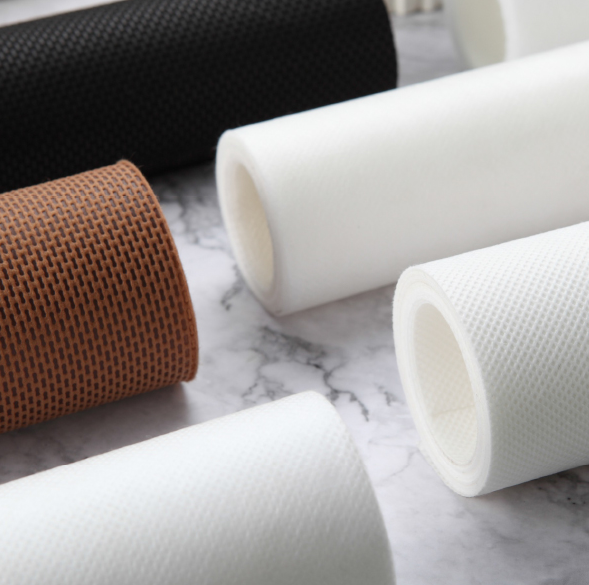
Considering GSM, width, color, roll dimensions, and functional properties together helps align the material with its intended use and downstream processing method. The aim is to establish a practical balance between material performance, processing requirements, and finished-product quality, rather than relying on a standard specification for every application.
Conclusion
Similar technical specifications do not guarantee equivalent performance in PET spunbond nonwoven fabrics. Filament distribution, thermal bonding, dimensional stability, pore structure, and surface quality can all affect processing behavior and final product performance.
Evaluating these factors against actual operating conditions provides a more reliable basis for material selection. Combining specification reviews with relevant laboratory tests and production trials helps identify potential weaknesses earlier, reduce processing risks, and improve finished-product consistency.
Frequently Asked Questions
1. Why can PET spunbond nonwoven fabrics with the same GSM have different strengths?
Differences in filament distribution, orientation, bonding uniformity, and web structure can affect tensile performance even when the basis weight is identical.
2. Does greater thickness mean better PET spunbond nonwoven quality?
Not necessarily. Thickness should be evaluated alongside tensile strength, structural density, pore characteristics, thermal stability, and the requirements of the final application.
3. How can the thermal stability of PET spunbond nonwoven fabric be evaluated?
Thermal shrinkage and dimensional stability tests can be performed under conditions representative of the intended process, including relevant temperatures, exposure times, and tension levels.
4. Which properties matter most when selecting PET spunbond nonwoven fabric?
The priorities depend on the application. Mechanical strength and dimensional stability may be critical for reinforcement and roofing materials, while permeability and surface characteristics may be more important for filtration and coated substrates.
Post time: Oct-09-2026