
PET spunbond nonwoven material is a polyester-based nonwoven fabric designed for applications that need better strength, heat resistance, dimensional stability, and long-term performance. Compared with many general lightweight nonwoven fabrics, PET spunbond nonwoven material is often selected when buyers need a stronger structure, cleaner surface, and more stable performance during processing or use.
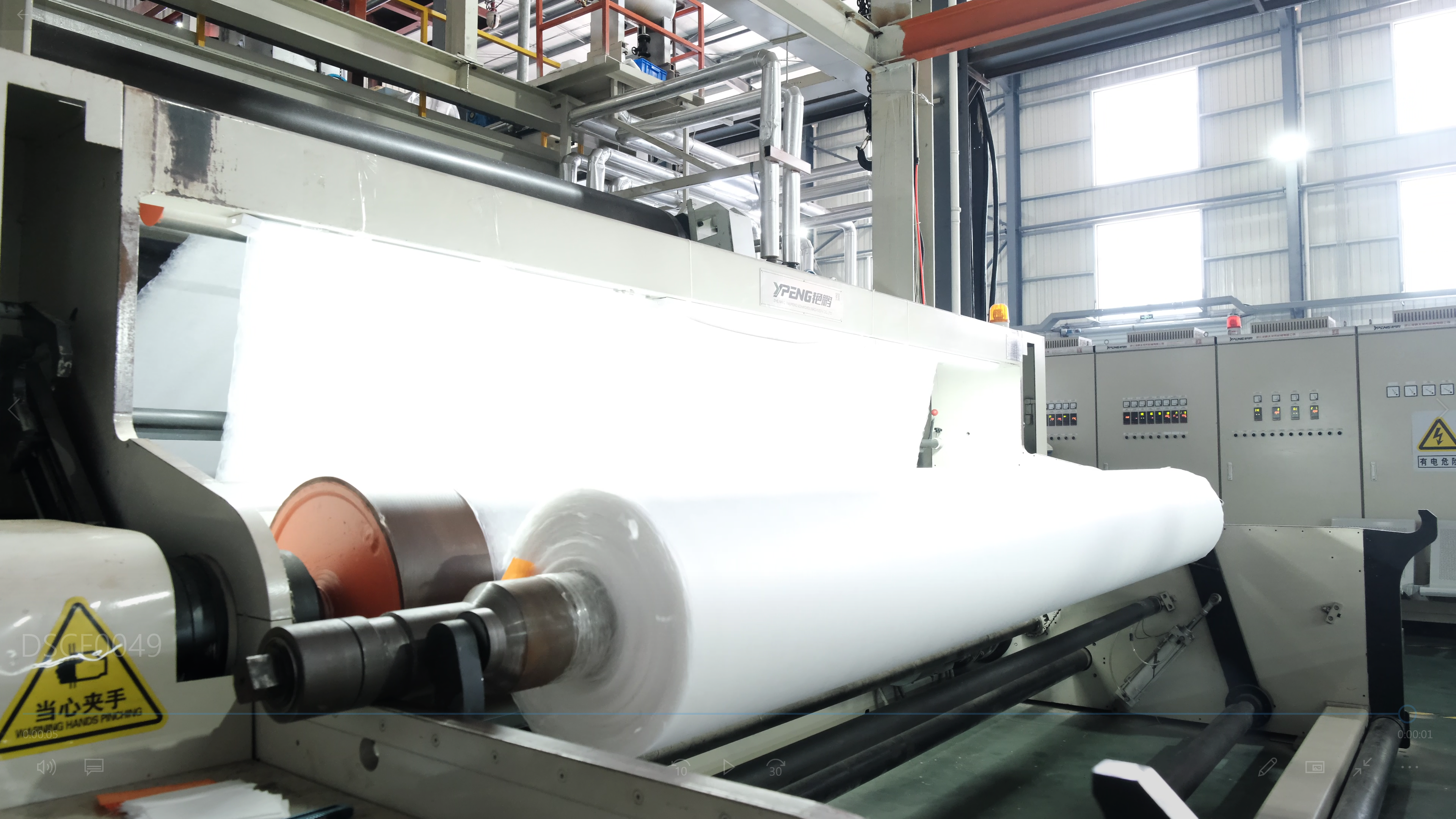
For packaging, filtration, furniture backing, home textiles, industrial reinforcement, and composite materials, the material must do more than simply cover a surface. It needs to resist pulling, keep its shape, support further processing, and remain stable under different working conditions. This is why PET spunbond nonwoven fabric is widely used in applications where ordinary materials may not provide enough durability.
What Makes PET Spunbond Nonwoven Material Different?
PET spunbond nonwoven material is made from polyester through the spunbond process. During production, PET resin is melted, extruded into continuous filaments, laid into a web, and bonded into fabric without weaving or knitting. This process creates a fabric with a uniform structure, stable surface, and good mechanical strength.
The main advantage of PET material is its stability. PET can maintain its shape better during processing, cutting, lamination, coating, and end use. It is also known for better heat resistance than PP nonwoven fabric, which makes it more suitable for applications involving heat, pressure, or composite processing.
Because of these properties, PET spunbond nonwoven material is often used where buyers need more than a basic lightweight fabric. It is especially useful when product quality depends on strength, flatness, surface consistency, and reliable performance.
PET Spunbond Nonwoven Material vs PP Spunbond Nonwoven Fabric
Many buyers compare PET and PP spunbond nonwoven fabrics before selecting a material. Both are widely used, but they are suitable for different priorities.
|
Comparison Item |
PET Spunbond Nonwoven Material |
PP Spunbond Nonwoven Fabric |
| Main Material | Polyester | Polypropylene |
| Strength | Generally stronger and more stable | Suitable for general strength needs |
| Heat Resistance | Better heat resistance | Lower heat resistance than PET |
| Dimensional Stability | Better shape retention | More suitable for lightweight applications |
| Common Uses | Filtration, composite layers, furniture backing, industrial support, durable packaging | Shopping bags, crop covers, disposable covers, light packaging, general home products |
| Cost Position | Usually higher than PP | Usually more economical |
| Best For | Applications needing stability, strength, and heat resistance | Applications needing light weight and cost efficiency |
This comparison shows that PET is not always used to replace PP. Instead, the right choice depends on the final application. If the product needs light weight and cost control, PP may be suitable. If the product requires stronger support, heat resistance, or better dimensional stability, PET spunbond nonwoven material is often a better choice.
Where Is PET Spunbond Nonwoven Material Commonly Used?
PET spunbond nonwoven material can be used in many product categories because it combines strength with processing stability.
| Application Area | Why PET Spunbond Nonwoven Material Is Suitable |
| Filtration Support | Stable structure helps support filter media during processing and use |
| Protective Packaging | Provides better tear resistance and a clean fabric-like appearance |
| Furniture Backing | Offers coverage, stability, and easy cutting for sofas and mattresses |
| Composite Materials | Works well as a support or reinforcement layer in laminated products |
| Industrial Covers | Provides stronger protection than many lightweight fabrics |
| Home Textile Products | Suitable for dust covers, storage products, and backing layers |
| Outdoor or Semi-Outdoor Use | Can offer better durability when matched with proper treatment |
This type of material is especially useful for manufacturers who need continuous roll material for cutting, bonding, laminating, coating, or sewing. A stable fabric surface helps reduce processing problems and supports consistent finished product quality.
Why Is PET Spunbond Nonwoven Used in Filtration?
Filtration is one of the important applications for PET spunbond nonwoven material. In filter products, the material may be used as a backing layer, support layer, or part of a composite filter structure. It helps support the filter media and maintain the structure during production and use.
A good filtration support material should have stable thickness, clean surface, suitable strength, and good dimensional performance. PET spunbond nonwoven fabric can meet these needs in many filtration-related applications because it resists deformation better than some lighter materials.
For buyers in the filtration industry, material consistency is very important. If the fabric thickness, strength, or roll quality is unstable, it may affect cutting, laminating, bonding, and final filter performance.
Why Is PET Spunbond Nonwoven Used in Furniture and Home Products?
In furniture and home products, PET spunbond nonwoven material is often used as sofa backing, mattress bottom fabric, dust-proof layers, storage product material, and protective covers. These applications require a material that looks clean, cuts smoothly, and performs consistently in production.
Compared with very light nonwoven fabrics, PET spunbond material can offer better structure and durability. It can help cover internal parts, protect products from dust, and provide a neat backing surface. For furniture manufacturers, easy processing and stable roll quality are important because the material is often used in large quantities.
For home textile products, PET spunbond nonwoven material can also be used in storage bags, dust covers, closet products, and protective layers where strength and surface stability are needed.
Why Is PET Spunbond Nonwoven Suitable for Composite Materials?
Composite production often requires a base material that can remain stable during lamination, coating, heating, or bonding. PET spunbond nonwoven material is suitable for many composite applications because it has good dimensional stability and better heat resistance than PP material.
In laminated products, PET nonwoven can act as a support layer or reinforcement layer. It helps improve structure and may support better durability depending on the final product design. This makes it useful in industrial materials, construction-related products, insulation support, protective layers, and technical textile applications.
For these applications, the fabric should have stable roll winding, uniform thickness, and reliable strength. These details help reduce production interruptions and improve finished product consistency.
Why choose us?
PET spunbond nonwoven material is often used as a functional layer in finished products, so material consistency is important. If the roll has uneven thickness, unstable strength, poor winding, or surface defects, it may cause problems during cutting, lamination, sewing, or coating.
A reliable material partner should provide stable roll quality, suitable packaging, quality inspection, OEM support, and clear communication for international orders. This is especially important for buyers who need continuous production and repeat orders.
With experience in multipurpose fabrics, spunbond nonwoven materials, garden products, netting, shade products, and outdoor covering materials, Vinner can support buyers who need PET spunbond nonwoven material for packaging, industrial, furniture, home, and composite applications.
Conclusion
PET spunbond nonwoven material is a strong, stable, and practical material for applications that require better heat resistance, dimensional stability, and durability. It is widely used in filtration support, packaging, furniture backing, home products, composite materials, industrial covers, and technical applications.
Compared with PP spunbond nonwoven fabric, PET is often selected when buyers need higher stability and stronger performance. By choosing the right material structure, surface quality, customization options, and reliable production support, buyers can improve processing efficiency and final product quality.
FAQ
1. What is PET spunbond nonwoven material used for?
PET spunbond nonwoven material is used for filtration support, protective packaging, furniture backing, mattress materials, dust covers, composite materials, industrial support layers, and durable home products.
2. Is PET spunbond nonwoven material better than PP?
PET is better for applications that require heat resistance, dimensional stability, and stronger performance. PP is often better for lightweight and cost-sensitive applications.
3. Can PET spunbond nonwoven material be used for filtration?
Yes. PET spunbond nonwoven material can be used as a support or backing layer in filtration products because it offers stable structure and good strength.
4. Can PET spunbond nonwoven material be customized?
Yes. It can be customized in width, roll length, color, surface treatment, coating, lamination compatibility, printing suitability, packaging, and other specifications based on application needs.
Post time: Jul-02-2026