
A weed barrier needs to do more than simply cover the ground. For long-term outdoor use, it should combine effective light blocking, water permeability, resistance to pulling and tearing, and reliable separation between soil and surface materials.
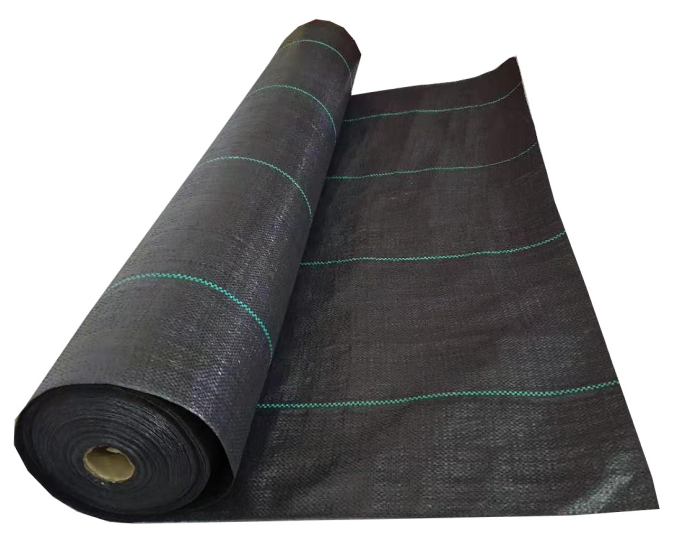
If the weave is too open, the fabric is not strong enough, or the material easily shifts after installation, weeds, sinking gravel, and exposed edges may still become problems over time.
For this reason, when evaluating PP woven weed barrier fabric, it is more useful to consider weave density, fabric weight, water permeability, UV resistance, and roll dimensions in relation to the actual application.
Why Is PP Woven Weed Barrier Fabric Suitable for Long-Term Ground Cover?
PP woven weed barrier fabric is typically made from polypropylene tapes arranged in a regular woven structure. Unlike solid plastic sheeting, it does not completely seal the ground. Instead, it creates a light-blocking layer while maintaining a degree of water permeability.
This structure allows the material to perform several functions at the same time:
- Reduce sunlight reaching the soil surface
- Suppress the continued growth of existing weeds
- Allow rainwater and irrigation water to penetrate
- Separate soil from gravel, bark, and other surface materials
- Resist tearing and displacement during outdoor installation
- Help maintain clearer ground layers over time
For gardens, orchards, nurseries, landscaping areas, and gravel-covered surfaces, a practical weed barrier usually needs to provide these functions together rather than focusing only on thickness.
Weed Control Starts with Weave Density
One of the most important factors affecting weed suppression is the ability of the fabric to block light.
When polypropylene tapes are woven closely together, they form a more continuous barrier that reduces the amount of sunlight reaching the soil. If the weave is too open or contains obvious gaps, more light can pass through the material and support plant growth underneath.
Weed suppression performance is therefore influenced by:
- Uniformity of the PP tapes
- Consistency of weave density
- Resistance to stretching and deformation
- Absence of weak or unusually open areas
- Ability to remain flat after installation
For long-term outdoor applications, a stable woven structure can be more important than simply increasing fabric thickness.
Why Is Water Permeability Just as Important?
Weed control should not mean completely sealing the soil.
If an impermeable material is used, rainwater and irrigation water may remain on the surface, making water management around plants more difficult and potentially creating local pooling.
One advantage of PP woven weed barrier fabric is that water can gradually pass through the woven structure into the soil below.
This makes it suitable for areas such as:
- Flower beds
- Nurseries
- Orchards
- Greenhouse growing areas
- Around trees and shrubs
- Landscape planting zones
In these applications, the material needs to reduce weed growth without interfering with normal irrigation.
Light blocking and water permeability should therefore be considered together rather than as separate performance characteristics.
Different Fabric Weights Suit Different Conditions
PP woven weed barrier fabric can be produced in different fabric weights. A heavier construction often provides greater strength and durability, but this does not mean that the highest weight is necessary for every application.
|
Application |
Performance to Focus On |
| Home gardens | Easy cutting, water permeability, general weed control |
| Flower beds and shrub areas | Flexibility, light blocking, easy planting openings |
| Nurseries | Foot-traffic resistance, tear resistance, long-term use |
| Orchards | Large-area coverage, weather resistance, suitable roll size |
| Gravel landscapes | Separation, strength, puncture resistance |
| Landscape projects | Uniform structure and installation stability |
| Long-term exposed areas | UV resistance |
Lighter fabrics may be easier to position around individual plants, while gravel-covered surfaces or areas exposed to frequent activity may require greater material strength.
The appropriate specification should therefore reflect actual working conditions rather than simply selecting the heaviest available option.
Why Does Weed Barrier Fabric Matter More Under Gravel?
In gravel landscapes, weed barrier fabric performs more than a weed-control function.
When decorative stone is placed directly over soil, some gravel may gradually press into the ground while soil moves upward into the stone layer.
Over time, this can result in:
- A thinner gravel layer
- A less organized surface appearance
- More exposed soil
- More opportunities for weeds to establish between stones
- More frequent gravel replenishment
PP woven weed barrier fabric creates a separation layer between the gravel and soil, helping limit direct mixing between the two materials.
For this application, important product characteristics include:
- Tensile strength
- Tear resistance
- Weave stability
- Puncture resistance
- Stability at overlapping sections
Where heavier gravel or larger installation areas are involved, material strength generally becomes more important than in a small residential flower bed.
Roll Width and Length Directly Affect Installation
Material performance is only part of the consideration. Roll dimensions can also influence installation quality.
Wider rolls can:
- Reduce the number of overlaps
- Reduce exposed soil at seams
- Improve efficiency over large areas
- Provide more continuous ground coverage
Narrower rolls may be more practical for:
- Small flower beds
- Areas between established plants
- Narrow landscape strips
- Around trees
- Irregularly shaped areas
Choosing appropriate roll width and length can reduce unnecessary cutting and simplify installation.
Edges and Overlaps Matter More Than Many People Expect
Even a high-quality weed barrier can perform poorly when seams and edges are not properly handled.
Common problems include:
- Placing two sections edge to edge without overlap
- Using too few ground pins
- Leaving edges unsecured
- Cutting planting openings too large
- Leaving exposed soil around corners
- Fabric shifting after extended use
Adjacent sections should have sufficient overlap, with seams, corners, and exposed edges securely fixed.
In windy locations, sloped areas, or places exposed to surface water movement, proper fixing becomes especially important for keeping the fabric in position.
Why Can Weeds Grow on Top of Weed Barrier Fabric?
Some weeds do not grow through the fabric from below. Instead, they germinate in material that has accumulated on top of it.
Over time, the surface may collect:
- Soil
- Dust
- Fallen leaves
- Bark particles
- Organic matter
- Fine particles carried by wind
Once this upper layer becomes thick enough, weed seeds may germinate directly above the fabric.
Simple maintenance is therefore still useful after installation. Removing accumulated soil, leaves, and organic debris reduces the chance of creating a new growing medium on the surface.
When Is UV Resistance More Important?
PP materials used outdoors may be exposed to sunlight, temperature changes, rainfall, and repeated wet-dry cycles.
If the weed barrier is completely covered with gravel, bark, or another material, direct sunlight exposure is limited. However, UV resistance becomes much more important where the fabric remains exposed.
UV treatment is particularly relevant for:
- Nursery floors
- Orchard rows
- Agricultural ground cover
- Exposed landscape areas
- Long-term outdoor applications
When determining the appropriate product specification, it is therefore useful to consider whether the fabric will remain exposed or be covered after installation.
Vinner PP Woven Weed Barrier Fabric
Vinner provides PP woven weed barrier fabric for gardening, nurseries, orchards, landscape construction, agricultural ground cover, and gravel-covered areas.
The fabric uses a stable PP woven structure designed to provide a practical balance between light blocking, water permeability, ground separation, and outdoor durability.
For gardens and planting areas, flexibility and water permeability may be the main considerations. Gravel landscapes and larger landscaping areas may require greater material strength and separation performance. Nurseries, orchards, and long-term outdoor applications may place greater emphasis on UV resistance and larger roll formats.
By matching product configuration to the installation area and expected service conditions, PP woven weed barrier fabric can provide more effective performance than using one standard specification for every application.
Conclusion
PP woven weed barrier fabric does more than cover exposed soil.
A practical material should combine a stable woven structure, effective light blocking, appropriate water permeability, and sufficient outdoor durability.
Different applications also require different priorities. Flower beds may emphasize easy installation and permeability, gravel areas need strength and separation, while nurseries and orchards require long-term stability and efficient large-area coverage.
When fabric weight, weave density, roll dimensions, UV treatment, and installation method are matched to actual site conditions, PP woven weed barrier fabric can provide more reliable weed control, material separation, and ground protection.
FAQ
1. Can PP woven weed barrier fabric be used for long-term outdoor applications?
Yes. Actual service performance depends on the woven structure, UV treatment, covering method, and outdoor conditions. UV resistance is particularly important when the fabric remains exposed.
2. Is a heavier weed barrier fabric always better?
No. Fabric weight should match the application. Home gardens, gravel landscapes, and nurseries have different requirements for strength and handling.
3. Can PP woven weed barrier fabric be installed under gravel?
Yes. It helps reduce mixing between gravel and soil while supporting weed control and a cleaner ground surface.
4. How should the roll width be selected?
Wider rolls are often more practical for large areas because they reduce the number of seams. Narrower rolls are easier to handle in small flower beds, narrow planting areas, and spaces with established plants.
Post time: Aug-07-2026