
Nonwoven fabrics are used in filtration, medical products, hygiene goods, automotive interiors, packaging, and many other applications. Although these materials may look similar to woven or knitted textiles, their internal structures can be very different. Fibers may be bonded mechanically, thermally, or chemically, and these differences affect how the material responds to cutting.
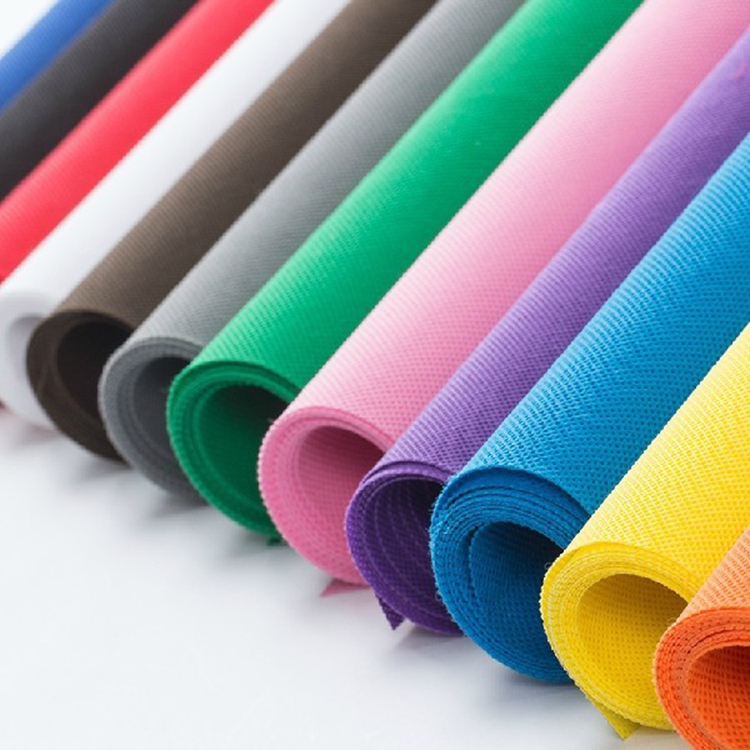
Choosing an unsuitable cutting method can lead to frayed edges, deformation, fiber shedding, or inconsistent dimensions. For businesses in the Non Woven Industry, understanding how material properties influence cutting is essential for maintaining product quality and reducing processing waste.
How Does Material Structure Affect Cutting?
Unlike woven fabrics, which have fibers arranged in regular interlaced patterns, nonwoven fabrics are formed by bonding or entangling fibers into a sheet. Their strength, flexibility, and resistance to cutting depend on fiber composition, bonding method, density, and thickness.
Spunbond materials often have relatively continuous fibers and may offer good tensile strength. Meltblown materials generally contain much finer fibers and are commonly used where filtration performance matters. Needle-punched materials have mechanically entangled fibers, while thermally bonded materials rely on heat-sensitive bonding points to maintain their structure.
These differences influence how a blade moves through the material. A loosely bonded sheet may stretch or pull apart during cutting, while a dense material may require greater cutting force. Heat-sensitive materials can deform when exposed to excessive friction or temperature. Laminated products introduce another challenge because the cutting process must pass through multiple layers without separating or damaging them. Thickness alone does not determine cutting difficulty. Two materials with the same thickness may respond differently because their fiber arrangement and bonding strength differ.
Common Cutting Methods for Nonwoven Materials
Mechanical Cutting
Mechanical cutting uses blades, rotary knives, slitting knives, or dies to separate material through physical force. It is widely used for converting rolls into narrower widths, cutting sheets, and producing repeatable shapes. Rotary slitting is suitable for continuous roll processing, particularly when materials need to be divided into consistent widths. Straight blades can handle many general cutting tasks, while die cutting is useful for producing repeated shapes such as pads, liners, and components with defined outlines.
However, mechanical cutting depends heavily on blade condition and material support. A dull blade may pull fibers instead of separating them cleanly. Excessive pressure can compress soft materials, while insufficient support may allow thin sheets to shift during cutting.
Thermal Cutting
Thermal cutting uses heat to separate material. It can be effective for certain synthetic nonwoven fabrics because heat may seal the cut edge and reduce loose fibers. The main limitation is thermal sensitivity. Excessive heat can cause melting, shrinkage, hard edges, discoloration, or changes in material thickness. These effects may be unacceptable in products that require a soft touch, precise dimensions, or consistent appearance.
Thermal cutting should therefore be tested against the material’s fiber composition and bonding characteristics. Temperature, cutting speed, and contact time all influence the final edge.
Ultrasonic Cutting
Ultrasonic cutting uses high-frequency vibration to assist separation, sometimes combining cutting with localized bonding at the edge. It can be useful for selected synthetic materials where a controlled edge and reduced fiber shedding are important.
Its performance depends on material compatibility, tool design, vibration settings, and processing speed. It is not automatically suitable for every nonwoven product. Natural fibers, mixed compositions, thick layers, or materials with particular coatings may respond differently from thin synthetic sheets. Before adopting ultrasonic processing, manufacturers should check whether the material responds consistently and whether the resulting edge meets the product’s functional requirements.
What Happens When the Cutting Method Is Unsuitable?
Frayed or loose edges: Fibers are pulled out rather than cleanly separated. This may occur when blades are worn, the material is poorly supported, or the cutting method does not suit the fiber structure.
Distorted dimensions: Soft or elastic sheets may stretch, shift, or compress during cutting. The finished pieces can then vary in width, length, or shape.
Heat damage: Excessive thermal exposure can melt synthetic fibers, harden edges, or change the appearance of the cut surface.
Uneven layers: Laminated materials may separate, wrinkle, or develop inconsistent edges if the cutting force or heat affects each layer differently.
Unstable production quality: Inconsistent blade wear, material tension, or machine settings can cause defects to appear intermittently, making them difficult to identify through final inspection alone.
These problems can affect more than appearance. Loose fibers may interfere with filtration or cleanliness requirements, inaccurate dimensions can complicate assembly, and damaged edges may reduce the performance of the finished component.
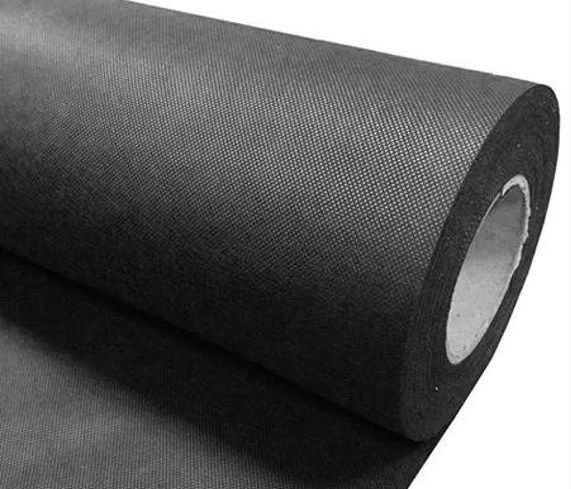
How Should the Cutting Method Be Selected?
Two considerations are particularly important.
Material composition and structure: Confirm whether the sheet is made from polyester, polypropylene, natural fibers, or a blend. Check its thickness, density, bonding method, elasticity, and any coatings or laminations. These properties help determine whether mechanical force, heat, or ultrasonic vibration is appropriate.
Required edge quality and production conditions: Define the acceptable edge appearance, dimensional tolerance, shape complexity, and production speed. Continuous roll slitting may favor rotary knives, while repeated custom shapes may suit die cutting. Where loose fibers are unacceptable, test whether a compatible edge-sealing process provides a better result.
A practical trial is usually more reliable than choosing a method based only on general material categories. Samples should be cut using realistic production settings, then inspected for edge quality, dimensional consistency, deformation, and any changes to the material’s function.
Testing and Process Control
Once a suitable cutting method has been identified, stable production depends on controlling the process. Blade sharpness, feed speed, material tension, cutting pressure, and alignment should be checked according to the selected technology.
For mechanical cutting, worn blades and uneven pressure can quickly affect edge quality. For thermal or ultrasonic cutting, changes in speed or energy settings may alter the cut even when the material remains unchanged. Operators should monitor these variables and establish acceptable operating ranges rather than relying entirely on visual judgment. Inspection should also take place at more than one stage. Initial samples help confirm that the process is suitable, while routine checks can reveal gradual changes caused by tool wear or material variation. When defects appear, checking the cutting conditions and incoming material together can help distinguish machine-related problems from changes in the material itself.
The Role of Cutting in Downstream Manufacturing
Cutting accuracy affects the next production stage. Components used in filtration, hygiene products, automotive parts, and medical applications may need to fit precisely, maintain a consistent surface, or meet specific cleanliness requirements. A cutting defect can therefore create assembly problems or reduce the reliability of the finished product. For roll-based production, consistent slitting helps maintain uniform widths and supports stable material feeding. For shaped components, accurate cutting reduces the need for trimming and limits waste around the finished outline. When several layers are processed together, the cutting method must also preserve the integrity of the complete structure.
In the Non Woven Industry, cutting should be treated as part of the overall converting process rather than an isolated machine operation. Coordinating material selection, cutting technology, and downstream requirements makes it easier to achieve consistent results. When evaluating nonwoven converting requirements, we consider material characteristics, cutting accuracy, production conditions, and the needs of the finished product together. This approach helps identify a suitable processing solution while avoiding unnecessary complexity in the production workflow.
Conclusion
Different nonwoven fabrics require different cutting methods because fiber composition, bonding structure, thickness, and heat sensitivity affect how they respond to processing. Mechanical, thermal, and ultrasonic technologies each offer advantages, but their suitability depends on the material and the required result. Testing representative samples, controlling operating conditions, and checking edge quality can help improve consistency, reduce waste, and support reliable downstream manufacturing.
FAQ
1. Can one cutting method handle every type of nonwoven material?
No. Different materials vary in fiber composition, bonding strength, thickness, and thermal response. The cutting method should be selected and tested according to the specific material and finished-product requirements.
2. Why do cut edges sometimes become hard?
Hard edges can result from excessive heat during thermal or ultrasonic processing, particularly when synthetic fibers soften or melt. Adjusting process settings or using a different cutting method may help.
3. Is die cutting suitable for complex nonwoven shapes?
Die cutting can produce repeatable shapes and defined outlines, making it useful for many components. Its suitability depends on material thickness, compression behavior, shape complexity, and the required dimensional accuracy.
4. When should a cutting process be reviewed?
Review the process when edge defects increase, dimensions become inconsistent, material specifications change, or production speed affects quality. These signs may indicate that the cutting settings, tools, or method need adjustment.
Post time: Oct-28-2026