
A garage floor is exposed to repeated tire contact, vehicle weight, moisture, road dirt, and occasional fluid spills. Over time, these conditions can affect both the appearance of the floor and the convenience of maintaining it. A PVC garage mat provides a practical surface layer between parked vehicles and the underlying concrete, but its suitability depends on more than the material alone. Surface texture, structural stability, wear resistance, coverage, and cleaning requirements all influence how well it performs during everyday use.
How Does PVC Construction Support Everyday Garage Use?
Polyvinyl chloride, commonly known as PVC, is used in floor coverings because it can be formulated with different levels of flexibility, hardness, and surface texture. These properties allow manufacturers to develop mats for different environments rather than relying on one construction for every application.
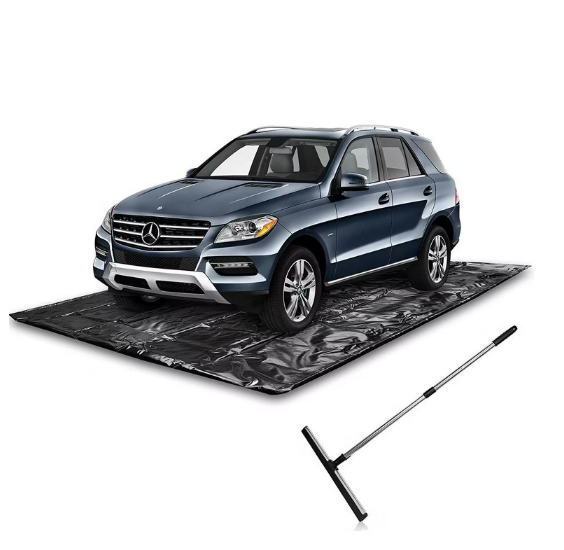
In a garage, the material must handle repeated contact with tires without becoming difficult to position or maintain. A mat that is excessively soft may deform under concentrated loads, while a very rigid product may not sit evenly on an imperfect floor. The appropriate balance depends on the mat’s thickness, formulation, internal structure, and intended load conditions. PVC also creates a relatively easy-to-clean surface. Dust, mud, and many common forms of vehicle dirt can be removed through sweeping, wiping, or washing, depending on the product’s construction. Unlike absorbent floor coverings, a solid PVC surface does not readily soak up water. However, liquid may remain on top, so the user still needs to remove standing water and clean spills promptly.
Why Does Surface Grip Matter When Vehicles Enter and Leave?
Slip resistance is important because garage floors experience changing conditions throughout the year. Rainwater, melting snow, wet tires, dust, and fine particles can alter the contact between a mat, footwear, and vehicle tires. A smooth surface may become difficult to walk across when contaminated, while an appropriately textured surface can provide additional grip.
The design of a Non-Slip PVC Garage Floor Mat should be considered from two perspectives: traction on the upper surface and stability against the floor below. A textured upper surface may improve contact, yet the entire mat can still shift if its underside does not remain stable during normal use.
Deep grooves may provide useful texture but can collect grit, whereas a flatter pattern may be easier to sweep. The best choice depends on whether the garage is used mainly for parking, walking, washing vehicles, or carrying out maintenance. Oil, grease, cleaning products, and accumulated water can reduce traction.
Which Construction Details Affect Durability Under Vehicle Loads?
Daily parking creates a repeated loading cycle. When a vehicle enters, the tires roll across the mat; once parked, the same areas remain under pressure for extended periods. Turning the steering wheel while the vehicle is stationary can create additional friction, particularly near the front tires. Thickness can influence flexibility and resistance to indentation, but thickness alone does not establish load capacity. Material density, reinforcement, overall design, and the manufacturer’s stated limits are also relevant.
If the mat curls at the edges, develops permanent depressions, or shifts repeatedly, it may become less convenient and create an uneven surface. Heavy vehicles, concentrated loads from equipment, and frequent steering movements require particular attention because they can place greater stress on specific areas. Sharp debris, loose fragments, raised joints, and damaged sections can create pressure points beneath the mat. Cleaning and inspecting the floor before installation helps reduce avoidable wear.
How Can a Garage Mat Help Protect the Underlying Floor?
Concrete is durable, but it can still develop stains, surface wear, and discoloration after repeated exposure to moisture, dirt, and vehicle-related contaminants. A floor mat creates a protective layer that helps separate much of this material from the covered area.
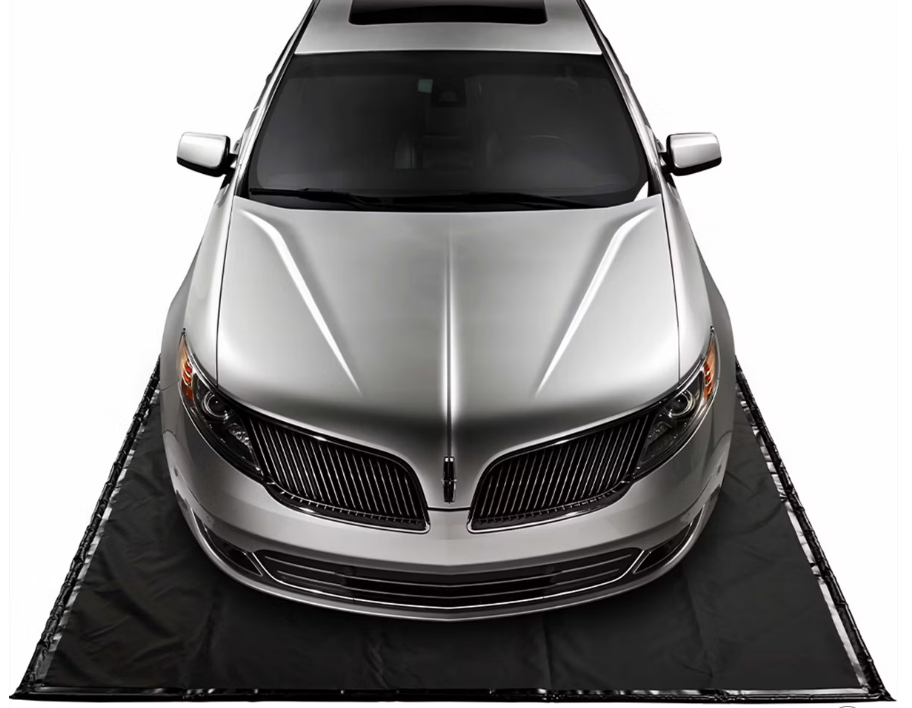
A flat mat can protect the area directly beneath it, but it may not contain liquid that runs beyond its edges. A containment-style design may include raised edges to help retain water and muddy runoff. These designs serve a different purpose from open-grid mats, which allow liquids to pass through. Coverage should account for the complete parked vehicle rather than only the four tire contact points. Water may drip from the wheel arches, underbody, doors, or bumpers, especially after driving in rain or snow. If these areas extend beyond the mat, the surrounding concrete can still become wet or dirty.
A Non-Slip PVC Garage Floor Mat can therefore support floor protection, but it should not be treated as a replacement for drainage, spill control, or repairs to damaged concrete. Selecting the appropriate structure and dimensions is essential to achieving the intended result.
 What Should Be Considered When Choosing a Mat for Regular Parking?
Before choosing a Non-Slip PVC Garage Floor Mat, consider the following practical factors:
l Vehicle weight and tire movement: Check whether the mat is designed for the vehicle’s load and whether it can accommodate repeated rolling and steering movements. Do not assume that a lightweight household mat is suitable for heavier vehicles.
l Dimensions and coverage: Measure the available parking area and consider the vehicle’s full length, width, and drip zones. Adequate coverage helps keep dirt and moisture from spreading onto uncovered concrete.
l Surface and underside design: Look for an upper texture suited to the expected moisture and dirt conditions, together with an underside that helps prevent unwanted movement. Confirm whether additional fixing or installation measures are recommended.
l Water management: Decide whether the main requirement is to protect the floor from drips, contain runoff, or allow water to drain through the surface. These functions require different mat designs.
l Cleaning requirements: Consider whether the surface can be swept, wiped, rinsed, or dried conveniently. A complicated pattern may retain more debris and require additional cleaning effort.
l Environmental conditions: Temperature changes, direct sunlight, and prolonged exposure to certain automotive fluids can affect material performance. Check the product’s care instructions and suitability for the intended location.
These factors should be assessed together.
How Can Routine Maintenance Preserve Mat Performance?
Even a durable mat requires regular care. Sand, small stones, road salt, mud, and other debris can accumulate along tire paths. When trapped between the tires and the mat, abrasive particles may contribute to surface scuffing. Moisture and automotive residue can also make the walking surface more slippery.
l Remove loose debris regularly: Sweep or vacuum grit before it becomes embedded in the surface or repeatedly passes beneath tires.
l Clean spills promptly: Remove oil, coolant, and other vehicle fluids using a cleaning method approved for the specific PVC product. Do not leave unknown chemicals on the mat.
l Use suitable cleaning agents: Mild cleaners are generally a practical starting point, but the manufacturer’s instructions should take priority. Strong solvents or incompatible chemicals may damage the material.
l Check edges and contact points: Look for curling, cracks, movement, or permanent deformation, especially where tires repeatedly enter and leave the parking space.
l Allow the surface to dry when necessary: After washing, remove excess water and ensure the area is suitable for safe walking and driving before returning to normal use.
Finding a Suitable PVC Garage Mat for Your Needs
When comparing PVC garage mats, it is useful to start with the actual conditions of the intended space. Vehicle type, parking frequency, floor condition, moisture exposure, and cleaning preferences all influence the appropriate construction. We offer PVC garage mat solutions for different application requirements, with product selection guided by practical considerations such as surface design, dimensions, and everyday use conditions. By identifying the main demands of your parking or maintenance area first, you can evaluate suitable options more effectively and choose a mat that fits your floor protection and maintenance needs.
Conclusion
A PVC garage mat is suitable for daily vehicle use when its material, surface texture, structural stability, dimensions, and maintenance requirements match the conditions of the garage. Grip helps support safer movement, durable construction accommodates repeated tire contact, and appropriate coverage helps protect the underlying floor from common dirt and moisture. Regular cleaning and inspection further support reliable use over time.
FAQ
1. Can a PVC garage mat be used under a parked car every day?
Yes, provided the mat is designed for the vehicle’s weight and repeated tire contact. Check the stated load limits and installation guidance before use.
2. Does a PVC Garage Mat Affect How Easily a Car Can Be Parked?
A PVC garage mat can influence how smoothly a vehicle enters and leaves a parking space. The mat should lie flat, remain stable under tire movement, and have edges that do not interfere with the tires. Choosing a suitable size and following the installation instructions can help reduce shifting during everyday parking.
3. How can users tell when a garage mat needs replacing?
Persistent curling, cracks, damaged edges, substantial deformation, or loss of surface texture may indicate that a mat needs repair or replacement. Follow the product’s inspection and replacement guidance.
Post time: Oct-23-2026