
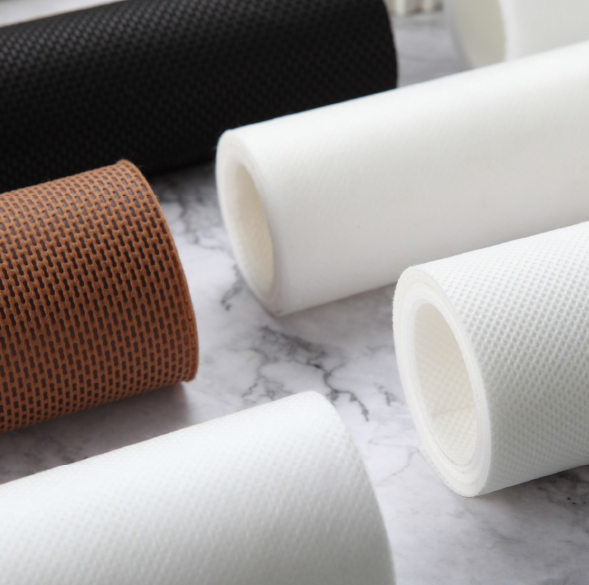
RPET Nonwoven Spunbond Fabrics are used in reusable bags, packaging, household products, protective coverings, and other manufactured goods. However, the quality of a finished product depends not only on the fabric itself but also on how it is handled and processed. Cutting, folding, sewing, laminating, and roll feeding can influence the material’s appearance, structural integrity, and suitability for further manufacturing.
Why Does Converting Matter for RPET Nonwoven Spunbond Fabrics?
RPET nonwoven spunbond fabric is generally made from recycled polyethylene terephthalate (PET), which can be recovered from used plastic bottles and processed into fibers. These fibers are formed into a web and bonded together. Unlike woven textiles, the structure does not depend on interlaced yarns. Instead, fiber arrangement and bonding contribute to the material’s strength, flexibility, and surface characteristics.
These structural differences matter during converting. A fabric that performs well as a flat sheet may respond differently when cut into narrow pieces, folded repeatedly, stitched under tension, or combined with another material. Processing conditions can also interact with fabric weight, thickness, bonding characteristics, and the design of the finished product. Converting should therefore be considered part of the overall product development process rather than a separate operation after material selection. Evaluating the fabric under realistic processing conditions helps determine whether it can meet manufacturing requirements and final product expectations.
How Cutting Influences Fabric Edges and Product Dimensions
Cutting establishes the shape and dimensions of the components used in a finished product. Although it may appear straightforward, the cutting method and fabric structure can influence edge appearance, dimensional consistency, and the efficiency of subsequent operations.
Mechanical cutting, rotary cutting, and heat-based cutting methods can produce different results depending on the fabric construction and equipment settings. An unsuitable blade may create rough edges, drag fibers, or produce inconsistent outlines. Heat-based methods may help control loose fibers in some constructions, but excessive heat can affect the cut edge or surrounding material.
Several considerations are important during cutting:
Edge condition: Check for loose fibers, deformation, or irregularities that could affect sewing, sealing, or assembly.
Dimensional accuracy: Confirm that cut pieces maintain the required length, width, and shape across production runs.
Material movement: Ensure that the fabric remains properly positioned instead of stretching, shifting, or developing folds.
Pattern layout: Arrange cutting patterns efficiently while preserving the required dimensions and orientation of each component.
Cutting quality also affects subsequent operations. Uneven edges can make panels harder to align before sewing or lamination. Accurate cutting reduces repeated adjustments and helps maintain consistency across finished products.
What Happens When the Fabric Is Folded or Sewn?
Folding and sewing introduce localized bending, tension, and pressure. Their effects depend on the fabric structure, product geometry, and assembly conditions.
Folding creates a concentrated bend along a specific line. For flexible RPET Nonwoven Spunbond Fabrics, folds may be easy to form, but repeated folding can leave visible creases or change the local appearance. Products designed for frequent folding should be evaluated under conditions that resemble their intended use.
Sewing presents a different challenge because stitches concentrate force around needle penetrations. If the needle, stitch spacing, thread tension, or seam position is unsuitable, the fabric may develop holes, puckering, or localized tearing. These issues are particularly relevant around handles, corners, and other areas exposed to repeated loading. A practical assessment should examine the complete seam rather than the stitching alone. The fabric around the seam should remain stable, and the joint should withstand the forces expected during normal use. Where substantial loads are concentrated in a small area, reinforcement or a design that distributes the load more widely may be worth considering. Not every RPET nonwoven fabric is suitable for sewing or repeated folding. Suitability depends on its construction and the requirements of the finished product.
How Does Lamination Change Processing Requirements?
Lamination combines nonwoven fabric with another layer, such as a film or coating, to achieve specific surface or functional properties. Depending on the design, the additional layer may improve moisture resistance, provide a printable surface, or change the appearance and handling characteristics of the finished material.
However, lamination introduces an interface that must remain compatible with the nonwoven substrate. Bonding depends on factors such as surface characteristics, adhesive selection, temperature, pressure, and processing speed. Unsuitable conditions may cause inconsistent bonding, wrinkles, or separation during later handling.
The additional layer can also change how the material behaves during cutting, folding, and sewing. A laminated structure may be stiffer than the original fabric, while differences in flexibility between layers may affect bending. The most appropriate construction depends on the intended application rather than the assumption that adding more layers always improves performance.
Why Roll Feeding and Material Tension Need Attention
Uneven roll tension, poor alignment, or wrinkles may cause the fabric to enter a machine inconsistently. This can lead to inaccurate cuts, misaligned patterns, or irregular positioning during lamination and assembly. Even when the fabric meets its specification, unstable feeding can reduce production consistency.
Roll handling should focus on maintaining alignment and controlling tension without unnecessarily stretching or distorting the web. Storage and transportation conditions also matter because damaged edges, contamination, or persistent creases may complicate subsequent processing. If irregularities repeatedly appear in the same location or at similar intervals, examining the feeding path and roll condition can help determine whether the issue originates during handling rather than in the fabric itself. Adjusting cutting or sewing settings will not necessarily resolve a problem caused by inconsistent material feeding.
How to Evaluate Fabric Before Full-Scale Production
A small converting trial can reveal problems that are not obvious when examining a flat fabric sample. Evaluation should reproduce the operations that the finished product will undergo rather than focusing only on appearance and basic specifications.
A practical assessment can include:
l Run a cutting trial: Check edge quality, dimensional accuracy, and material stability during cutting.
l Test the intended joining method: If the product requires sewing, sealing, or lamination, assess the joint and surrounding fabric.
l Inspect after handling: Fold, bend, or move the sample as expected during manufacturing and use, then check for visible changes or structural problems.
l Review process consistency: Compare samples from different positions in the roll or separate production runs to identify recurring irregularities.
l Confirm application requirements: Evaluate the processed sample against dimensional, appearance, strength, and functional requirements.
These checks should reflect the intended product. A simple packaging insert does not necessarily require the same evaluation as a reusable bag with stitched handles. Testing should focus on the stresses and processing operations relevant to the finished item.
Finding the Right RPET Nonwoven Spunbond Fabric for Your Project
Choosing a suitable fabric starts with understanding the finished product and its processing requirements. Fabric weight, thickness, flexibility, bonding characteristics, and surface condition can all influence how the material behaves during converting. The best option is not determined by a single specification but by how the material works within the complete production process.
Vinner offers RPET Nonwoven Spunbond Fabrics as part of its multipurpose fabric range. When evaluating materials for a project, buyers can consider the intended application, required dimensions, cutting method, joining process, and expected conditions of use. Sharing these details when making an inquiry helps establish whether a proposed fabric is appropriate for the planned converting operations.
Conclusion
Cutting and converting influence how RPET Nonwoven Spunbond Fabrics perform during manufacturing and in finished products. Cutting affects edge quality and dimensions, folding and sewing introduce localized stresses, lamination changes the material structure, and roll feeding influences processing consistency. Considering these stages together helps distinguish material-related limitations from problems caused by processing conditions. Representative converting trials and clear product requirements provide a practical basis for achieving reliable processing and consistent finished-product quality.
Frequently Asked Questions
1. Can RPET Nonwoven Spunbond Fabrics Be Used for Products with Different Shapes and Sizes?
Yes. RPET Nonwoven Spunbond Fabrics can be supplied in different widths and processed into various shapes and sizes, depending on the product design and manufacturing requirements. Before placing a bulk order, buyers should confirm the required dimensions, cutting tolerances, and converting method to ensure the material suits the intended application.
2. Are RPET Nonwoven Spunbond Fabrics Suitable for Outdoor Applications?
They may be suitable for certain outdoor applications, depending on the fabric’s formulation and performance requirements. Factors such as ultraviolet exposure, moisture, temperature changes, and mechanical stress can affect durability. Buyers should confirm whether the selected material has the properties needed for the intended environment and request relevant test information when specific outdoor performance is required.
3. Does Recycled PET Content Affect the Processing Performance of Nonwoven Spunbond Fabrics?
Processing performance depends on the overall material formulation, fiber structure, fabric construction, and manufacturing quality—not recycled content alone. Buyers should evaluate the finished fabric’s strength, consistency, and suitability for the intended converting process rather than assuming that all recycled PET nonwovens perform the same way.
4. What Information Should Buyers Provide When Requesting RPET Nonwoven Spunbond Fabrics?
To help suppliers recommend suitable materials, buyers should specify the end product, required fabric weight and width, color, order quantity, and expected processing methods. Details about cutting, sewing, bonding, or lamination requirements are also useful. Providing this information early helps suppliers assess material suitability and reduces the risk of mismatches during production.
Post time: Oct-21-2026