
A PVC Garage Containment Mat is designed to keep water, mud, snowmelt, road salt, and vehicle debris within a defined parking area. Unlike a simple floor covering, it needs to remain waterproof, stable, and easy to clean while vehicles repeatedly drive over the same surface.
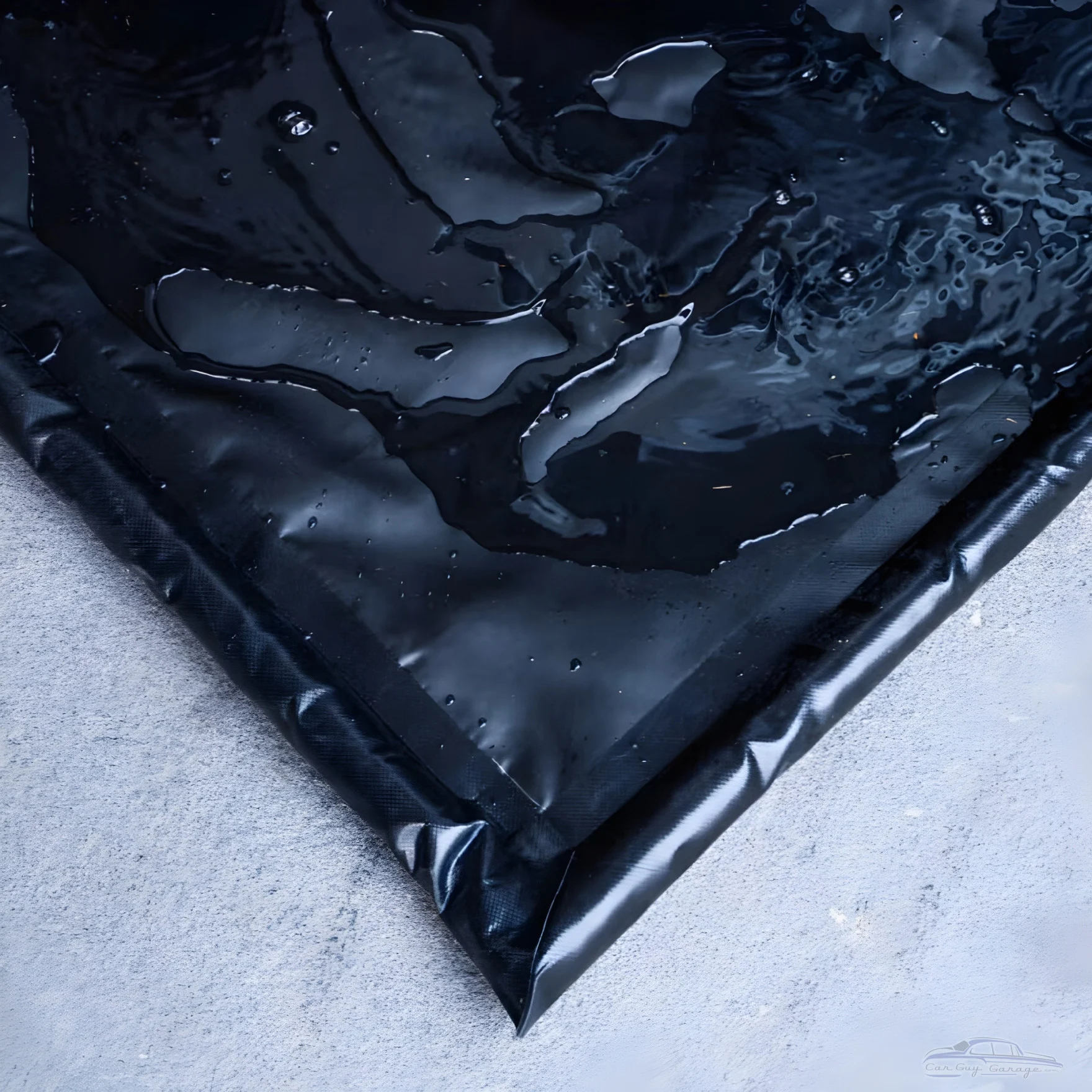
For long-term garage use, durability depends on more than PVC thickness. Tire pressure, steering movement, edge construction, floor condition, mat size, and routine cleaning all influence how a PVC Garage Containment Mat performs over time.
Why PVC Garage Containment Mat Durability Depends on Daily Use
A garage containment mat is exposed to repeated pressure every time a vehicle enters, parks, and leaves. Tires roll across the mat edge, vehicle weight is concentrated within relatively small contact areas, and dirt or grit may become trapped between the tire and the PVC surface.
The most demanding conditions often come from repeated rather than occasional use. For example, parking in the same position every day concentrates pressure along the same tire paths, while turning the steering wheel when the vehicle is stationary creates lateral friction across the PVC.
Common factors affecting long-term performance include:
- Vehicle weight and tire width
- Frequency of vehicle entry and exit
- Stationary steering on the mat
- Sand, gravel, or debris carried by tires
- Seasonal temperature changes
- Repeated exposure to water and road salt
- Cleaning and maintenance frequency
A durable garage containment mat therefore needs to handle both vehicle loading and the everyday contamination that comes with normal garage use.
Is a Thicker PVC Garage Mat Always More Durable?
Not necessarily.PVC thickness is one useful product characteristic, but it does not determine durability by itself. Two mats with similar thickness can behave differently depending on the PVC formulation, flexibility, surface consistency, edge construction, and overall material stability.
A suitable heavy duty PVC garage mat should provide a balance between flexibility and structural stability. If the material is too stiff, it may take longer to flatten after unfolding, especially in cooler environments. If it is too flexible or unstable, repeated tire movement may contribute to shifting or wrinkling.
For this reason, it is more useful to evaluate the complete mat structure rather than relying on thickness alone.
Why Tire Areas Wear Differently from the Rest of the Mat
The center of a PVC garage containment mat does not experience uniform pressure.
The tire paths usually receive the greatest repeated load, especially where the vehicle first drives onto the mat and where the tires remain parked for long periods.
Several conditions increase stress in these areas:
- Stationary steering: turning the wheels while the vehicle is not moving creates more surface friction than normal rolling.
- Heavy vehicles: SUVs, pickups, and vans place greater concentrated loads on the mat.
- Embedded grit: small stones or sand caught in tire tread can create localized pressure points.
- Repeated parking position: continuous loading in the same location increases wear along specific areas.
Keeping the tire paths relatively clean helps reduce unnecessary abrasion and point loading.
Why Wrinkles Matter on a PVC Garage Containment Mat
Wrinkles are not only an appearance issue.A large PVC mat is normally folded or rolled for transport, so some temporary creasing may appear when it is first opened. The more important question is whether the material can settle into a reasonably flat working surface.
Persistent wrinkles may:
- Interfere with smooth vehicle entry
- Create areas where dirt and water collect
- Increase localized tire pressure
- Make sweeping and rinsing more difficult
- Cause the mat to shift when driven over
Before installation, the garage floor should be cleaned of loose stones, screws, sharp debris, and heavy dirt. The mat should then be unfolded and positioned carefully rather than repeatedly dragged across the floor.
A relatively clean and even surface helps the PVC mat settle more consistently.
Why Sealed Edges Are Important for Garage Containment
The waterproof center surface and the perimeter of the mat perform different functions.
The PVC surface prevents water and debris from directly reaching the concrete below, while the sealed edges help keep collected liquid inside the designated parking area.
If the perimeter becomes damaged or loses its shape, water can escape even if the central surface remains waterproof.
This makes edge construction especially important for garages exposed to:
- Melting snow
- Rainwater
- Muddy tire runoff
- Road salt
- Slush
- Minor vehicle drips
A containment mat should therefore be evaluated as a complete structure rather than simply as a flat waterproof sheet.
How Garage Floor Condition Affects PVC Mat Performance
The surface under the mat also matters.A relatively smooth concrete floor provides more consistent support than a floor containing sharp debris, raised joints, or broken edges. Small objects trapped under the mat may create localized pressure when a vehicle drives over them.
Before placing a PVC garage containment mat, it is useful to check for:
- Loose stones or metal fragments
- Sharp concrete edges
- Raised floor joints
- Deep cracks or damaged areas
- Heavy dust and debris
- Significant floor slope
A containment mat can protect the covered garage floor, but it cannot correct serious structural problems in the concrete itself.
Does Vehicle Type Affect PVC Garage Mat Performance?
Yes. Different vehicles create different loading and coverage requirements.
A compact passenger car usually places less load on the mat and has a smaller drip area. SUVs typically have wider tires, larger wheel arches, and may carry more snow or mud into the garage. Pickups and vans may combine greater weight with longer body dimensions.
For this reason, mat size should provide enough space around the complete vehicle rather than simply fitting beneath the four tires.
|
Vehicle Type |
Main Considerations |
| Compact car | Moderate tire load, smaller footprint |
| Sedan | Front and rear drip coverage |
| SUV | Wider tires, larger wheel arches, more runoff |
| Pickup truck | Greater load, longer body, larger drip area |
| Van | Longer vehicle length and wider coverage needs |
A correctly sized PVC Garage Containment Mat keeps the main tire and drip areas away from the perimeter, which can help the mat perform more consistently.
How Cleaning Affects the Life of a PVC Garage Containment Mat
A containment mat collects the same dirt that would otherwise spread across the garage floor. Over time, sand, grit, road salt, mud, and other debris can build up on the surface.
Abrasive particles are particularly important because they may remain beneath the tires and increase friction during vehicle movement.
Routine maintenance may include:
- Sweeping away dry grit and debris
- Removing standing water when necessary
- Rinsing accumulated mud and salt residue
- Checking the tire paths for trapped stones
- Inspecting the mat edges during cleaning
Winter conditions often require more frequent cleaning because road salt, sand, and snowmelt accumulate faster.
The purpose of maintenance is not only appearance. A cleaner mat surface also reduces unnecessary wear caused by abrasive debris.
What Should a Good PVC Garage Containment Mat Provide?
For regular vehicle use, several product features should work together:
- Waterproof PVC surface to isolate water and dirt from the garage floor
- Durable material structure for repeated vehicle movement
- Stable sealed edges to maintain the containment area
- Reduced wrinkling for easier parking and cleaning
- Stable corners to reduce unwanted movement
- Suitable dimensions for the vehicle and garage layout
- Easy-clean surface for regular maintenance
No single feature determines performance. Long-term reliability depends on how these details work together under actual garage conditions.
Vinner PVC Garage Containment Mat
Vinner provides PVC Garage Containment Mat products for passenger cars, SUVs, pickups, vans, and larger vehicle applications.
The mats use high-strength waterproof PVC and are designed to help contain rainwater, melting snow, mud, road salt, debris, and minor vehicle drips. Updated material construction is intended to improve durability, reduce wrinkling, and provide stronger edge containment.
The mat requires no complicated assembly. It can be unfolded and placed with the smooth side facing down, while the corner design helps maintain position during normal garage use.
Conclusion
A PVC Garage Containment Mat needs to do more than stay waterproof. Daily durability is influenced by tire pressure, steering movement, trapped debris, floor condition, edge construction, vehicle size, and maintenance.
A well-designed mat combines a durable PVC surface with sealed edges, stable positioning, suitable dimensions, and easy cleaning. When these elements are matched to actual garage conditions, the mat can continue containing water, mud, snowmelt, and debris while protecting the floor beneath the vehicle.
FAQ
How long can a PVC Garage Containment Mat last?
Service life depends on material quality, vehicle weight, floor condition, cleaning habits, temperature, and frequency of use. Proper installation and regular removal of abrasive debris can help support longer use.
Why does a PVC garage mat wrinkle?
Wrinkles may result from packaging, temperature, floor unevenness, or material flexibility. Allowing the mat to settle on a clean, relatively flat floor can reduce persistent creasing.
Can SUVs and pickup trucks use a PVC Garage Containment Mat?
Yes. Larger vehicles can use a garage containment mat when the dimensions and material construction are suitable for the vehicle’s size and daily loading.
Are sealed edges necessary on a garage containment mat?
Yes. The waterproof PVC surface protects the floor below, while sealed edges help keep water, mud, and debris from spreading beyond the mat.
How should a PVC Garage Containment Mat be cleaned?
Loose debris can be swept away, while mud, road salt, and other residue can be rinsed or wiped from the waterproof surface as needed.
Post time: Aug-24-2026