
Long-term outdoor performance depends on more than how a PP Woven Ground Cover looks when it is first installed. In gardens, nurseries, orchards, and landscaped areas, the fabric is continuously affected by tension, foot traffic, surface friction, fixing stress, and changes in the ground below.
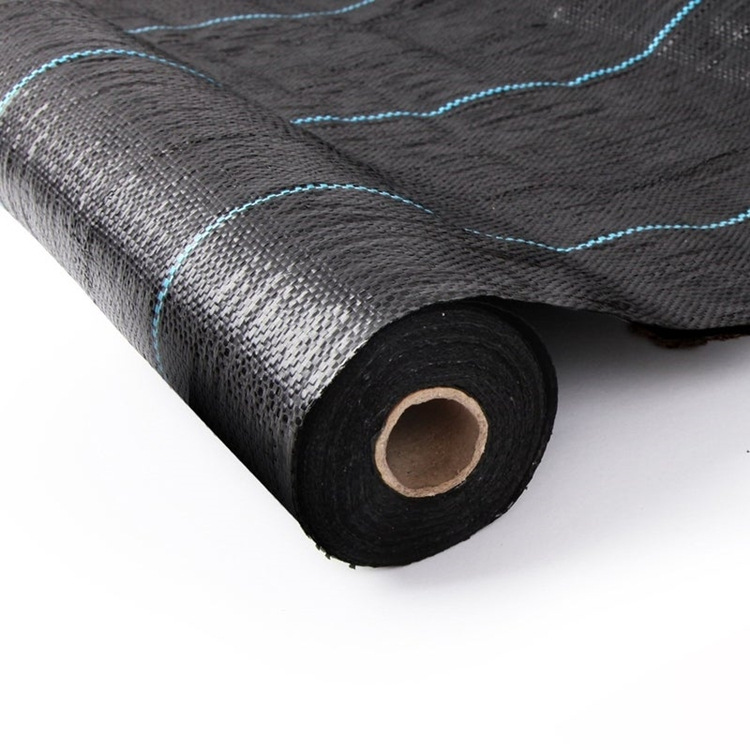
For this reason, the key question is not simply whether the fabric can cover the soil, but whether the woven structure can remain stable after repeated use. A durable PP Woven Ground Cover needs to maintain its position, resist local loosening and fraying, and continue supporting water movement and surface coverage over time.
Why Does the Woven Structure of PP Woven Ground Cover Determine Long-Term Stability?
PP Woven Ground Cover is typically produced by interlacing polypropylene tapes in longitudinal and transverse directions. Unlike nonwoven materials, much of its strength and dimensional stability comes from the continuous relationship between these woven tapes. Once one area begins to loosen, the effect may gradually extend into the surrounding structure.
Many PP woven ground covers look very similar when first unfolded, but differences often become visible after extended use, particularly around fixing points, cut edges, and frequently accessed areas. If the tapes are unevenly distributed or the weave is too loose, local openings may gradually enlarge under repeated tension, and the fabric may become more likely to shift from its original position.
For this reason, the quality of PP Woven Ground Cover should not be judged only by surface flatness. The more important question is whether the woven structure can remain stable after repeated stress. In applications where the material is expected to stay in place for a long time, structural stability directly influences future maintenance requirements.
How Does PP Woven Ground Cover Balance Light Blocking and Water Movement?
Light blocking is one of the important functions of PP Woven Ground Cover. By reducing the amount of sunlight reaching the soil surface, the fabric can help limit unwanted plant growth. At the same time, outdoor ground should not become completely isolated from rainfall or irrigation.
This means the woven structure needs to balance two requirements. It should be sufficiently stable and dense to reduce light penetration, while still allowing suitable water movement through the fabric.
If the weave is too open, more light may reach the soil through larger gaps. If the structure is poorly designed for water transmission, rainfall or irrigation water may take longer to pass through. Therefore, “the tighter the weave, the better” is not an accurate way to evaluate the material. What matters more is whether the entire PP Woven Ground Cover maintains a uniform and stable woven structure.
This is particularly important in nurseries and planting areas that use drip or sprinkler irrigation, where the fabric needs to provide ground coverage without interfering with normal water management.
How Do Gravel, Tools, and Foot Traffic Change the Stress on Ground Cover?
PP Woven Ground Cover does not always remain completely undisturbed after installation. Nursery workers may repeatedly walk along the same paths, while pots, hoses, tools, and equipment may be moved across the surface. In landscape projects, decorative gravel may also be installed over the fabric.
These activities create localized friction rather than uniform tension across the entire material.
Common high-wear areas include:
- Main nursery walkways;
- Frequent turning points;
- Areas where pots and tools are regularly placed;
- Locations around irrigation equipment;
- Routes used by small equipment;
- Areas where decorative gravel is repeatedly disturbed.
When the woven structure remains stable, localized friction is less likely to quickly disturb the alignment of the tapes. If the weave is already loose, repeated abrasion can gradually enlarge local damage.
For this reason, the same PP woven ground cover should not automatically be considered suitable for every outdoor environment. The more frequently the surface is used and disturbed, the more important structural stability becomes.
Why Can Changes in the Soil Cause PP Woven Ground Cover to Wrinkle?
Outdoor soil changes continuously with moisture conditions. After rainfall, soil may soften or expand; during dry periods, it may contract. Repeated foot or equipment traffic may also create localized settlement.
Because the fabric is installed directly above this surface, it needs to adapt to small ground changes while maintaining overall positional stability.
If installation tension is uneven or fixing points are insufficient, local wrinkles may form after the ground settles. These wrinkles do more than affect appearance. They can collect soil, water, and plant debris and may also be caught by tools or footwear during later maintenance.
Long-term performance therefore depends not only on whether the PP material is flexible, but also on whether the material structure, fixing method, and ground conditions work together to maintain a relatively stable surface.
Why Should Overlap Areas Be Treated as More Than Simple Coverage?
When PP Woven Ground Cover is installed over a large area, multiple fabric sections usually need to overlap. Immediately after installation, the surface may look fully covered, but overlap areas can still move over time.
If the overlap is too narrow or poorly secured, foot traffic, wind, gravel movement, and changes in the ground can gradually cause the two sections to shift apart. Once the overlap opens, the soil underneath becomes exposed again.
For this reason, overlap areas should be treated as long-term connection points. Their stability should consider traffic direction, fixing locations, surface materials, and future maintenance frequency rather than simply placing one sheet over another.
How Do Structural Priorities Change Between Different PP Woven Ground Cover Applications?
Different outdoor environments expose the fabric to different types of stress, so the main structural requirements also change.
|
Application |
Structural Performance to Consider |
| Garden beds and planting areas | Stable coverage and water movement |
| Nursery walkways | Resistance to foot traffic and localized abrasion |
| Orchard rows | Fixing stability and long-term positional control |
| Decorative gravel areas | Resistance to friction and localized puncture |
| Around trees and posts | Stability of cut edges |
| Irrigation areas | Structural stability under wet conditions and frequent maintenance |
Instead of applying one general specification to every application, it is more useful to first identify the main stresses the ground cover will experience. Areas with frequent traffic require greater attention to wear and fixing stability, while lightly used planting areas may place more emphasis on coverage and water management.
Vinner PP Woven Ground Cover
Vinner provides PP Woven Ground Cover for gardens, nurseries, orchards, landscaping projects, and other outdoor ground-covering applications. Different solutions can be matched according to actual use conditions, including foot-traffic frequency, gravel coverage, irrigation maintenance, and long-term fixing requirements.
For projects with specific installation dimensions, operating conditions, or long-term maintenance needs, product configurations can also be adjusted according to the intended application so that the PP woven ground cover better matches actual outdoor use.
Long-Term Performance Depends on How the Structure Handles Repeated Disturbance
The performance of PP Woven Ground Cover should not be judged only by how effectively it covers the ground immediately after installation. Over time, outdoor conditions expose the material to tension, foot traffic, abrasion, cutting, overlap movement, soil settlement, and repeated maintenance activity. These effects are often concentrated around fixing points, edges, and frequently used areas.
A stable woven structure helps the ground cover maintain its original coverage and overall condition even after these disturbances occur. Therefore, when evaluating whether a PP woven ground cover is suitable for long-term outdoor use, a more useful question than “Does it look flat when first installed?” is whether it can maintain a complete and stable woven structure after prolonged traffic, maintenance, and ground movement.
FAQ
Why does PP Woven Ground Cover gradually become loose around fixing points?
Fixing points concentrate forces created by wind, foot traffic, and routine maintenance. If the surrounding woven structure is not sufficiently stable, the openings around landscape staples can gradually enlarge under repeated stress and eventually affect the position of the fabric.
Why can PP woven ground cover fray after cutting?
Cutting interrupts the continuous relationship between the longitudinal and transverse tapes. If the exposed edge is repeatedly pulled or rubbed, the individual tapes can become loose more easily than those within an intact section.
Can PP Woven Ground Cover be installed beneath gravel?
Yes. When used beneath decorative gravel, the woven structure should be able to tolerate localized friction, movement, and puncture forces while remaining stable during installation and long-term use.
Is PP Woven Ground Cover suitable for nursery walkways?
Yes, but nursery walkways usually involve repeated foot traffic, tool movement, and frequent maintenance. Greater attention should therefore be given to weave stability, fixing areas, and resistance to localized wear.
Post time: Sep-10-2026