
One of the key advantages of PP Spunbond Non Woven Fabric is its flexibility in specification. By adjusting GSM, width, color, roll dimensions, and final configuration, the material can be adapted to different products and application environments. From packaging and agricultural covering to furniture components, laminated materials, and general industrial uses, PP spunbond fabric can be configured according to the needs of the final product instead of relying on one standard specification for every application.
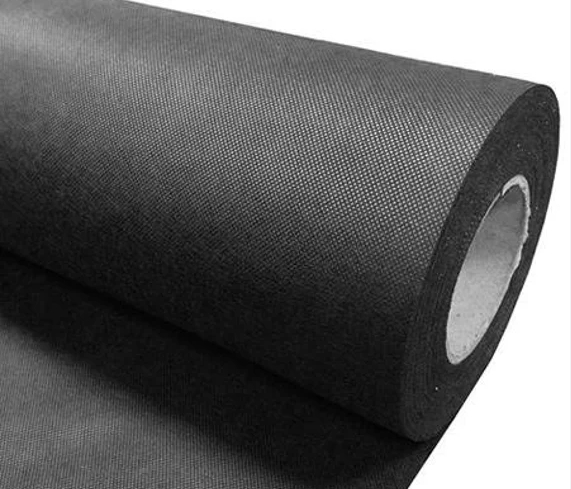
This flexibility makes PP spunbond nonwoven more than a basic sheet material. It can serve as a functional layer within many different product structures. The important point is not to focus on one parameter alone, but to find the right balance between coverage, flexibility, weight, dimensions, and downstream processing requirements.
Why Can the Same PP Spunbond Non Woven Fabric Be Used in Different Products?
The spunbond process forms continuous polypropylene filaments and distributes them into a web before bonding them into a stable fabric structure. This gives the material a useful combination of low weight, flexibility, and structural stability. Because the structure can be adjusted for different requirements, PP Spunbond Non Woven Fabric can be used across a wide range of applications.
For packaging, the material may place more emphasis on a clean surface, low weight, and easy cutting. In furniture applications, stable coverage and suitable dimensions may be more important. Agricultural uses often require convenient handling over larger areas, while laminated structures may need a fabric width and configuration that work well with the other layers in the finished product.
Different applications therefore require more than simply changing where the fabric is used. The specification should be matched to the final product so that the PP spunbond fabric performs the right function within that structure.
Why Is Lightweight Performance an Important Advantage?
Many products do not require a heavy woven material. Instead, they need an additional layer for covering, separation, protection, or support without adding unnecessary weight to the finished product. PP spunbond nonwoven is well suited to these applications because its GSM can be adjusted for different levels of coverage and material feel.
Lighter grades can be used for basic covering, packaging, or auxiliary-layer applications, while higher GSM options can provide a more substantial structure where needed. This allows PP Spunbond Non Woven Fabric to fit different product designs without being limited to one fixed level of material weight.
For applications where total product weight, material usage, and structural efficiency need to be balanced, this flexibility is particularly useful.
Why Should Width and Roll Specifications Be Matched in Advance?
For roll materials, performance is important, but practical dimensions also influence how easily the fabric can be used. Packaging, furniture, agriculture, lamination, and industrial applications may all require different working widths, so matching the roll width more closely to the final application can reduce unnecessary secondary cutting.
Roll length and overall roll format also matter. Some applications benefit from larger continuous rolls, while others may require smaller rolls that are easier to move, store, and handle. The best configuration depends on how the material will actually be used.
For this reason, customization of PP Spunbond Non Woven Fabric is not limited to GSM and color. Width, roll length, and packaging format can also be matched to the real production or application process, helping the material fit more naturally into the final workflow.
Color Is More Than an Appearance Choice
PP spunbond nonwoven can be supplied in different colors depending on the application, and color is not always purely decorative. In packaging and finished consumer products, the fabric may need to coordinate with the overall product design. Furniture and industrial components may also require a certain color even when the material is only partially visible.
Agricultural and general-purpose applications may use different colors for product identification or specific usage requirements. For projects with established product lines or long-term supply needs, consistent color selection can also help maintain a more uniform appearance across different production batches.
As a result, color can be treated as part of the complete material specification together with GSM, width, roll dimensions, and final application.
How Can PP Spunbond Non Woven Fabric Be Matched to Different Applications?
The same PP spunbond material system can be configured differently according to the final product, which is one reason it is used across many industries.
|
Application |
Main Specification Considerations |
| Packaging | GSM, color, width, cutting requirements |
| Furniture components | Coverage, width, surface appearance |
| Agriculture | Large-area coverage, roll dimensions, ease of handling |
| Laminated materials | Width, structural matching, lamination requirements |
| Protective applications | Coverage, flexibility, suitable GSM |
| General industrial use | Stable specifications, dimensions, customization |
There is therefore no single standard specification that is ideal for every PP spunbond application. A more practical approach is to begin with the final use and then determine the material configuration around that requirement.
Why Are Customized Specifications More Practical for Long-Term Projects?
Standard specifications may be sufficient for occasional or small-volume applications, but long-term projects and repeated production often benefit from materials that are more closely matched to the finished product.
A suitable width can reduce additional cutting, while the right roll length can make daily handling more convenient. Consistent color helps maintain a uniform product series, and an appropriate GSM allows the material to meet the actual functional requirement without being unnecessarily light or heavy.
These parameters may appear independent, but together they determine whether the PP spunbond fabric truly fits the project. Customization does not need to make the specification more complicated; its purpose is to make the material more suitable for the way it will actually be used.
Vinner PP Spunbond Non Woven Fabric
Vinner provides PP Spunbond Non Woven Fabric for a range of applications, with different GSM options, widths, colors, and roll specifications available according to project requirements. The material can be matched to packaging, agriculture, furniture, lamination, and other industrial applications.
For different projects, the focus is not simply on supplying one standard configuration. The intended application, finished-product dimensions, weight requirements, color, and processing method can all be considered when matching the material specification. This helps the PP spunbond nonwoven fit the final product more closely.
If you already have a sample, an existing specification, or a clear application requirement, you can provide the GSM, width, color, roll dimensions, intended use, and estimated quantity. Vinner can help match a suitable PP Spunbond Non Woven Fabric solution to your project.
The Right PP Spunbond Non Woven Fabric Should Match the Final Application
The value of PP Spunbond Non Woven Fabric does not depend on one specification alone. Its strength lies in the ability to combine different GSM levels, widths, colors, and roll formats to suit different products and application environments. GSM affects material weight and coverage, while width and roll format influence handling and practical use. Color and other customized options can further adapt the material to specific product requirements.
From packaging and furniture to agricultural covering and laminated materials, the right PP spunbond nonwoven should be selected around the final use. Understanding what the finished product requires and then matching the material configuration accordingly is often more practical than comparing only one GSM value or relying on a single standard specification.
FAQ
What specifications are available for PP Spunbond Non Woven Fabric?
Different GSM levels, widths, colors, and roll dimensions can be matched according to the application. The final configuration should be selected based on the requirements of the finished product.
Can PP spunbond nonwoven fabric be used for packaging?
Yes. PP spunbond nonwoven is lightweight, flexible, and easy to process, making it suitable for various packaging applications depending on required dimensions, colors, and material structures.
Can PP Spunbond Non Woven Fabric be customized in color and width?
Yes. Color and width can be matched to specific project requirements so that the material better fits the finished product and actual application dimensions.
What information should be provided when asking Vinner about PP spunbond nonwoven?
It is useful to provide the required GSM, width, color, roll dimensions, final application, and estimated quantity. If you already have a sample or an existing specification, it can also be used as a reference for material matching.
Post time: Sep-14-2026