
PP Spunbond Laminated Fabric is suitable for applications that require additional surface protection, liquid resistance, or a more complete surface finish while still benefiting from the lightweight and flexible properties of PP spunbond nonwoven. Standard PP spunbond fabric already works well for covering, separation, packaging, and supporting layers, while lamination allows the material to meet applications with higher surface-performance requirements.
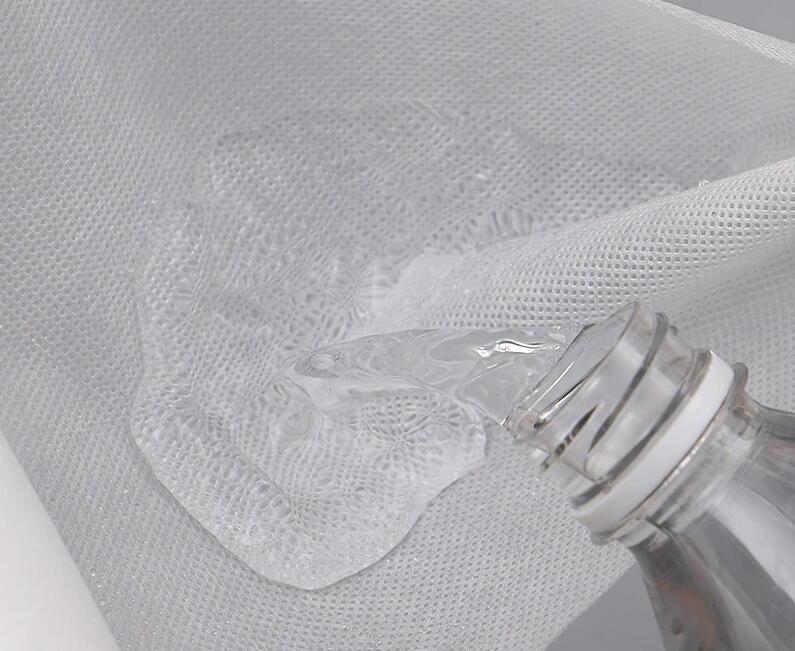
Lamination is therefore not simply about adding material thickness. Its purpose is to introduce a function that the finished product actually needs. Packaging, protective products, furniture components, agricultural materials, and industrial products all interact with their surroundings differently, so the decision to use a laminated structure should be based on the final application.
When Is Standard PP Spunbond Fabric Already Enough?
If a product mainly requires lightweight coverage, separation, flexibility, or basic support, standard PP spunbond nonwoven can already perform effectively. Packaging liners, furniture backing materials, agricultural covers, and general protective layers may focus more on material weight, softness, dimensions, and ease of handling than on creating a closed surface.
Standard PP spunbond is also convenient for cutting, folding, sewing, and combining with other materials. When there is no clear requirement for additional liquid resistance or a more finished surface, a simpler nonwoven structure can remain the practical choice.
The advantages of PP Spunbond Laminated Fabric become more relevant when the finished product needs additional protection against moisture, dust, dirt, or direct environmental contact.
What Changes When a Lamination Layer Is Added?
The PP spunbond base provides flexibility, support, and the basic material structure, while the laminated layer creates a more closed surface and can add specific protective properties according to the selected construction.
This type of structure can help reduce direct contact between liquids and the materials underneath while also giving the finished product a more complete surface. In multi-layer products, the PP spunbond layer can continue to provide lightweight support, while the laminated surface handles additional environmental exposure. Each layer performs a different role instead of requiring one material to provide every property.
Lamination can also change the appearance and feel of the material. Compared with the natural texture of ordinary nonwoven fabric, a laminated surface may look smoother and more uniform, which can be useful for products where both function and appearance matter.
Where Can PP Spunbond Laminated Fabric Be Used?
The benefits of a laminated structure become clearer when considered in real applications.
Packaging and Protective Products
For packaging used during transportation, storage, or daily handling, PP Spunbond Laminated Fabric can serve as an outer layer or supporting protective layer where additional resistance to moisture, dust, and dirt is required. Compared with an ordinary nonwoven surface, lamination can provide more complete separation while keeping the material lightweight and easy to fold or process.
It can be used in bags, protective covers, wrapping materials, and other flexible packaging structures. GSM, width, and laminated construction can be matched according to the product size and application environment.
Furniture and Home Furnishing Materials
PP spunbond materials are commonly used as internal covers, backing fabrics, or supporting layers in furniture, mattresses, upholstered products, and other home furnishing applications. When the material needs a cleaner surface or additional protection against dust and moisture, a laminated structure offers another option.
These applications often require a balance of dimensional consistency, surface appearance, color, and compatibility with surrounding materials rather than simply a heavier fabric. The laminated PP spunbond structure can be adjusted according to how visible or functional the material will be in the finished furniture product.
Agricultural and Garden Applications
Agricultural and garden materials frequently come into contact with moisture, soil, and outdoor environments. Some applications can be handled effectively with standard PP spunbond fabric, while others benefit from a more protective surface.
PP Spunbond Laminated Fabric can be considered for temporary protection, packaging, agricultural auxiliary materials, or other uses where lightweight handling needs to be combined with additional surface separation. The most suitable structure depends on the actual exposure conditions and the role of the material in the finished product.
Protective Applications
Some protective products require a soft and lightweight base material together with a surface that offers better separation from liquids, dust, or external contamination. A laminated PP spunbond construction combines the flexibility of nonwoven fabric with an additional functional surface.
For these applications, the objective is not simply to make the material thicker. The more useful solution is to balance protection, material weight, flexibility, and ease of handling according to the final use.
Industrial Covers and Supporting Materials
In industrial products, laminated nonwoven fabric can be used as a lining, protective layer, separator, or part of a multi-layer structure. The material can be cut, sewn, heat sealed, or combined with other components depending on the final product design.
For projects that use the same material continuously, stable width, GSM, color, and roll format can also help keep finished-product specifications more consistent across repeated production.
Standard PP Spunbond or Laminated PP Spunbond?
The two structures are designed for different functional needs rather than representing a simple difference in quality.
|
Application Requirement |
Standard PP Spunbond |
PP Spunbond Laminated Fabric |
| Lightweight coverage | Suitable | Suitable |
| Soft and easy to fold | Suitable | Adjustable according to lamination |
| Basic separation | Suitable | Suitable |
| More complete surface protection | Limited | More suitable |
| Liquid barrier requirements | Relatively limited | More suitable |
| Multi-layer product structure | Can be used as a base layer | Suitable as an integrated structure |
| Smoother surface appearance | Natural nonwoven texture | Can provide a more finished surface |
If the product only requires coverage or a supporting layer, standard PP spunbond can meet many applications. When the finished product needs additional surface protection or barrier performance, a laminated structure becomes more appropriate.
The PP Spunbond Base Still Matters After Lamination
Although the laminated layer adds new functions, the PP spunbond base still influences overall weight, flexibility, width, feel, and processing characteristics. For this reason, laminated nonwoven should be treated as a complete material structure rather than simply as “PP fabric plus film.”
Different applications can use different GSM levels, widths, colors, and roll dimensions together with the required laminated structure. Packaging applications may prioritize lightweight flexibility, furniture components may focus more on dimensions and surface appearance, while protective products may require stronger surface barrier performance.
Considering these requirements together makes it easier to match the material to the finished product.
Vinner PP Spunbond Laminated Fabric Solutions
Vinner provides PP Spunbond Laminated Fabric for packaging, furniture components, agriculture, protective products, and other industrial applications. Different GSM levels, widths, colors, roll dimensions, and laminated structures can be matched according to project requirements.
For existing products, material configurations can be matched according to current samples or specifications. For new projects, the structure can be selected according to the final application, required surface finish, and barrier performance.
If your project requires PP Spunbond Laminated Fabric, you can provide the required GSM, width, color, roll dimensions, final application, and required surface or barrier function. Vinner can help match a suitable material structure to the finished product.
Conclusion
The advantage of PP Spunbond Laminated Fabric is not simply that it contains an additional layer. Its value comes from adding useful surface protection and barrier performance while retaining the lightweight, flexible, and easy-to-process characteristics of PP spunbond nonwoven.
For packaging, furniture, agriculture, protective products, and industrial supporting materials, the decision to use a laminated structure should be based on the actual application. By first identifying what the finished product needs to achieve and then matching the base fabric and laminated structure accordingly, the material can provide a more practical and application-focused solution.
FAQ
What applications are suitable for PP Spunbond Laminated Fabric?
PP Spunbond Laminated Fabric can be used in packaging, furniture components, agricultural materials, protective products, and selected industrial applications. Whether a laminated structure is necessary depends on the required surface protection, liquid resistance, appearance, and processing method of the finished product.
What specifications can be customized for PP spunbond laminated fabric?
Different GSM levels, widths, colors, roll dimensions, and laminated structures can be matched according to project requirements. For long-term projects, specifications can also be developed around an existing sample or fixed finished-product dimensions.
Can PP Spunbond Laminated Fabric be cut, sewn, or further processed?
Yes. Depending on the base fabric and laminated structure, the material can be cut, sewn, heat sealed, or combined with other materials according to the finished-product requirements.
What information should be provided when requesting PP spunbond laminated fabric?
It is useful to provide the required GSM, width, color, roll dimensions, final application, and required surface or barrier performance. Existing samples or specifications can also be used as references for material matching.
Post time: Sep-20-2026