
Washing a vehicle in a garage, workshop, driveway, or temporary detailing area often creates a problem that is larger than the vehicle itself. Water spreads beyond the working zone, foam reaches nearby storage areas, and mud collects in floor joints or low spots. In winter, melted snow and road salt can make the floor even harder to manage.
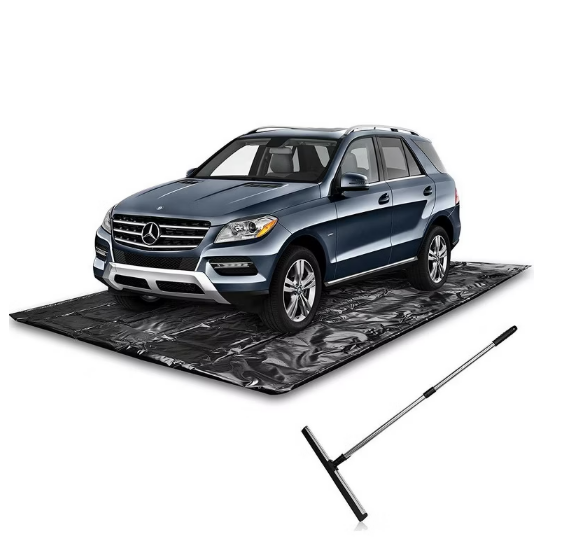
A Car Wash Mat creates a defined containment area beneath the vehicle. Its raised edges help keep water, dirt, and cleaning residue within the mat instead of allowing runoff to travel freely across the floor. After the work is finished, the contained liquid can be removed in a more controlled way.
A Car Wash Mat Creates a Controlled Washing Zone
The main challenge in indoor or limited-space vehicle washing is not generating water. It is controlling where that water goes.
On an open concrete surface, runoff usually follows the floor slope. If the drainage direction is unsuitable, water may move toward doors, walls, cabinets, tools, electrical equipment, or neighboring workstations. Even a relatively small amount of water can spread over a large floor area.
A Car Wash Mat changes this working condition by creating a clear boundary around the vehicle. Instead of relying entirely on the floor to direct runoff, the mat holds water inside its raised perimeter.
This controlled zone can help reduce:
- Water spreading across the garage floor
- Foam and detergent reaching storage areas
- Mud entering floor joints and corners
- Road salt remaining on concrete surfaces
- Repeated sweeping and mopping after washing
- Disruption to nearby work areas
The result is a cleaner and more organized washing process, especially where permanent wash bays are unavailable.
Indoor Vehicle Washing Without a Permanent Wash Bay
Not every garage, service area, or detailing workshop is designed with built-in floor drains. Installing a permanent wash bay may require construction work, drainage changes, waterproofing, and additional floor treatment.
A portable containment mat provides a more flexible option. It can be placed in the required area before washing and removed or stored when the space is needed for another task.
This is particularly useful in multipurpose spaces. A garage may be used for parking during the week, vehicle cleaning on weekends, and equipment maintenance at other times. A fixed structure would occupy the area continuously, while a removable mat allows the same floor to support different activities.
The mat can also be used during temporary projects, seasonal cleaning, vehicle exhibitions, mobile detailing work, and indoor service events where water control is required for a limited period.
More Than a Surface Cover
A basic floor sheet covers the ground, but it does not necessarily contain liquid. Once water reaches the edge, it can continue flowing across the surrounding floor.
A Car Wash Mat is designed to hold liquid within a defined area. The raised perimeter is therefore one of its most important features. It creates a shallow containment space beneath and around the vehicle.
During washing, water carries more than dirt. It may also contain:
- Cleaning foam
- Fine sand
- Mud
- Oil residue
- Road salt
- Leaves and small debris
- Melted snow and ice
Keeping these materials inside the mat makes cleanup more direct. Instead of collecting residue from a wide floor area, it can be handled within the contained section.
The mat is not a substitute for a complete wastewater treatment or drainage system. Its role is to control runoff at the working surface and make liquid removal more manageable.
Useful for Mobile Detailing and Temporary Work Areas
Mobile detailing often takes place in spaces that were not designed for vehicle washing. The available area may be a residential garage, warehouse corner, temporary workshop, parking structure, or covered event space.
In these environments, controlling water is important because the surrounding floor may need to remain dry and accessible. A portable Car Wash Mat helps define the service area without permanently changing the location.
For mobile detailing work, practical considerations include:
- How quickly the mat can be positioned
- Whether it fits common vehicle sizes
- How easily it can be folded or rolled
- Whether the edges remain stable during use
- How the contained water will be removed
- How the surface can be cleaned before storage
A mat that is difficult to set up or clean may slow down the entire process. The product should therefore support the working routine rather than create an additional maintenance task.
Containing Snowmelt, Road Salt, and Winter Dirt
A Car Wash Mat can remain useful even when no vehicle is being washed.
In snowy regions, vehicles carry ice, slush, road salt, and dirty water into the garage. As the snow melts, the liquid spreads across the floor and often collects near walls, storage shelves, or door tracks.
Repeated exposure to salty water can leave stains and residue on concrete. It can also create slippery surfaces and increase daily cleaning work.
Placing the vehicle over a containment mat allows snowmelt and winter dirt to collect within a limited area. The liquid can then be removed before it spreads through the garage.
This seasonal application is especially relevant for:
- Residential garages
- Fleet parking areas
- Vehicle storage buildings
- Workshops in cold climates
- Garages with limited floor drainage
- Spaces containing tools or stored materials
The same structure that contains wash water can therefore support everyday floor management during wet and snowy weather.
Selecting the Right Size for the Vehicle and Work Process
A mat should provide enough space for the vehicle and the washing activity around it. Choosing a size that only matches the exact tire footprint may leave too little room for water sprayed from the wheels, lower body panels, and cleaning tools.
The required dimensions depend on:
- Vehicle length and width
- Available floor space
- Washing method
- Spray direction
- Position of doors and equipment
- Space required to walk around the vehicle
Passenger cars may need less coverage than SUVs, pickup trucks, or vans. A larger mat can provide more working room, but it also requires more floor space and may hold a greater volume of water.
The best size creates a practical balance between containment coverage and convenient operation.
Surface Durability and Routine Cleaning
The mat surface must handle tires, water, dirt, cleaning products, and repeated folding or storage. It should remain flexible enough for practical handling while resisting damage during normal use.
Before a vehicle enters, sharp stones, metal pieces, or other debris should be removed from the tire treads and floor. Concentrated pressure from a sharp object can damage many flexible materials, especially when it is trapped beneath a vehicle tire.
After use, standing water should be removed according to the working setup. Pumps, wet vacuums, drainage hoses, or manual removal methods may be used depending on the volume of liquid.
The mat should then be rinsed or wiped to remove mud, foam, and salt. Allowing it to dry before folding helps reduce odor and keeps residue from being transferred to the storage area.
Regular inspection of the surface, seams, corners, and raised edges can identify wear before it affects containment.
Common Applications Beyond Car Washing
Although the product is commonly called a Car Wash Mat, its containment function supports several related activities.
It can be used for:
- Vehicle detailing
- Motorcycle cleaning
- Bicycle washing
- Lawn equipment cleaning
- Small machinery maintenance
- Snowmelt containment
- Temporary workshop protection
- Exhibition vehicle preparation
- Fleet cleaning areas
These applications share a similar requirement: liquid and dirt need to remain within a controlled space while the surrounding floor stays cleaner.
The mat should always be matched to the equipment size, liquid volume, surface condition, and cleaning process.
Car Wash Mat Solutions from Vinner
Vinner provides Car Wash Mat and Garage Containment Mat solutions for garages, detailing areas, vehicle storage spaces, temporary work zones, and seasonal floor protection.
Product configurations can be adapted to different vehicle dimensions and working environments. Attention is given to containment coverage, raised-edge stability, surface durability, portability, and convenient cleaning.
Different sizes, structures, packaging formats, and customized requirements can support residential, commercial, mobile, and project-based applications. The product can also be coordinated with other Home & Garden and functional outdoor materials within Vinner’s product range.
Conclusion
Vehicle washing becomes more difficult when water has no clear boundary. Foam, mud, road salt, and cleaning residue can quickly spread beyond the working area, increasing cleanup and affecting the surrounding floor.
A Car Wash Mat creates a defined containment zone beneath the vehicle. It helps hold runoff, supports temporary indoor washing, manages winter snowmelt, and keeps nearby areas cleaner.
The most suitable option should provide enough coverage for the vehicle, stable raised edges, practical water capacity, durable surface performance, and convenient cleaning. When these details match the actual working process, the mat becomes more than a simple floor cover—it becomes part of a cleaner and more organized vehicle care area.
FAQ
1. Can a Car Wash Mat be used inside a garage?
Yes. It is designed to contain wash water, foam, mud, and other residue within a defined area, making it suitable for garages without permanent wash bays.
2. Can the mat contain snowmelt and road salt?
Yes. It can collect melting snow, slush, and road salt carried into the garage by a vehicle, reducing the spread of dirty water across the floor.
3. How should water be removed from a Car Wash Mat?
Water can be removed with a wet vacuum, pump, drainage hose, or another suitable method depending on the mat design and liquid volume.
4. What size Car Wash Mat is suitable for an SUV or pickup truck?
The mat should be longer and wider than the vehicle footprint, leaving enough surrounding space to contain runoff from the wheels and body panels. Larger vehicles generally require wider and longer coverage.
Post time: Jul-31-2026