
Artificial grass is widely used in residential gardens, commercial landscapes, sports fields, and recreational areas because it provides a stable surface with lower maintenance requirements compared with natural turf. However, the performance of artificial grass products can vary significantly depending on material selection, fiber structure, backing systems, and manufacturing processes. An Artificial Grass Factory plays an important role in maintaining product consistency by controlling these key factors during production. Instead of judging synthetic turf only by appearance, understanding how materials, design, and manufacturing methods influence performance can help users choose products that better match their project requirements.
How Material Selection Affects Artificial Grass Performance
The foundation of artificial grass quality starts with the materials used in production. Different polymer materials offer different characteristics, affecting softness, durability, flexibility, and resistance to environmental conditions. Polyethylene (PE) is commonly used for landscaping applications because it provides a good balance between softness and durability, making it suitable for areas where a natural appearance and comfortable surface are important. Polypropylene (PP) offers good structural support and is often selected for applications that require stable performance and cost efficiency. Polyamide (PA) provides stronger wear resistance and is suitable for areas with higher usage demands.
The right material choice depends on the intended application. Residential lawns may prioritize a realistic appearance and comfortable touch, while sports surfaces may require stronger resistance to repeated pressure and friction. A well-designed artificial grass system should achieve a balance between visual appeal and practical performance.
Why Fiber Structure Influences Artificial Grass Quality
Grass fibers determine not only the appearance of synthetic turf but also how it performs after long-term use. Fiber shape, height, density, and thickness all affect the surface experience and durability.
Different fiber structures provide different benefits. Some designs focus on softness and a natural look, while others improve support and recovery after compression. Fiber height affects cushioning and visual effect, while density influences coverage and resistance to daily wear. Consistency during production is also important. Uneven fiber distribution may create differences in appearance and performance across the surface. For larger projects, maintaining uniform quality between different rolls helps achieve a more consistent final installation.
The Importance of Backing Systems for Long-Term Performance
Although grass fibers are the visible part of artificial turf, the backing system provides essential structural support. It helps secure fibers, maintain stability, and improve overall durability. A reliable backing system can influence several aspects of performance, including fiber retention, dimensional stability, and drainage capability. Strong fiber bonding helps reduce fiber loss during frequent use, while stable backing materials help minimize deformation caused by temperature changes or outdoor exposure.
For outdoor applications, artificial grass must withstand sunlight, rain, humidity, and seasonal changes. Therefore, the backing system and surface fibers need to work together to maintain stable performance over time.
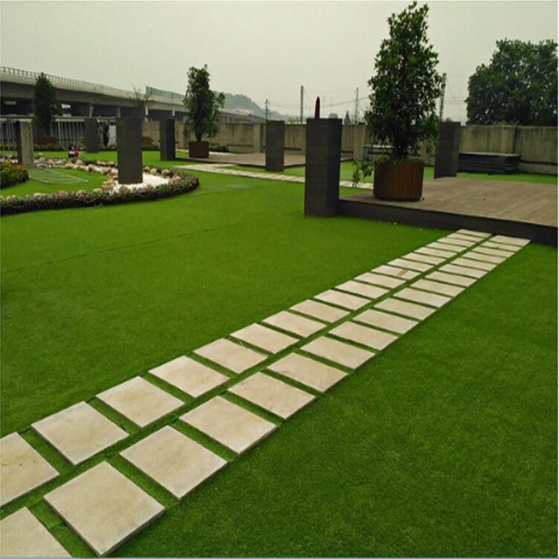
How Artificial Grass Is Designed for Different Applications
Different environments create different demands for artificial grass. Selecting a product based only on appearance may lead to performance issues if the structure does not match the actual application.
- Residential landscaping: Home gardens and private outdoor areas usually focus on natural appearance, comfort, and easy maintenance. The turf should provide a pleasant surface while maintaining a realistic visual effect.
- Sports and recreational areas: These applications require better wear resistance, surface recovery, and drainage performance because the turf experiences frequent movement and pressure.
- Commercial spaces: Public areas often require strong color stability, durability, and a consistent appearance due to higher foot traffic.
Matching product characteristics with real usage conditions helps improve long-term performance and reduces unnecessary replacement.
Quality Control Factors That Improve Product Consistency
Consistent artificial grass quality depends on control throughout the entire manufacturing process. Small differences in materials or production conditions can affect the final product.
Important quality factors include:
- Raw material consistency: Stable materials help maintain similar color, texture, and mechanical properties between different production batches.
- Manufacturing accuracy: Processes such as fiber extrusion, tufting, coating, and finishing influence surface uniformity and structural stability.
- Performance evaluation: Testing factors such as tensile strength, weather resistance, and fiber retention helps ensure products meet practical application requirements.
These quality control steps are especially important for large installation projects, where multiple sections of artificial grass need to maintain a consistent appearance and performance.
Choosing Artificial Grass Based on Project Requirements
Selecting suitable artificial grass requires more than comparing basic specifications. The installation environment, expected usage, and maintenance requirements all influence the right choice.
Before selecting a product, users should consider:
- Expected traffic level and frequency of use
- Indoor or outdoor installation conditions
- Exposure to sunlight and weather changes
- Drainage requirements
- Desired appearance and maintenance expectations
A suitable artificial grass solution should provide a balance between durability, appearance, and practical use. Careful evaluation before installation can help improve long-term results and reduce future maintenance concerns.
Creating More Reliable Artificial Turf Solutions
The performance of artificial grass depends on how well materials, structure, and application requirements work together. By selecting suitable fiber designs, backing systems, and product specifications, artificial turf can maintain better appearance and functionality throughout its service life. For landscaping, sports, and commercial projects, understanding the relationship between product structure and usage conditions is essential. A properly matched solution can provide a cleaner, more stable, and lower-maintenance surface for different environments.
Conclusion
An Artificial Grass Factory helps ensure consistent quality by controlling raw materials, fiber structures, backing systems, and production processes. These elements determine how artificial grass performs in different applications and environmental conditions.
Choosing artificial grass based only on appearance may not always provide the best long-term results. Evaluating product structure, usage requirements, and performance characteristics allows users to select a solution that better fits their specific needs. With the right product design and application matching, artificial grass can provide a durable, attractive, and practical surface for residential, commercial, and sports environments.
Frequently Asked Questions
1. Can an Artificial Grass Factory customize products for different projects?
Yes. Different projects may require variations in grass height, density, color, fiber shape, and overall structure. Customizing specifications according to application requirements helps ensure better compatibility with different environments.
2. Will artificial grass fade after long-term outdoor use?
Outdoor conditions such as sunlight exposure, temperature changes, and weather can affect color stability. Products designed with suitable materials and production processes can provide better resistance to environmental changes and maintain appearance for longer periods.
3. What preparation is needed before installing artificial grass?
Before installation, factors such as ground stability, surface level, and drainage conditions should be considered. Proper preparation helps improve installation quality and supports long-term performance.
4. Is artificial grass suitable for high-traffic areas?
Artificial grass can be used in high-traffic areas when the product structure matches the application requirements. Factors such as wear resistance, recovery ability, and overall durability should be considered to ensure reliable performance.
Post time: Oct-12-2026