
A garage often needs to accommodate several activities at once. It may be used for vehicle parking, equipment storage, basic maintenance, and seasonal organization. However, when a vehicle enters after driving through rain or snow, water, mud, and road residue can remain on its tires and undercarriage. Once the vehicle is parked, these substances may spread across the floor and affect nearby storage areas.
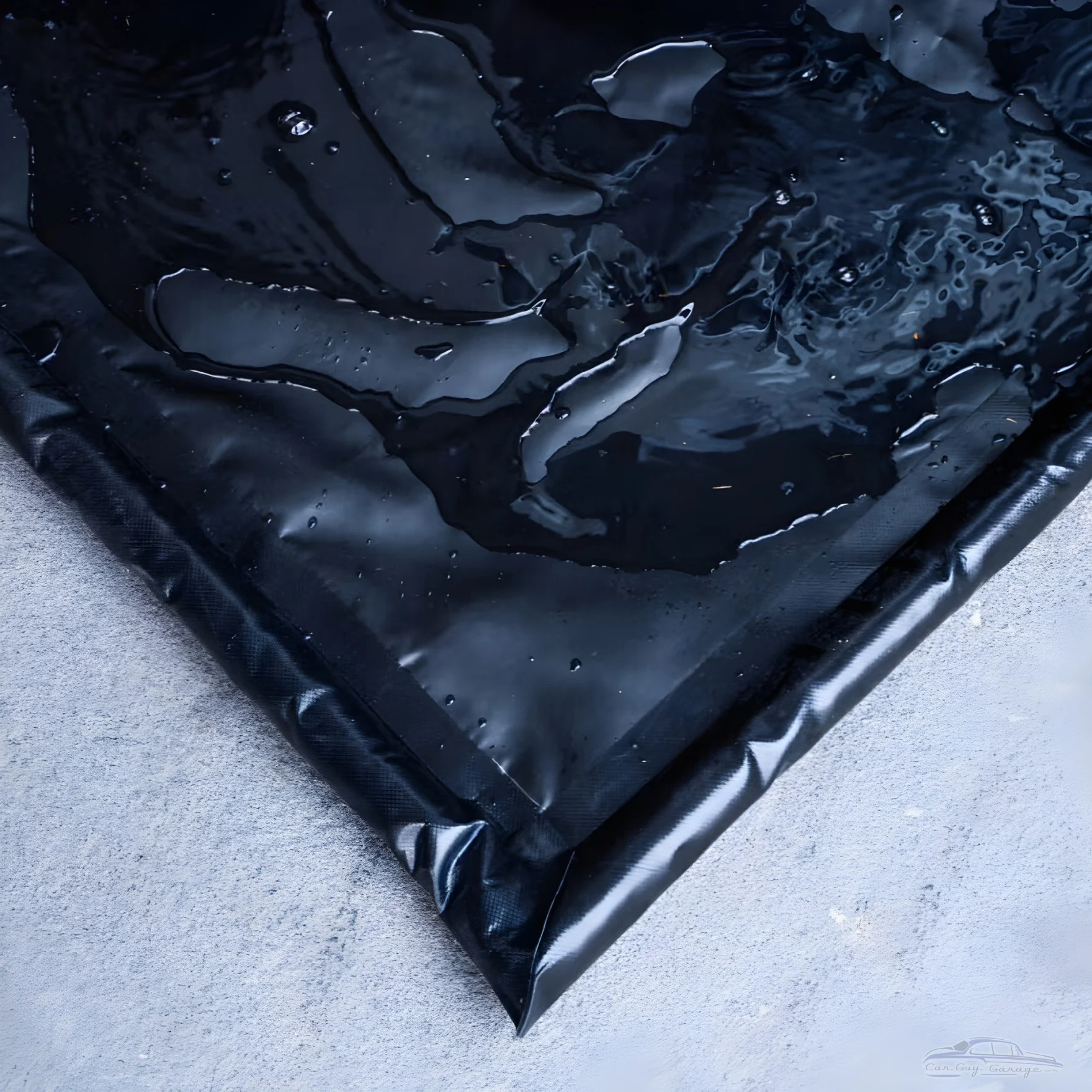
A Garage Containment Mat provides a defined surface beneath a parked vehicle to collect water and debris. Its waterproof construction and raised edges help keep vehicle-related runoff within a designated area instead of allowing it to spread freely across the garage floor. This is particularly useful when vehicles, tools, and stored equipment share limited space.
How Vehicle-Related Moisture Affects a Shared Garage
Moisture in a garage does not always come from a leaking roof or plumbing system. Everyday vehicle use can introduce a considerable amount of water and dirt. Rainwater collects on tires, wheel wells, and undercarriages. In colder weather, snow and ice attached to a vehicle may melt after it enters the garage.
The problem becomes more noticeable when the vehicle is parked near cabinets, workbenches, or storage containers. Water can move beyond the parking area, carrying mud and road residue with it. Items placed directly on the floor may then require additional cleaning or repositioning. A wet floor also makes routine garage activities less convenient. People may need to move equipment before cleaning, avoid certain areas while water remains, or spend extra time removing accumulated dirt. In a garage that serves as both a parking area and a workspace, uncontrolled runoff can gradually make the entire space harder to manage.
How a Garage Containment Mat Helps Control Runoff
The main purpose of a Garage Containment Mat is to collect water and debris beneath a parked vehicle. Its waterproof surface helps prevent collected liquid from passing directly through to the floor, while raised perimeter edges help limit outward runoff.
This arrangement is useful when a vehicle is parked close to other garage items. Without a containment surface, water can travel across the concrete floor and reach areas used for storage or maintenance. A properly sized mat helps keep most vehicle-related moisture within a more manageable zone. The raised edges are especially important because water does not always remain directly beneath the tires. It may drip from the undercarriage or flow outward as snow and ice melt. A containment edge helps define the area where this runoff can collect, although the mat still needs to be correctly positioned and large enough for the vehicle.
It is important to understand what the product can and cannot do. A Garage Containment Mat helps manage water and dirt brought in by vehicles, but it does not repair structural leaks, eliminate condensation, or control overall garage humidity. Collected water must still be removed, particularly after heavy rain, snowfall, or vehicle washing.
Keeping Garage Equipment Outside the Wet Zone
Many garages are arranged around convenience. Tool cabinets may stand beside the vehicle, while portable machines, storage bins, extension reels, and maintenance supplies occupy the remaining floor space. When water spreads from the parking area, these items can become exposed to splashes or standing moisture. A containment mat makes it easier to establish separate zones for parking and storage. Equipment can be positioned outside the mat’s perimeter, leaving the vehicle-related wet area more clearly defined. This can reduce the need to move tools every time the floor becomes wet and make routine cleaning more straightforward.
However, the mat should not be treated as a substitute for appropriate equipment storage. Electrical tools and sensitive machinery should remain in suitable dry locations. Metal equipment may also require normal inspection and maintenance. The mat helps limit the spread of vehicle runoff; it does not guarantee protection against corrosion, electrical damage, or every form of moisture exposure.
Choosing the Right Size for Different Garage Layouts
Selecting a Garage Containment Mat involves more than matching its length to the vehicle. Width, parking position, door clearance, and nearby storage arrangements all affect how well the mat works. A mat that is too small may leave areas exposed where water commonly drips, while an oversized option may interfere with cabinets or walking paths.
- Vehicle dimensions: Measure the vehicle’s length and width, allowing additional coverage around areas where water and dirt are likely to fall.
- Parking position: Check whether the vehicle is normally centered, parked close to a wall, or positioned at an angle.
- Storage arrangement: Leave enough clearance between the mat’s edge and nearby cabinets, workbenches, or equipment.
- Access and movement: Make sure the mat does not obstruct doors, walking routes, or the movement of tools and other equipment.
- Future requirements: Consider whether the garage may need to accommodate a different vehicle or a revised storage layout.
A single-car garage used mainly for parking has different requirements from a space where a larger vehicle shares the floor with maintenance equipment.
Installation and Routine Maintenance
A containment mat performs best when placed on a reasonably clean and level floor. Small stones, sharp debris, or objects trapped underneath can affect how it sits and may cause unnecessary wear. Sweep the installation area first and check that the surface is suitable.
After unfolding the mat, position it so the vehicle can enter without catching or folding the raised edges. The vehicle should be parked within the containment area, with enough coverage around the points where water is expected to drip. Nearby objects should not press down on the perimeter or interfere with its shape.
- Remove leaves, grit, and loose dirt before they accumulate.
- Clear collected water after wet-weather parking or vehicle washing.
- Wash away mud and road residue when necessary.
- Allow the surface to dry before folding or storing the mat for an extended period.
- Inspect the surface and raised edges for damage or deformation.
For larger amounts of collected water, a suitable wet vacuum, pump, or other removal method may be necessary. Leaving water on the mat for too long can make cleaning more difficult and reduce the convenience of the containment area.
What to Consider for Long-Term Use
A mat intended for regular vehicle storage should suit both the vehicle and the conditions in which it will be used. Material durability, waterproof performance, edge construction, and ease of cleaning all influence its practical value. Heavy-duty PVC, for example, provides a waterproof surface suitable for collecting water and dirt from parked vehicles. The frequency of repositioning is another consideration. Some garages maintain the same parking arrangement throughout the year, while others are reorganized as storage needs change. A mat that can be unfolded for use and cleaned without complicated assembly is useful when the space serves several purposes.
For a garage where vehicles and equipment share the floor, the best choice is not necessarily the largest available mat. It should cover the relevant parking area while leaving sufficient room for storage, access, and safe movement. Standard dimensions may suit common vehicle layouts, while customized sizing can help address less typical spaces. For different garage arrangements, we offer PVC garage containment mats in several standard dimensions as well as customized sizes. A waterproof surface, raised containment edges, and straightforward installation can help create a clearly defined vehicle parking area. Considering vehicle dimensions, available floor space, and nearby equipment before selecting a configuration makes it easier to match the mat to everyday use.
Conclusion
A Garage Containment Mat helps collect vehicle-related water and debris within a designated parking area, limiting the spread of runoff across a shared garage floor. This is particularly useful when vehicles, tools, and stored equipment occupy the same space. With suitable sizing, correct positioning, and regular water removal, the mat can make garage maintenance more manageable and help keep parking, storage, and work areas better organized.
FAQs
1. Is a garage containment mat suitable for garages used as home workshops?
Yes. It can help define a separate parking area and collect vehicle-related water and dirt, leaving nearby floor space more convenient for maintenance, storage, and other activities.
2. Can a garage containment mat accommodate SUVs and larger vehicles?
Yes, provided the mat has sufficient length and width for the vehicle. Larger vehicles may require wider or longer coverage, so measuring the vehicle and available garage space before selecting a size is important.
3. Can I fold and store a garage containment mat when it is not in use?
Many PVC containment mats can be folded for storage. Before folding, remove collected water and dirt and allow the surface to dry. This helps keep the mat cleaner when it is used again.
4. What features should I compare when selecting a garage containment mat?
Consider material durability, waterproof construction, raised-edge design, available dimensions, and ease of cleaning. These features influence how well the mat fits your parking arrangement and handles routine vehicle runoff.
Post time: Nov-03-2026