
For an Extruded Netting Manufacturer, producing a useful plastic net is not simply a matter of changing the mesh opening or roll width. The same basic netting structure can be used for packaging, garden protection, agricultural separation, industrial protection, fencing, and other applications, but each use places different demands on the mesh. Some applications need flexibility and easy wrapping, while others need greater stiffness, larger openings, or stronger dimensional stability.
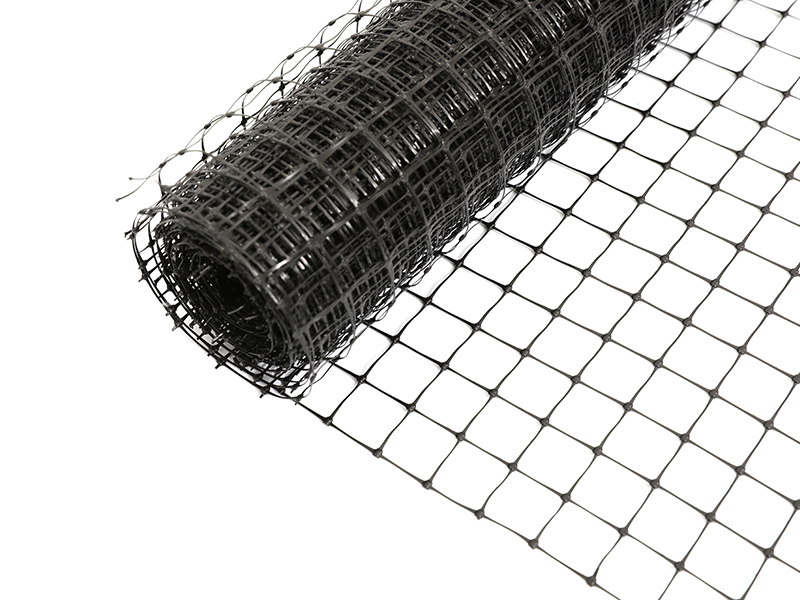
This is why extruded netting works best when the mesh structure is matched to its final function. Mesh size, strand structure, material, width, color, flexibility, and roll format can all be adjusted so that the finished net performs naturally in the intended application rather than forcing one standard product into every use.
Start With What the Extruded Netting Needs to Do
Before deciding on a mesh specification, it is more useful to define the job the net needs to perform. In some applications, the main purpose is to separate or protect products without adding much weight. In others, the net may need to create a visible boundary, support plants, protect an area, or provide an open structure that allows air and water to pass through.
These functions lead to different product priorities. Packaging netting may need to be flexible enough to wrap around irregular shapes, while garden or agricultural netting may benefit from a structure that keeps its shape after installation. Protective plastic mesh may need a balance between impact resistance and low weight, while fencing applications usually place more emphasis on visibility and dimensional stability.
Thinking from the final use first makes the product specification much clearer.
Mesh Opening Changes More Than the Appearance
Mesh size is one of the most visible characteristics of extruded netting, but its effect goes beyond appearance. A smaller opening provides more surface coverage, while a larger opening reduces material density and allows more open space through the structure.
The suitable opening depends on what the net is expected to contain, separate, protect, or support. A mesh designed around larger objects does not necessarily need the same opening as netting used around smaller products or garden applications. At the same time, the opening affects airflow, visibility, drainage, overall weight, and how easily the net can conform to a surface.
This is one reason an Extruded Netting Manufacturer needs to consider the complete application instead of treating mesh size as an isolated number. The right opening should support the function of the product without adding unnecessary material.
Flexible or More Rigid? The Application Decides
Extruded plastic netting can be configured with different levels of flexibility. This changes how the product behaves during installation, wrapping, cutting, or long-term use.
Flexible netting is useful when the material needs to follow curved surfaces, wrap around products, or be folded and handled repeatedly. A more structured net is often more practical when the mesh needs to stay open, maintain a defined shape, or form a temporary boundary.
Neither structure is automatically better. The correct balance depends on whether the finished product needs to move with the object or maintain its own form.
For this reason, strand structure and overall stiffness should be considered together with mesh opening. Two nets with similar openings can feel and perform differently if their strand thickness and structural rigidity are not the same.
Why Extruded Netting Works Well for Repeated Cutting and Converting
Many extruded netting applications begin with a roll rather than a finished piece. The material may later be cut into sheets, strips, sleeves, guards, barriers, or other shapes depending on the project.
A continuous mesh structure makes this format practical for manufacturers and converters that need multiple finished dimensions from one material type. Roll width and roll length can also be selected around the intended conversion process, helping reduce unnecessary handling and offcuts.
For applications that repeatedly use the same finished dimension, a more suitable roll width can simplify preparation. Where several product sizes are required, a different master-roll format may offer greater flexibility. This makes roll configuration part of the product solution rather than simply a packaging detail.
One Mesh Material Can Serve Very Different Industries
The versatility of extruded netting comes from the ability to adjust its structure according to the required function.
|
Application |
Main Netting Priority |
| Product protection | Flexible structure and suitable surface coverage |
| Packaging | Lightweight handling and easy converting |
| Garden applications | Open structure and practical installation |
| Agricultural use | Coverage, flexibility, and suitable mesh size |
| Temporary barriers | Visibility and dimensional stability |
| Industrial protection | Structural support and application-specific strength |
| General plastic mesh use | Width, mesh opening, and roll configuration |
The important point is that these applications should not all use exactly the same mesh simply because they belong to the same product family. A net designed for wrapping a product may require a very different feel from one intended to stay installed outdoors as a boundary or protective layer.
Color Can Support Both Product Design and Practical Use
Color is another specification that can be matched to the final application. Black, green, orange, or other colors may be selected according to the environment, finished product design, visibility requirements, or product identification.
For garden and landscape uses, color may help the net blend more naturally with the surrounding environment. For temporary barriers or areas where visibility is important, a more noticeable color may be preferred. Packaging and industrial applications may also require specific colors to match a product series or distinguish different material specifications.
This makes color part of the overall product configuration rather than simply a decorative choice.
Roll Size Matters When Netting Is Used Regularly
A suitable net can still be inconvenient if the roll format does not match the way it will be handled. Large rolls may be useful for continuous converting or larger-area installations, while smaller rolls can be easier to move and use manually.
Width is particularly important because it influences how much cutting or joining is required before installation. Matching the net width more closely to the finished application can reduce unnecessary preparation and simplify repeated use.
For long-term or recurring projects, these practical details can make a noticeable difference. The goal is not to create the largest possible roll, but to provide a format that fits the actual working process.
Vinner Extruded Netting Solutions
Vinner provides extruded plastic netting for different packaging, garden, agricultural, protective, and industrial applications. Mesh opening, material structure, width, color, roll size, and other product details can be matched according to the intended use.
Instead of relying on one standard mesh for every project, Vinner can support different configurations according to whether the net needs to be flexible, more structured, highly visible, easy to convert, or suitable for a particular finished dimension.
For projects with an existing sample or established specification, matching can begin from the current product. For new applications, the specification can be developed around the dimensions, mesh requirement, working environment, and finished use.
If you are looking for an Extruded Netting Manufacturer for a specific application, provide the required mesh opening, roll width, color, application, and any existing sample or size requirement. Vinner can help match an extruded netting configuration to the project.
The Best Mesh Starts With the Final Use
Extruded netting is useful precisely because it does not have to remain a single fixed product. By adjusting mesh opening, flexibility, strand structure, color, width, and roll format, the material can be adapted to very different uses while retaining the advantages of a lightweight open-mesh structure.
For this reason, selecting extruded netting should begin with what the finished net needs to accomplish. Once the application is clear, the rest of the specification can be built around that requirement, resulting in a product that is easier to use and better suited to its intended environment.
FAQ
What information is useful when requesting extruded netting?
Useful details include the intended application, mesh opening, roll width, color, required dimensions, and whether an existing sample or specification is available.
Can extruded netting be customized in mesh size?
Yes. Different mesh structures can be matched according to the size of the object, required coverage, flexibility, and final application.
Can extruded netting be supplied in different colors?
Yes. Color can be matched according to product design, visibility requirements, garden applications, industrial identification, or other project needs.
Can Vinner provide custom roll sizes for extruded netting?
Yes. Roll width and other product configurations can be matched to the intended cutting, installation, packaging, or converting requirements.
Post time: Sep-18-2026