
Mobile vehicle washing requires more than a convenient cleaning location. Operators need to control water, mud, detergent residue, and road debris while working in driveways, parking spaces, and temporary service areas. Without a defined washing surface, runoff can spread beyond the vehicle and create additional cleanup work.
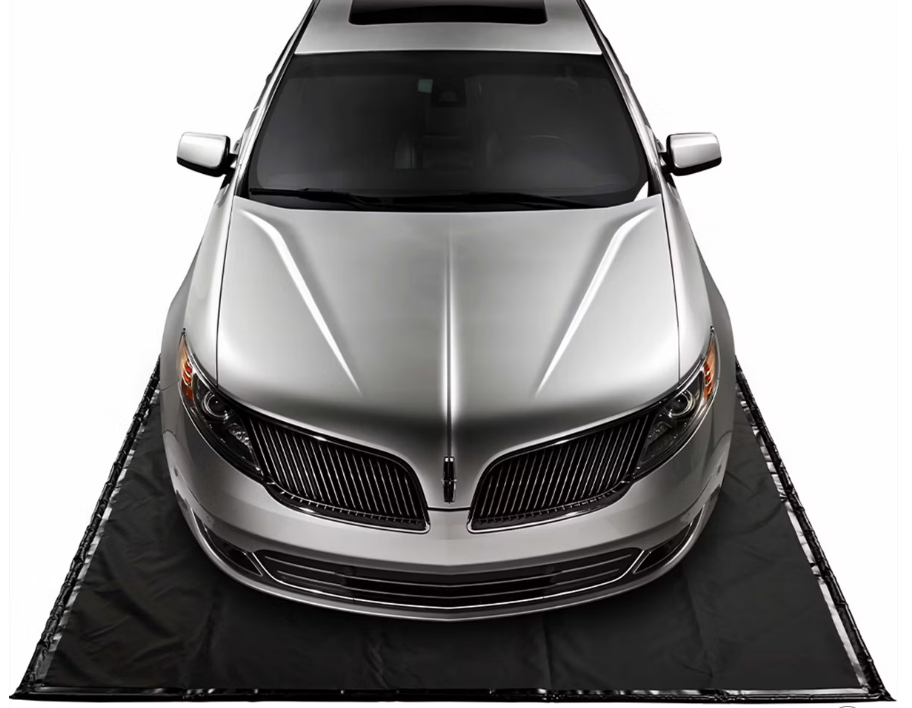
A Car Wash Mat provides a designated area for vehicle cleaning and helps prevent water and dirt from spreading across the surrounding ground. However, its effectiveness depends on more than waterproofing. Material durability, edge construction, vehicle coverage, and ease of handling all influence how well the mat performs during repeated use.
Why Does PVC Construction Matter for a Car Wash Mat?
PVC is widely used in vehicle containment mats because it combines waterproof performance with the flexibility needed for handling and storage. During washing, the mat may come into contact with water, mud, road salt, detergents, and repeated tire movement. Its material must therefore withstand regular exposure without becoming difficult to manage. A waterproof PVC surface helps prevent collected liquids from reaching the ground underneath. This is particularly useful when washing vehicles on concrete driveways, parking surfaces, or temporary work areas where permanent drainage facilities may not be available.
Flexibility is equally important. A mat that is too rigid can be difficult to unfold, position, and store between appointments. On the other hand, a material that lacks sufficient structural stability may wrinkle excessively or become difficult to position during washing. A suitable Car Wash Mat should balance these properties. It needs enough flexibility for transportation while maintaining a stable working surface after installation. Evaluating the overall construction is more useful than judging a product by thickness alone.
How Do Raised Edges Improve Water Containment?
The edge structure is one of the most important parts of a vehicle washing mat. Waterproof material can prevent downward leakage, but it cannot fully control runoff if water moves freely beyond the perimeter. During washing, water travels in different directions depending on spray pressure, vehicle position, floor slope, and the operator’s movements. Mud and detergent residue also accumulate around the wheels and lower body panels. Raised edges help create a defined containment area and reduce the chance of liquids spreading across the surrounding surface.
However, edge design must also account for repeated use. Vehicle tires may cross the perimeter when entering or leaving the mat, while operators may step near the edges during cleaning. If an edge loses its shape after repeated pressure, its ability to contain water may be reduced.
Choosing the Right Size for Different Vehicles
The dimensions of a Car Wash Mat directly affect its ability to contain runoff. A mat that is too small may leave the wheel areas or sections of the vehicle outside the containment zone. An oversized mat, however, may take up unnecessary storage space and become less convenient to transport.
Vehicle type should be the starting point when determining suitable dimensions. Compact cars generally require less coverage than SUVs, pickup trucks, and commercial vehicles. Operators should also consider how much space is needed for cleaning equipment and movement around the vehicle.
When comparing available sizes, consider these points:
- Vehicle dimensions: Measure the vehicle’s length and width, including the space needed around the wheels and body panels. The containment area should extend beyond the vehicle footprint.
- Working clearance: Allow enough room for hoses, pressure washers, buckets, and operator movement. Insufficient clearance can make cleaning less convenient.
- Storage capacity: Consider the available space inside the service vehicle. A larger mat may offer greater coverage but can require more room when folded or rolled.
- Frequency of use: Businesses that regularly clean similar vehicle types may benefit from a consistent mat size, while operators serving different vehicle categories may need a more flexible configuration.
Installation and Positioning During Mobile Washing
A practical containment mat should not require complicated installation. Mobile operators often work under time constraints, especially when handling multiple appointments in different locations. A straightforward setup helps reduce preparation time and makes the washing process more consistent. Before unfolding the mat, operators should check the ground for sharp stones, debris, or objects that could damage the material. The surface should also be reasonably stable and suitable for the mat’s design.
After positioning, the corners and edges should be arranged correctly. Vinner’s product features include stay-put corners designed to help secure the mat in position and reduce unwanted movement. Proper positioning remains important because an incorrectly placed mat may allow water to escape even when its material and edge construction are suitable. The vehicle should enter and leave the mat carefully. Operators should avoid unnecessary movement that could pull, fold, or displace the material. Once positioned, the mat can provide a consistent working boundary for washing activities.
Cleaning and Maintaining the Mat Between Jobs
Repeated washing exposes the mat to dirt, detergent residue, mud, and other contaminants. If these materials remain on the surface, they may accumulate over time and make subsequent cleaning more difficult.
A simple maintenance routine can help keep the mat ready for repeated use:
- Remove loose debris: Clear mud, leaves, stones, and other particles after each washing session.
- Rinse the surface: Use a hose or suitable cleaning method to remove detergent residue and remaining dirt.
- Inspect the edges: Check corners, seams, and containment sections for deformation, damage, or separation.
- Dry before storage: Allow sufficient drying before folding or rolling the mat to reduce moisture-related problems.
- Store carefully: Avoid placing heavy objects on folded sections or creating unnecessary stress around reinforced areas.
Matching the Mat to Different Washing Environments
Not every washing location creates the same demands. A residential driveway may have a relatively stable concrete surface, while an outdoor parking area may have uneven paving or limited working space. The washing method also affects the amount of water and residue that needs to be contained. For occasional home washing, convenient installation and simple cleaning may be the main priorities. Mobile detailing businesses may place greater importance on portability, repeated folding, and suitable coverage for different vehicle sizes. Commercial vehicle cleaning may require larger dimensions and a containment structure suited to more demanding use.
A Car Wash Mat should also be considered alongside the wastewater removal method. Containing water does not mean that the mat can store unlimited liquid. For washing operations that generate larger volumes of wastewater, wet vacuums, portable pumps, or suitable collection equipment may be needed. Operators should also follow local wastewater disposal requirements. Collected water containing detergents and road contaminants should be handled according to applicable regulations rather than discharged without consideration.
Choosing a Car Wash Mat That Fits Your Operation
The right product should match the actual washing process rather than simply offer the largest dimensions or thickest material. PVC construction, edge stability, corner positioning, vehicle coverage, and cleaning convenience all contribute to practical performance.
Vinner offers PVC Garage Containment Mat/Car Wash Mat solutions in several standard sizes, with customized dimensions available for different vehicle and working-area requirements. Its product design focuses on waterproof protection, improved containment edges, convenient installation, and straightforward cleaning. For businesses planning a new washing setup, sharing vehicle dimensions, available working space, and typical cleaning conditions can help identify a suitable size and configuration. Matching these requirements before selecting a mat can make daily use more convenient and reduce unnecessary adjustments.
Conclusion
A Car Wash Mat needs to do more than provide a waterproof surface. Its material, raised edges, dimensions, and handling characteristics all influence how effectively it controls washing residue during repeated use. PVC construction offers a practical combination of waterproofing and flexibility, while suitable containment edges and sizing help create a more controlled washing area. Selecting a mat according to vehicle dimensions and operating conditions supports more consistent vehicle cleaning.
FAQs
1. Why is PVC commonly used for Car Wash Mats?
PVC provides waterproof protection while remaining flexible enough for folding, transportation, and repeated installation. It is suitable for applications involving regular contact with water and cleaning residues.
2. Are customized Car Wash Mat sizes available?
Yes. Customized dimensions can help accommodate different vehicle sizes, working spaces, and containment requirements when standard sizes are not suitable.
3. How can a Car Wash Mat be kept in position?
Correct positioning and properly arranged corners help reduce unwanted movement. The ground should also be checked before installation to ensure a stable working surface.
4. How should a PVC Car Wash Mat be cleaned?
Loose debris can be swept away, and the surface can be rinsed with a hose. The mat should be allowed to dry sufficiently before being folded and stored.
Post time: Oct-30-2026